Common Pest Problems in Kerala During Changing Seasons
There's a strange pattern many Kerala homeowners will recognize. Your house feels completely fine for weeks: no ants, no cockroaches, nothing worth mentioning. Then the weather shifts, even slightly, and suddenly you're dealing with mosquitoes near the window, ants around the sugar jar, or a musty smell near the bathroom that wasn't there before.
This isn't bad luck. Kerala's weather doesn't just change the temperature; it changes how pests behave, where they hide, and how quickly they multiply. Rainfall, humidity, sudden dry spells, and the gap between monsoon and summer all play a role in what shows up in your home and when.
Understanding these seasonal patterns can help you catch problems early, before they turn into something bigger. And for some homeowners, especially once a pest problem feels beyond routine cleaning, it eventually leads to searching for a pest control service near me not out of panic, but simply because the situation has moved past what home remedies can handle.
Why Seasonal Changes Affect Pest Activity in Kerala
Pests don't respond to the calendar; they respond to conditions. And Kerala's shifting weather creates a rotating set of conditions that different pests take advantage of at different times of year.
A few factors matter most:
- Increased moisture after rainfall gives many insects the damp environment they need to survive
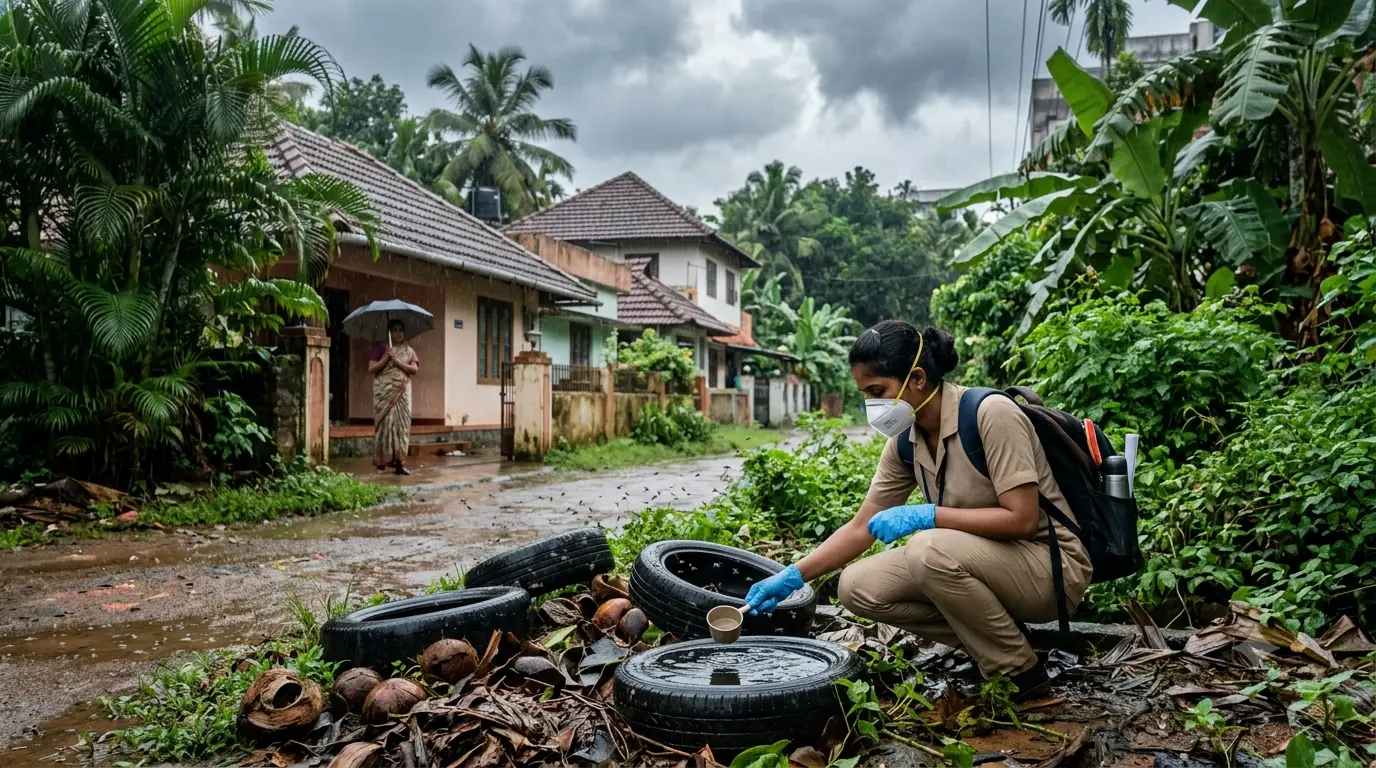
- Standing water, even in small amounts, becomes a breeding ground within days
- Humidity keeps materials like wood and cardboard softer, which some pests prefer
- Temperature changes between rainy and dry spells can push pests to seek shelter indoors
- Food availability shifts depending on kitchen habits, storage, and waste disposal
- Water leakage around pipes or roofing creates hidden damp pockets
- Drainage problems allow water to sit longer than it should
- Indoor shelter becomes more appealing to pests once outdoor conditions turn extreme, whether too wet or too dry
None of these factors work in isolation. Usually, it's a combination of heavy rain plus poor drainage, or humidity plus a small leak that creates the right conditions for a pest problem to take hold.
Common Pest Problems During the Monsoon
Monsoon is when most Kerala households notice the most pest activity, and for good reason. Rain creates exactly the conditions several common pests need to thrive.
- Cockroaches — often driven indoors by flooding or waterlogged drains outside, seeking dry shelter
- Mosquitoes — breed rapidly in any standing water, from clogged gutters to plant saucers
- Termites — moisture-softened wood becomes easier for termites to access and damage
- Ants — displaced from outdoor nests by rain, they move indoors in search of dry ground and food
- Rodents — flooding or waterlogging outside can push rats and mice toward drier indoor spaces
- Flies — increase around waste and drains where moisture and organic matter build up
- Spiders — while not usually harmful, more spiders indoors often signals more insect activity for them to feed on
This is a good example of why common household pests during the rainy season in Kerala tend to follow a predictable pattern year after year; it's less about bad luck and more about water, shelter, and food lining up at the same time.
Pest Problems After the Rainy Season
A lot of homeowners assume pest problems fade once the rain stops. In practice, some issues only become noticeable once the rain clears, because the underlying damage or moisture is still there.
Common post-monsoon concerns include:
- Damp areas that take weeks to fully dry out, especially in poorly ventilated corners
- Remaining stagnant water in overlooked spots like tarpaulin covers or unused containers
- Damaged wooden structures, where termite activity that began during the rains becomes visible only afterward
- Cracks and gaps in walls or foundations, often widened by water exposure during heavy rain
- Food waste accumulating faster in humid, post-monsoon conditions
- Increased indoor pest activity, as pests that moved inside during the rains simply stay, having found reliable shelter
This transition period is often when seasonal pest control for residential properties makes the most sense, addressing lingering moisture and hidden damage before it compounds through the drier months.
Summer Pest Problems in Kerala Homes
Summer brings a different, though sometimes overlapping, set of pest issues. With less rainfall, pests often shift their focus toward finding water and cooler, sheltered spaces.
- Ants — search more aggressively for water sources, often ending up in kitchens and bathrooms
- Cockroaches — drawn to any residual moisture, particularly around sinks and drains
- Mosquitoes — while overall numbers may drop, any remaining stagnant water becomes a concentrated breeding spot
- Flies — increase around exposed food and waste in warmer temperatures
- Termites — continue feeding on already-weakened wood from the monsoon, sometimes causing damage to become visible only now
- Rodents — seek out cooler, hidden spaces indoors, including storage rooms and false ceilings
Summer pest problems tend to be quieter but no less persistent, often building gradually rather than appearing suddenly the way monsoon infestations do.
Signs That Your Home May Have a Pest Problem
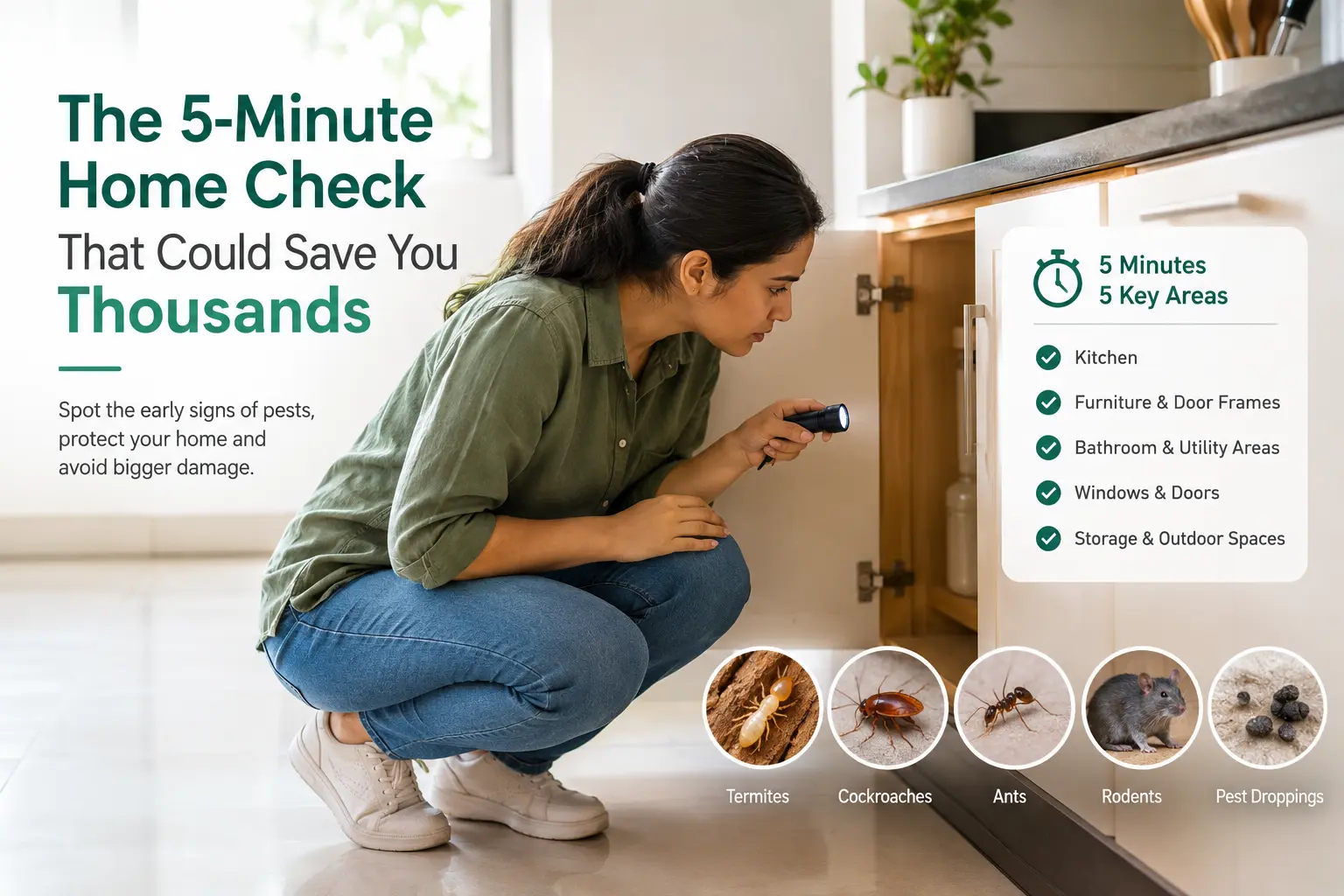
Some signs are obvious. Others are easy to miss until the problem has grown. It's worth periodically checking for:
- Small droppings near food storage or corners
- Damaged or hollow-sounding wood
- Insect eggs or larvae in cracks or damp corners
- Unusual musty or stale smells, particularly near wood or drains
- Gnaw marks on packaging, wiring, or furniture
- Increased mosquito activity indoors, even during the day
- Cockroaches appearing during daylight hours, which often indicates a larger hidden population
- Repeated insect sightings despite regular cleaning
- Noticeable pest activity around drains, sinks, or kitchen counters
These are genuinely useful signs that your home needs professional pest control, especially when more than one appears at the same time.
How to Prevent Seasonal Pest Problems at Home
A good portion of pest prevention comes down to consistent, unglamorous habits rather than one-time fixes:
- Keep food sealed in airtight containers
- Clean kitchen surfaces and countertops regularly
- Remove stagnant water from pots, trays, and unused containers
- Keep drains clear and free of debris
- Repair leaks as soon as they're noticed
- Seal cracks and gaps around doors, windows, and pipe entry points
- Maintain garden areas to avoid overgrowth and water pooling
- Dispose of household waste properly and promptly
- Keep storage areas dry and ventilated
- Periodically check wooden structures for early termite activity
Knowing how to prevent pests at home during monsoon specifically often comes down to drainage and moisture control more than anything else — the rest of the year benefits from the same habits, just with slightly less urgency.
When Should You Call a Professional Pest Control Service?
Not every pest sighting requires outside help. An occasional ant or a single mosquito doesn't necessarily mean anything is wrong. But there are situations where DIY methods genuinely reach their limit:
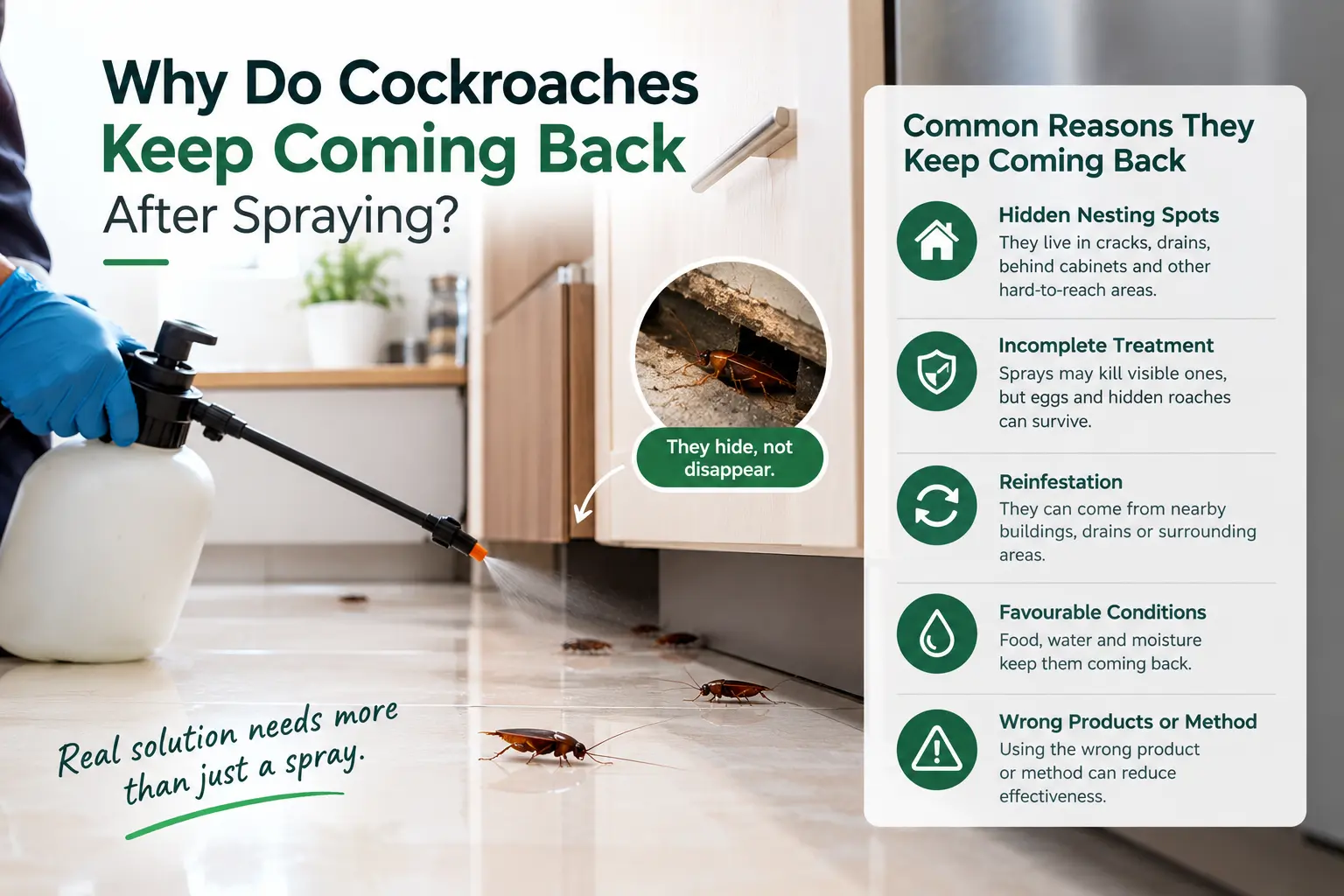
- Infestations that keep returning despite consistent cleaning
- A large or growing cockroach population, particularly in kitchens
- Mosquito activity that persists even after removing visible standing water
- Confirmed or suspected termite damage
- Clear signs of rodent activity, such as droppings or gnaw marks
- Bed bug infestations, which are difficult to fully resolve without proper treatment
- Pest activity that returns shortly after a DIY treatment attempt
At this stage, searching for a professional pest control service near me or arranging a pest inspection service near me becomes a practical next step rather than an overreaction it's simply recognizing that the problem needs more targeted treatment than home remedies can offer.
How to Choose the Right Pest Control Service Near You
If you've reached the point of needing outside help, a little research goes a long way. When comparing options, it helps to consider:
- Local service availability — can they respond within a reasonable time?
- Experience with the specific pest you're dealing with, since treatments vary significantly
- Proper inspection before treatment, rather than jumping straight to spraying
- Clear explanation of the treatment process, including what to expect
- Safety precautions, especially for homes with children, elderly residents, or pets
- Follow-up support to confirm the treatment actually worked
- Transparent pricing, without vague or shifting quotes
- Customer reviews from other local homeowners
- Appropriate treatment methods matched to the specific pest and property type
Thinking through how to choose a local pest control service this way, based on process and transparency rather than promises, tends to lead to a better outcome than picking based on price alone.
DIY Pest Prevention vs Professional Pest Control
It helps to be realistic about what each approach can and can't do.
DIY prevention works well for:
- Minor, occasional pest sightings
- Ongoing maintenance between treatments
- Situations that respond to consistent cleaning and moisture control
Professional treatment tends to be necessary for:
- Established or recurring infestations
- Situations requiring a proper property inspection
- Pest-specific treatment that generic sprays can't match
- Cases needing follow-up visits to ensure the issue is fully resolved
Neither approach replaces the other. Most Kerala homes end up using a mix of consistent home habits most of the year, with professional treatment stepping in when things go beyond that.
FAQs About Seasonal Pest Problems in Kerala
1. What pests are most common in Kerala during the monsoon?
Cockroaches, mosquitoes, ants, termites, and rodents are the most frequently reported, largely due to increased moisture and displaced outdoor pests seeking shelter indoors.
2. Why do cockroaches enter homes during rainy weather?
Flooding or waterlogged drains outside push cockroaches to seek dry, sheltered spaces, which often means moving indoors.
3. How can I prevent mosquitoes around my house?
Regularly check for and remove standing water, keep drains clear, and use mesh screens on windows and doors.
4. Are termites more active during the rainy season?
Increased moisture softens wood, making it easier for termites to access and feed on, so activity often increases during and after heavy rain.
5. How often should a home receive pest control treatment?
This varies by property, but many homes benefit from a check every few months, with extra attention during and after monsoon.
6. When should I search for a pest control service near me?
Typically once home prevention methods aren't keeping pace with recurring or worsening pest activity.
7. Is professional pest treatment necessary for recurring infestations?
Often yes, particularly if the same pest keeps returning despite consistent cleaning and DIY treatment.
8. What should I check before hiring a pest control service?
Look for proper inspection practices, clear communication about methods, safety precautions, and follow-up support.
Final Thoughts
Kerala's shifting seasons bring a rotating set of pest challenges, but the pattern is fairly consistent once you know what to look for. The most effective approach usually follows a simple sequence: identify the source, remove the conditions attracting pests, monitor for early warning signs, and bring in professional help when the problem genuinely calls for it.
For homes where prevention alone isn't enough, searching for a pest control service near me at that point isn't overreacting; it's simply matching the response to the scale of the problem.