Composting & Pest Risks: Does Composting Attract Pests? How to Compost Without the Bug Problem
Indroduction
More households in Kochi are starting a compost bin on the balcony or setting aside a corner of the garden for kitchen waste. It's a small habit that cuts down on what goes to the landfill and gives home gardens a genuine boost. But almost every first-time composter hesitates at some point, usually after picturing fruit flies hovering over the bin, or worse, a cockroach scuttling out from under the lid.
Here's the direct answer: poorly managed compost can attract pests, but properly maintained compost does not have to become a pest hotspot. The difference almost always comes down to how the compost is managed, not whether composting itself is a good idea. This article walks through why compost sometimes attracts unwanted visitors, how to keep that from happening, and when it's worth calling in professional help.
Does Composting Really Attract Pests?
Compost can attract pests, but only under certain conditions it isn't an automatic outcome. Food scraps are, by definition, a food source, and any exposed organic waste can catch the attention of flies looking for a place to feed and lay eggs. Strong odours from decomposing material can draw insects from some distance away, and excess moisture creates exactly the damp, sheltered conditions many pests prefer.
Poorly covered compost is also more accessible to rodents, and compost that isn't balanced correctly can decompose slowly or unevenly, which tends to make it smellier and more attractive to insects in the process. The key distinction to keep in mind is that a well-managed compost system, where waste is covered and balanced, behaves very differently from an exposed pile of rotting food scraps sitting in the open.
Which Pests Are Commonly Attracted to Compost?
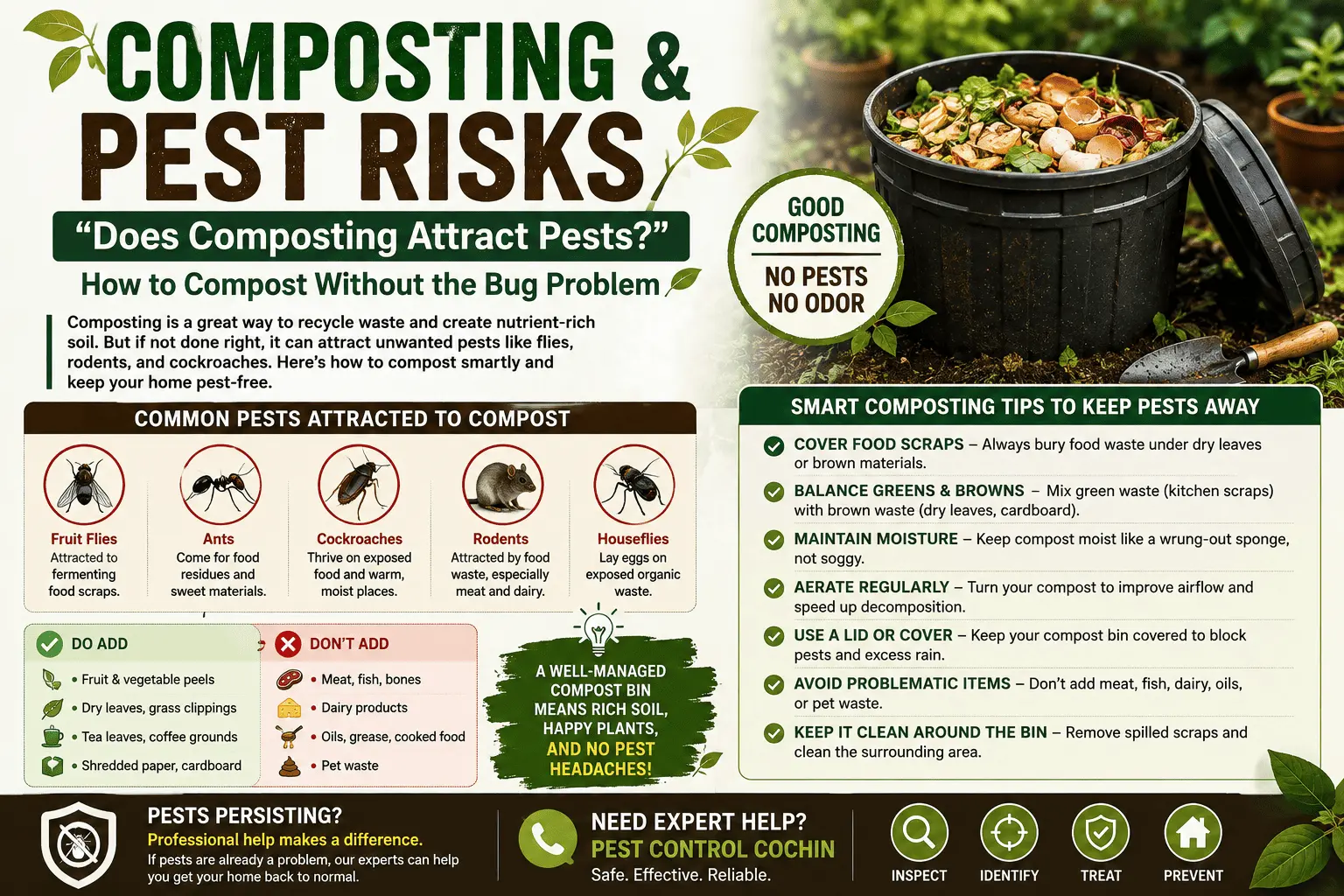
Fruit flies are usually the first sign of trouble, drawn to fermenting fruit and vegetable scraps almost as soon as they're added, especially in warm weather.
Houseflies tend to show up when organic waste sits exposed on the surface rather than being buried or covered, since they're attracted to the smell more than anything else.
Ants often appear in compost that's too dry or where food scraps are easily accessible near the top, rather than mixed into the pile.
Cockroaches are drawn less to compost specifically, and more to accessible food waste combined with general sanitation issues nearby; an uncovered bin next to a cluttered utility area is a bigger draw than the compost alone.
Rodents are typically attracted by meat, oily foods, or cooked leftovers, which offer a richer food source than plant scraps and are harder to break down cleanly.
It's worth mentioning that not everything living in your compost is a pest. Certain insects, worms, and microorganisms are a normal, even necessary, part of decomposition. Seeing small beetles or worms in an active compost pile usually means the process is working, not that something has gone wrong.
Why Compost Attracts Pests in Some Homes
Most compost pest problems trace back to a handful of avoidable habits. Leaving food scraps exposed on top of the pile rather than burying them under drier material is one of the most common. Adding a large batch of kitchen waste all at once, rather than in smaller, manageable amounts, can also overwhelm the system and slow decomposition.
Excessive moisture, often from too much wet kitchen waste and not enough dry material, creates a soggy, low-oxygen environment that smells stronger and breaks down more slowly. Poor ventilation has a similar effect. Other common issues include adding unsuitable materials, placing the compost bin directly against an exterior wall, neglecting the container itself, or letting general waste and clutter build up around the composting area, which gives pests more reasons to linger nearby.
How to Compost Without Creating a Pest Problem
Keep food scraps covered. Bury fresh kitchen waste under a layer of dry, carbon-rich material like dried leaves or shredded cardboard rather than leaving it exposed on the surface.
Maintain the right moisture level. Compost should feel like a wrung-out sponge moist, but not dripping or waterlogged. Too dry slows decomposition; too wet invites flies and odour.
Balance green and brown materials. Green materials fruit and vegetable scraps, fresh plant trimmings, coffee grounds provide nitrogen and moisture. Brown materials dry leaves, shredded cardboard, dry garden waste provide carbon and help absorb excess moisture. A reasonable mix of both keeps the pile active without becoming a wet, smelly mass.
Avoid attracting rodents. Steer clear of adding meat, oily leftovers, or large amounts of cooked food to an open compost system, and use a container with a secure lid rather than an open pile where these materials could otherwise end up.
Keep the compost container secure. A well-fitted lid or cover, along with a base that discourages digging, makes it much harder for rodents and larger pests to get in.
Turn or aerate the compost regularly. Good airflow supports faster, cleaner decomposition and helps prevent the low-oxygen conditions that tend to smell stronger and attract more insects.
Keep the area around the compost clean. Pest prevention doesn't stop at the bin itself; spilled scraps, standing water, or general clutter nearby can undo otherwise good compost management.
What Should You NOT Put in a Home Compost Bin?
Depending on the composting method you're using, certain materials are more likely to cause pest or odour problems in a typical household system: meat, fish, bones, dairy products, oily or greasy food, large quantities of cooked food, and pet waste.
These aren't universal rules for every composting system; some specialised setups, like certain hot composting or bokashi methods, can handle a wider range of materials safely. But for a standard home compost bin or backyard pile, these items are the ones most likely to create odour, attract rodents, or slow decomposition if added in any quantity.
How Kochi's Climate Can Affect Compost and Pest Risks
Kerala's warm temperatures, high humidity, and heavy monsoon rainfall all play a role in how compost behaves. Moisture that would evaporate quickly in a drier climate can linger for days here, and a compost pile that isn't properly covered can end up retaining far more water than intended, especially during the monsoon.
Waterlogging is one of the more common issues households in Kochi and Cochin run into, since heavy rainfall can quickly turn a well-balanced pile into a soggy one if it's left exposed. Good drainage around the compost area, a secure cover during heavy rain, and slightly more brown material than you might use in a drier climate can all help keep moisture at a manageable level. The goal isn't to keep compost dry; it's to keep it appropriately moist without letting it become stagnant.
Where Should You Place a Compost Bin?
For homes and villas: position the bin away from doors, windows, and kitchen entrances, ideally a short distance from exterior walls. Choose a spot with decent drainage so water doesn't pool underneath, and somewhere you can access easily for regular turning and inspection.
For apartments and shared communities: a fully open pile usually isn't practical, so a covered compost bin or tumbler tends to work better in limited space. Keep it away from shared walkways and building entrances, and check with your apartment association about a location that has reasonable airflow and doesn't sit directly beside a neighbour's window or balcony.
What If Your Compost Bin Already Has Pests?
If you've noticed pest activity, a step-by-step approach usually resolves it. First, identify what type of pest is actually present, since the fix differs for fruit flies versus rodents. Check whether food scraps are exposed rather than buried, and assess the moisture level; too wet or too dry can both contribute to the problem.
Inspect the container itself for gaps or damage, remove or adjust any unsuitable materials you've been adding, and improve both the cover and the sanitation of the surrounding area. Monitor the situation over the following days rather than assuming one fix solves everything immediately. If the pest problem continues or spreads beyond the compost area itself, that's a reasonable point to bring in professional help.
One important caution: avoid spraying pesticides directly onto compost you intend to use in a garden. Compost relies on beneficial organisms to function, and introducing pesticides can disrupt that process, potentially affecting the soil and plants the compost is eventually used for. Pest issues around compost are usually better solved through management changes than chemical treatment.
When Should You Call a Professional Pest Control Service?
Most compost-related pest issues can be resolved through better management, but there are situations where professional support makes sense. Consider contacting a pest control Cochin provider if pest activity is spreading from the compost area into the home itself, if cockroaches keep appearing despite improved sanitation, if rodents are gaining access to the property, or if flies remain excessive even after you've corrected moisture and coverage issues.
It's also worth calling in help when the actual source of an infestation isn't clear, when multiple pest issues seem to be happening around the property at once, or when your own prevention efforts haven't made a noticeable difference after a reasonable amount of time. To be clear, normal compost organisms the worms, beetles, and microbes doing the actual decomposing aren't a reason to call anyone. Professional intervention is for infestations that have moved beyond the compost pile, not for compost doing what compost is supposed to do.
Composting vs Pest Control: Can You Have Both?
Sustainable composting and effective pest management aren't in conflict. In fact, they rely on some of the same principles. A combined approach of proper composting, good sanitation, moisture control, physical exclusion, regular monitoring, and professional pest management when genuinely needed tends to work better than treating them as separate concerns.
This is essentially Integrated Pest Management (IPM) applied to a household setting: rather than reaching for chemical treatment first, IPM focuses on removing what attracts pests in the first place accessible food and excess moisture and only escalates to targeted treatment when prevention alone isn't enough. Managed this way, a compost bin and a pest-free home aren't mutually exclusive goals.
Simple Compost Pest Prevention Checklist
- Keep the compost covered
- Cover fresh food scraps with dry material
- Maintain suitable, sponge-like moisture
- Add dry brown material when the pile feels too wet
- Avoid meat, dairy, and oily food waste
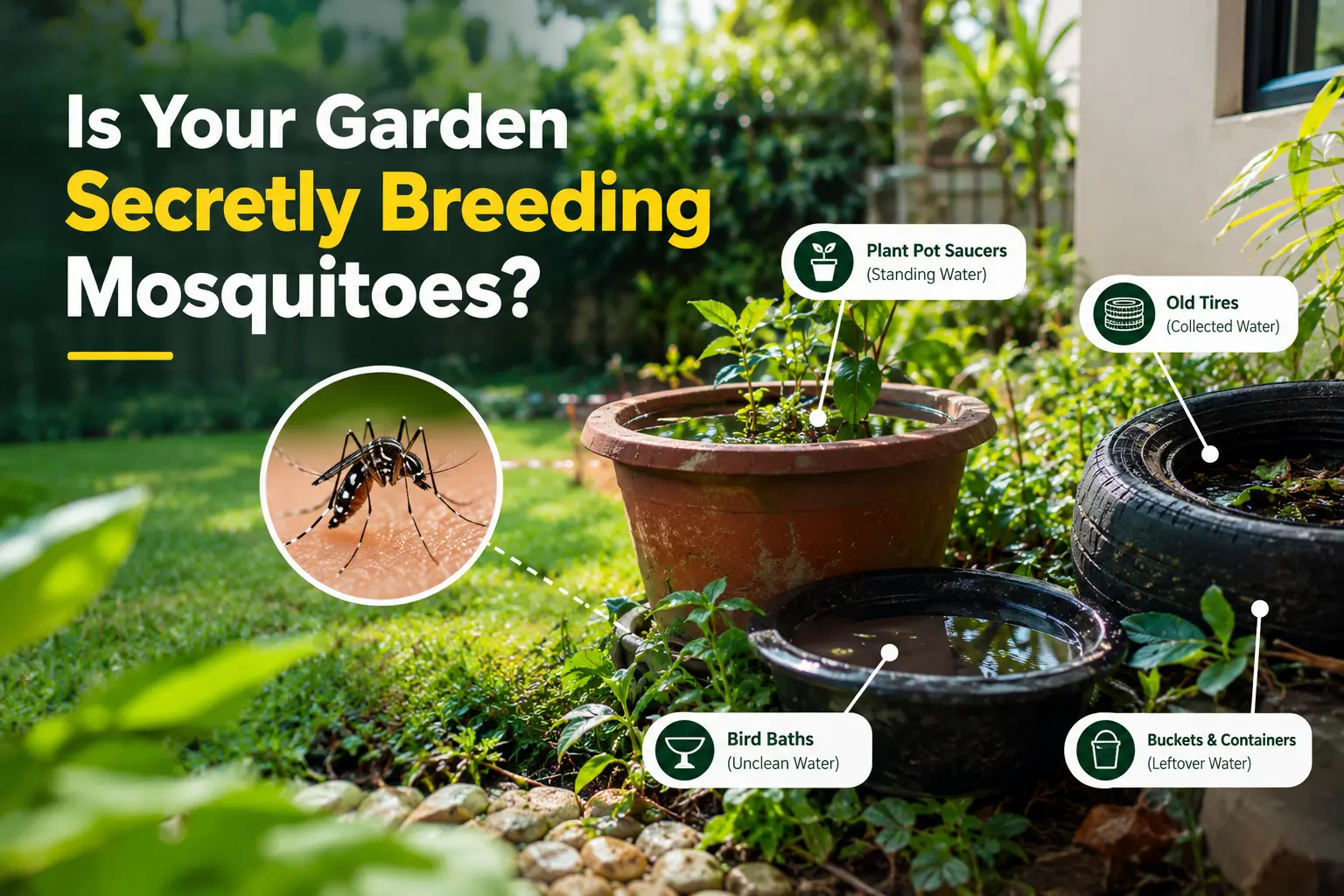
- Prevent standing water around the bin
- Keep the surrounding area clean and clutter-free
- Check regularly for signs of rodent access
- Inspect the bin and its cover periodically
- Address any pest activity early, before it spreads
Frequently Asked Questions
Does composting attract cockroaches? Composting itself doesn't automatically attract cockroaches. They're more drawn to exposed food waste and poor sanitation around the bin than to well-managed compost. Keeping scraps covered and the surrounding area clean significantly reduces the risk.
Does compost attract rats? Compost can attract rats if it contains meat, oily food, or large amounts of cooked leftovers, or if the container isn't secure. Using a covered bin and avoiding these materials makes compost far less appealing to rodents.
How do I stop fruit flies from getting into my compost? Bury fresh fruit and vegetable scraps under dry material instead of leaving them exposed, and avoid adding large amounts of overripe fruit at once. A well-fitted cover also helps keep adult flies from laying eggs in the pile.
Can I compost in an apartment without attracting pests? Yes, using a covered compost bin or tumbler designed for small spaces works well in apartments. Keep it away from shared entrances, cover food scraps promptly, and monitor moisture, since apartment settings often have less airflow than open gardens.
Should I put meat in my compost bin? In most standard home composting systems, it's best to avoid meat, since it decomposes slowly and can attract rodents and create strong odours. Some specialised composting methods can handle it, but for a typical backyard bin, it's better left out.
How do I control pests around my compost bin? Focus on prevention first: cover food scraps, manage moisture, keep the area around the bin clean, and use a secure container. These steps address the actual attractants rather than just responding to pests after they appear.
When should I contact Pest Control Cochin? Reach out when pest activity spreads beyond the compost area into your home, when the source of an infestation isn't clear, or when your own prevention efforts haven't resolved the problem after a reasonable amount of time.
Is composting safe if I already have a pest problem? You can generally continue composting if you manage it properly, but it's worth checking whether the compost is contributing to the existing pest issue. Addressing both the compost management and the underlying infestation together gives the best results.
Indroduction
Composting and a pest-free home aren't at odds with each other. Most problems trace back to a handful of fixable habits: exposed scraps, too much moisture, or an insecure bin rather than composting being inherently risky. Manage those basics well, and your compost can keep doing its job without becoming a bug problem. If pest activity does spread beyond the bin despite your best efforts, a proper inspection from a pest control Cochin provider can help pinpoint what a home routine might be missing.