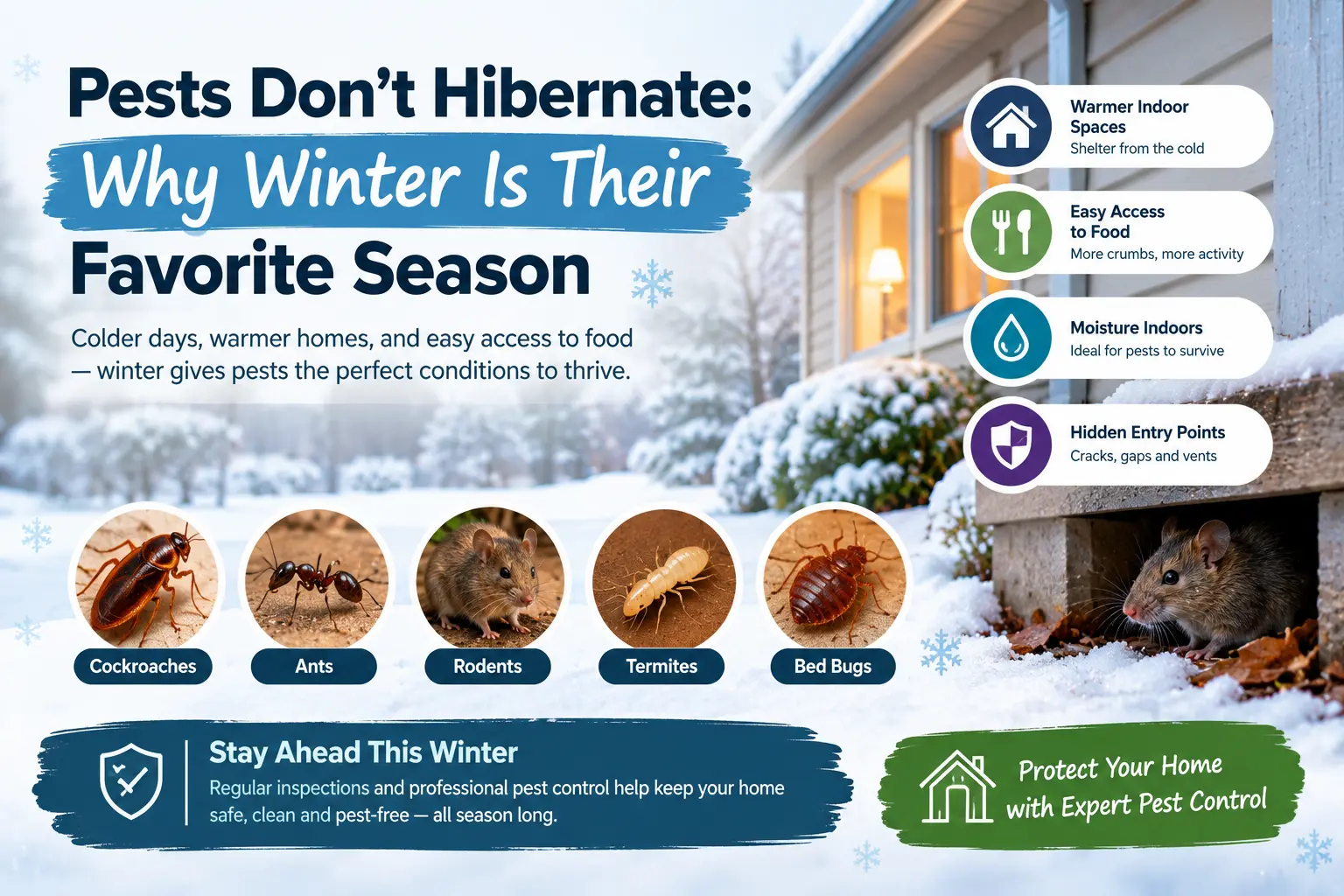
Pests Don’t Hibernate: Why Winter Is Their Favorite Season
Indroduction
It starts with a faint scratching in the ceiling at night, a cockroach darting across the kitchen floor, or a line of ants heading for the sugar tin. Many people assume the colder months give them a break from pests. Often, they don’t.
Winter does not switch pest problems off. Some pests move indoors looking for warmth, food and shelter. Others stay active in heated, damp or sheltered parts of a building, and some carry on their life cycles as long as conditions suit them. Spotting these habits early helps you act before a small issue becomes a full infestation. If the signs keep returning, searching for a pest control service near me is a sensible next step, but a few simple checks and habits can often prevent the trouble in the first place.
Do Pests Hibernate During Winter?
Most household pests do not truly hibernate. In cooler weather, some insects slow down or become dormant, while others stay active inside heated buildings. Rodents keep searching for food and shelter all winter. How a pest responds depends on its species, the temperature, and whether it can find food, water, and shelter.
In practice, you will see a mix of behaviours:
- Shelter seekers: Some pests move indoors when outdoor conditions turn harsh, settling in wall voids, lofts and storerooms.
- Active in heated buildings: Cockroaches and ants can carry on as normal in warm kitchens, bathrooms and plant rooms.
- Reduced activity or dormancy: Some insects slow down or enter a resting stage, then become active again when conditions improve.
- Rodents: Mice and rats do not hibernate, so they keep foraging and nesting wherever they find warmth and food.
Three things drive all of this: temperature, moisture and food. The headline of this article is a catchy generalisation, not a claim that every pest stays active all winter. The point is that a drop in outdoor activity does not mean your building is safe.
Why Is Winter an Attractive Season for Household Pests?
Buildings offer what the outdoors may not: steady warmth, food, moisture, and shelter. A pest that struggles outside can find all four behind a refrigerator, under a sink or inside a stored cardboard box. Small gaps and clutter make it easy to get in and stay unnoticed.
The usual chain of events looks like this: colder or harsher outdoor conditions push some pests to seek shelter; they enter through small openings, and once inside they find food and moisture, which can lead to an indoor infestation. This pattern varies by pest species and local conditions.
Ordinary household situations create the opportunities:
- Warm indoor temperatures: A heated room or a running refrigerator motor is a comfortable spot for a cockroach or a mouse.
- Accessible food and waste: Crumbs, open packets and uncovered bins feed pests for weeks.
- Moisture: Leaking taps, damp bathrooms and condensation give insects the water they need.
- Cracks and gaps: A gap around a pipe or under a door can be enough for a mouse or a line of ants.
- Cluttered storage: Boxes, newspapers, and stacked belongings provide hiding and nesting places.
- Sheltered spaces: The warm, dark area behind appliances and inside cupboards is rarely disturbed.
5 Common Pests That Can Cause Problems During Winter
These five are the pests most often found causing trouble indoors when the weather turns cooler. They behave differently, so the right response is different too.
1. Rodents
Mice and rats are warm-blooded and do not hibernate, so they look for warmth, food, and shelter where they can find it. A roof void, a store room or the back of a kitchen cabinet suits them well. Watch for droppings, gnaw marks, scratching sounds in ceilings or walls, and chewed or damaged packaging.
2. Cockroaches
Cockroaches thrive in warm, humid indoor spaces, so kitchens, drains, bathrooms, and areas around appliances stay attractive all year. They hide in cracks during the day and come out at night. Seeing one in daylight, or finding droppings and egg cases, often means a larger hidden population.
3. Ants
Ants keep foraging indoors wherever food is within reach. Crumbs, sweet spills, open sugar jars, and pet food are common draws. A steady trail of ants usually leads to both a food source and an entry point, and the colony itself is often outside or inside a wall.
4. Termites
Termite activity depends on the species, temperature, moisture, and the building itself. Because they feed on wood, often out of sight, termite prevention should not stop when the weather changes. Mud tubes, hollow-sounding wood and fine wood dust are worth investigating at any time of year.
5. Bed bugs
Bed bugs are not drawn to winter as such. They stay active indoors all year as long as they have people to feed on. They spread through luggage, used furniture and bedding, so check these whenever they come into your home.
Not every one of these pests becomes more active in every region during winter. The common thread is that heated, sheltered buildings give all five a place to carry on.
Warning Signs of a Winter Pest Infestation
The most common signs are droppings, gnaw marks, scratching sounds, insects that keep reappearing, and damaged food packaging. Mud tubes on walls may point to termites, and unexplained bites can suggest bed bugs. Any single sign can have several causes, so identify the pest before choosing a treatment.
Look out for:
- Droppings or unusual odours, especially in cupboards, under sinks and along walls
- Gnaw marks on packaging, wires, wood or soap
- Scratching or movement sounds in ceilings, walls or behind appliances, usually at night
- Insects appearing repeatedly in the same room, particularly cockroaches and ants
- Damaged food containers with holes, torn corners or spilled contents
- Mud tubes or damaged wood, which may suggest termites
- Bites or small dark spots on bedding, which may need further investigation
Proper identification matters. Rodent droppings, for example, call for a very different response from an ant trail, and a wrong guess can waste time and let the problem grow.
How to Keep Your Home Pest-Free During Winter
You keep pests out by closing entry points and removing food, water, and hiding places. Seal gaps, store food in sealed containers, clean up crumbs, fix leaks, manage waste and reduce clutter. These steps cut the opportunities pests rely on, though they may not clear an established infestation alone.
A practical checklist:
- Seal suitable gaps around doors, windows, pipes and utility openings
- Store food, including pet food, in tightly sealed containers
- Clean kitchen surfaces and wipe up crumbs and spills each day
- Dispose of waste regularly and keep bins covered
- Repair leaking taps and pipes
- Reduce unnecessary moisture and improve ventilation
- Keep storage areas organised and avoid piling up cardboard
- Inspect deliveries and stored belongings where appropriate
- Trim plants that touch exterior walls
- Check entry points now and then for signs of activity
If you use any pest treatment product, follow the label instructions exactly, and keep children, pets and food away from treated areas. For anything beyond a minor problem, follow professional guidance.
Is Winter a Good Time to Schedule Pest Control?
Winter can be a useful time for inspections and prevention, but it is not automatically the best time for every treatment. Timing depends on the pest, the property and the treatment needed. An inspection can show whether acting now makes sense.
There are good reasons to look at your property during the cooler months:
- Finding entry points: Gaps and cracks are easier to trace when you are not distracted by peak-season problems.
- Detecting rodent activity: Droppings and gnaw marks show up in lofts, storerooms, and behind appliances.
- Checking damp or sheltered areas: Leaks and condensation attract pests long before they show up in the kitchen.
- Dealing with repeat problems: Recurring cockroach or ant activity is easier to track when you inspect regularly.
- Monitoring commercial premises: Food stores, kitchens, warehouses and offices benefit from steady checks.
- Planning treatment: An inspection lets a technician match the method to the pest and how serious the problem is.
Some treatments work best at particular times or need specific conditions, so ask the technician what suits your situation.
When Should You Call a Professional Pest Control Service?
Call a professional if pests keep returning, you suspect rodents in walls or ceilings, you see signs of termite damage, cockroaches persist, you worry about bed bugs, or activity appears in a food-handling business. Also call when problems continue despite your own prevention efforts.
It is time to get help when:
- The same pest keeps coming back after you have cleaned and sealed
- You hear or see signs of rodents inside walls or ceilings
- You find mud tubes, damaged timber or other suspected termite damage
- Cockroach activity continues in spite of regular cleaning
- You suspect bed bugs in bedding or furniture
- Pests appear in a restaurant, shop, warehouse or other commercial space
A trained professional can identify the pest, find the conditions allowing it to thrive, and recommend suitable treatment and prevention. When you search for a pest control service near me, look for a provider that inspects first, explains its methods and gives safety advice, and does not just spray and leave.
PestTrack offers residential and commercial pest management and can talk through your concerns and the treatment options for your property. We would rather you understand the problem than be sold a treatment you may not need.
Frequently Asked Questions
Do pests hibernate during winter?
Most household pests do not hibernate in the strict sense. Some insects slow down or go dormant in the cold, but many stay active in heated indoor spaces. Rodents keep foraging and nesting through the season. What a pest does depends on its species and on the temperature, moisture and food around it.
Why do rodents enter homes during winter?
Rodents come indoors for warmth, food and a safe place to nest. A mouse can squeeze through a very small gap, and once inside it finds stored food, waste and quiet corners. Sealing openings and removing food sources are the most effective ways to make a home less appealing.
Can cockroaches survive during winter?
Yes, especially indoors. Cockroaches live well in warm, humid areas such as kitchens, bathrooms and drains, so heated buildings let them carry on. Cold outdoor weather may slow some species, but indoor conditions often stay suitable. Keeping food, water and hiding places to a minimum helps limit them.
Is pest control necessary during winter?
Not every property needs treatment, but inspection and prevention remain worthwhile. If you see signs of activity, have recurring problems or run a food business, acting early is usually better than waiting. A professional inspection can confirm whether treatment is needed and what type suits the situation.
How can I prevent pests from entering my home?
Close off gaps around doors, windows and pipes, and store food in sealed containers. Clean up crumbs, empty bins regularly, fix leaks and keep clutter down. Trim plants away from walls and check deliveries and stored boxes. Together, these steps remove the food, water, and shelter pests look for.
Which pests are commonly found indoors during winter?
Rodents, cockroaches and ants are among the most common indoor pests when the weather cools. Bed bugs and termites can also be a problem, as they are active indoors or inside structures when conditions suit them. Which pests you see depends on your region, your building, and its condition.
When should I contact a professional pest control service?
Get in touch if pests keep coming back, you hear scratching inside walls or ceilings, you notice suspected termite damage, or cockroaches persist despite cleaning. You should also call if you suspect bed bugs or find pests in a food-handling or commercial space. Early help usually keeps the problem smaller.
How do I find a reliable pest control service near me?
Look for a provider that inspects before recommending treatment and explains the methods and products it will use. Ask about safety around children and pets, what follow-up is included, and what the written scope covers. Check that it is properly licensed where required, and compare more than one quote.
Protect Your Property from Winter Pest Problems
Winter does not guarantee a break from pests. Heated, sheltered buildings with food, moisture, and small gaps can keep them active, and a small sign today can become a larger problem if it is ignored. Early detection, good sanitation, moisture control, and sealed entry points are your best protection, and they cost far less than dealing with an established infestation.
Do not wait for warmer weather to take warning signs seriously. If you are unsure what you are seeing, or the problem keeps returning, a pest control service near me search is a good place to begin, and the PestTrack team is also happy to help. Contact PestTrack to discuss your pest concerns and the treatment options for your home or business.