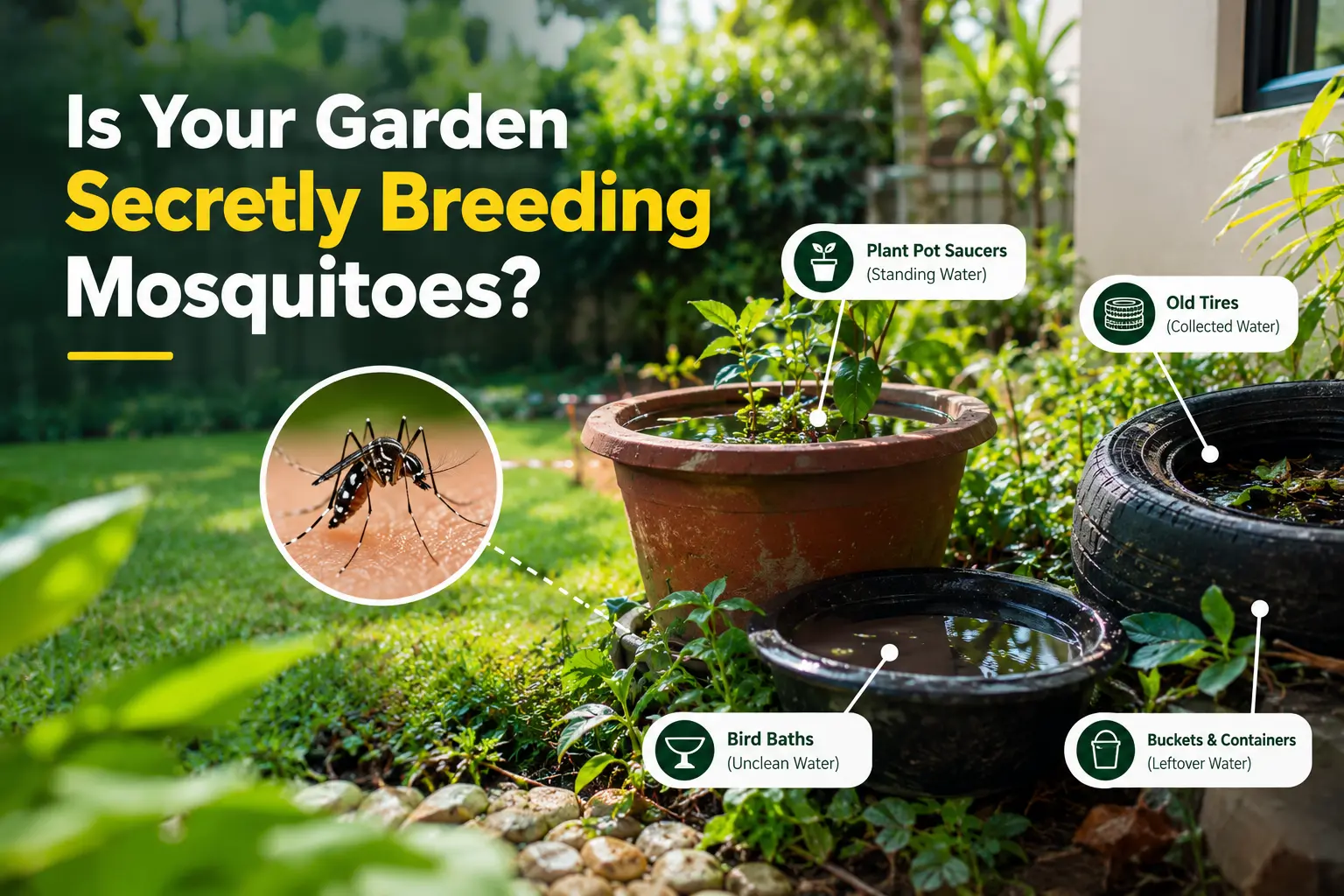
Is Your Garden Secretly Breeding Mosquitoes?
Indroduction
You sweep the paths, trim the hedges, and keep the lawn tidy, yet the mosquitoes still find you the moment you step outside at dusk. It is a frustrating problem, and the cause is often hiding in plain sight. A plant saucer that never fully dries, a forgotten bucket, a clogged drain or a sheet of plastic left in a corner can hold enough water for mosquitoes to breed within days. These small, overlooked spots are why a garden can look spotless and still produce a steady stream of mosquitoes.
Regular inspections and a few simple habits go a long way towards stopping the problem at its source. When the infestation keeps returning, professional mosquito control in Kochi & Ernakulam can help you find and treat the places you cannot easily reach. This guide shows you where to look and what to do.
Why Do Mosquitoes Breed in Home Gardens?
Mosquitoes cannot complete their life cycle without water. A female lays her eggs on or just above still water, the eggs hatch into larvae, and those larvae grow into flying adults in about a week in warm weather. Kerala's humidity and heavy monsoon rains speed this cycle up, which is why a small problem can become a noticeable infestation so quickly.
A few common garden conditions give mosquitoes exactly what they need:
- Standing water: Even a few spoonfuls left in a container for several days is enough for egg-laying.
- Shaded, damp corners: Cool, sheltered spots keep water from evaporating and give adult mosquitoes somewhere to rest during the day.
- Poor drainage: Low patches, blocked channels, and waterlogged soil hold rainwater long after the rain has stopped.
- Unused containers: Anything that can catch water becomes a breeding site once it has been forgotten.
- Overgrown vegetation: Dense shrubs, tall grass, and thick ground cover offer shade and shelter for adults between feeds.
Not every damp area is a breeding site, though. Different species have different preferences. Aedes mosquitoes favour small containers of clean water, Culex mosquitoes prefer dirty, nutrient-rich water such as blocked drains, and Anopheles mosquitoes usually look for larger, clearer pools. Moist soil or a flowing stream rarely breeds mosquitoes, so the goal is to find water that sits still for days, not to remove every drop.
7 Hidden Mosquito Breeding Spots You May Be Missing
Most people check the obvious places and miss the ordinary objects around the garden. These seven are the ones we see most often.
1. Plant pot saucers and flower pots
Saucers hold the water that drains out of a pot, and it can sit there for days. Empty saucers every two or three days, or scrub them out weekly to remove eggs stuck to the sides. For indoor-outdoor plants, avoid leaving a pot standing in water. This is also the simplest way to prevent mosquito larvae in plant pots.
2. Birdbaths and garden water features
Still water in a birdbath is an easy target. Change the water and scrub the basin at least once a week. For ponds and fountains, keep the water moving with a small pump, or add larvae-eating fish such as guppies or gambusia.
3. Old tyres and discarded containers
A tyre's curved shape traps rainwater and is nearly impossible to drain once it fills. Remove tyres from the property, or drill drainage holes if you reuse them as planters. Cut up or recycle broken pots, cans and bottles instead of leaving them in a corner.
4. Buckets, watering cans and unused garden tools
Watering cans and buckets left outside collect rain overnight. Store them upside down or under cover, and tip out any water at the end of each day. Wheelbarrows and trays need the same treatment.
5. Clogged gutters and outdoor drains
Leaves and silt stop water from flowing, leaving a shallow, nutrient-rich pool that suits Culex mosquitoes. Clear gutters before and during the monsoon, and make sure drains slope so water leaves the garden. Cover open drains with fine mesh where possible.
6. Tarpaulins and plastic sheets that collect rainwater
A sagging sheet over firewood, a scooter, or building material creates a pocket that fills with every shower. Stretch covers tight so water runs off, and check them after heavy rain. Fold and store any sheet you are not using.
7. Coconut shells, discarded packaging and other garden waste
Half coconut shells are a classic problem in Kerala gardens, because each one holds water like a small cup. Chop shells into pieces or compost them, and break up or bin packaging, thermocol boxes and bottle caps. A weekly tidy of the garden corners removes most of this risk.
How Can You Tell If Your Garden Has a Mosquito Breeding Problem?
The clearest sign is mosquito activity that does not ease. If you are bitten within minutes of stepping outside, or mosquitoes rise from the plants when you brush past, they are probably breeding close by. Daytime biting is a particular clue, since Aedes mosquitoes are active in daylight and usually breed within a short distance of where they feed.
Go looking for the cause with a simple check:
- Look for standing water. Walk the whole garden after rain and note anything holding water for more than three or four days.
- Check for larvae. Mosquito larvae are small, dark, and thread-like, and they wriggle up and down in the water when disturbed. Look closely in saucers, buckets, and drains.
- Look for pupae. These are comma-shaped and tumble through the water. Their presence means adults are about to emerge.
- Inspect shaded areas. Resting adults gather under leaves, behind pots and in dark corners.
Remember that mosquitoes can breed in a very small amount of water, so a container the size of a bottle cap deserves attention. If you find larvae, tip the water onto dry ground away from the house, scrub the container, and keep it dry. If you keep finding them across the property, or in places you cannot reach, it is time to think about a wider treatment plan.
How to Prevent Mosquitoes from Breeding in Your Garden
Good mosquito breeding prevention is mostly about routine. Removing stagnant water once is not enough, because rain refills containers all the time. A short weekly check keeps the cycle broken, since eggs usually need about a week to become flying adults.
Here is a simple weekly checklist you can copy:
- Empty and scrub plant saucers, buckets, watering cans and trays
- Tip out or cover any tyres, tarpaulins and containers
- Clear leaves from gutters and outdoor drains
- Change the water in birdbaths and pet bowls
- Level or fill low spots where rainwater collects
- Trim dense shrubs and cut long grass to reduce resting places
- Clean or cover water storage tanks, and fit fine mesh over openings
A few extra steps help the most around the house. Keep doors and windows screened. Use outdoor fans on patios, since mosquitoes are weak fliers. Plant mosquito-repelling plants such as citronella grass, lemongrass, or basil near seating areas, although these work best as a support and not a replacement for removing water.
These habits reduce mosquitoes in outdoor garden spaces and protect your family from mosquito-borne illnesses such as dengue, which is a recurring concern in Kerala. They will not reach every breeding site on a large or heavily planted property, which is where professional help comes in.
When Should You Hire Professional Mosquito Control in Kochi & Ernakulam?
DIY steps solve many problems, but they have limits. Consider calling a specialist if any of these apply:
- Mosquitoes return within days even though you clean the garden every week
- Your property is large, heavily planted or backs onto a canal, marsh, vacant plot or drain
- Someone in the household has had dengue or another mosquito-borne illness
- You manage a rented home, apartment complex, school, resort or commercial property
- You are planning an outdoor event, or you simply cannot enjoy your garden in the evening
Here is how the main approaches compare:
Method Works well for Limitation
Home habits (emptying, covering, trimming) Removing small breeding sites Cannot reach hidden or shared areas
Repellents, coils and screens Short-term personal protection Do not stop breeding
Professional treatment Large or recurring infestations Needs a trained team and follow-up visits
A professional mosquito control service starts with an inspection to find the breeding sites you may have missed, including roof tanks, septic vents, drains,
and dense vegetation. The team then treats larvae in water that cannot be removed and applies a targeted outdoor treatment on the resting areas where adults gather. Methods are matched to your property, so families with children, pets, or edible plants get safer choices and clear guidance on re-entry times.
Trained technicians also advise on what to change, so the problem does not return. Good providers schedule follow-up visits, which matter most during and after the monsoon. For homes across the district, mosquito control solutions in Kochi and Ernakulam work best when treatment is paired with regular inspection and the habits above. If you are comparing providers, ask about the products used, the safety precautions, and whether a follow-up is included.
Frequently Asked Questions
How long does it take for mosquitoes to breed in standing water?
In warm, humid weather, eggs can hatch within a couple of days, and larvae can become adults in about 7 to 10 days. That is why emptying containers every week is so effective.
Can mosquitoes breed in a very small amount of water?
Yes. Aedes mosquitoes can lay eggs in a bottle cap, a leaf axil, or a damp saucer, so small items are worth checking.
Do mosquitoes breed in clean water or dirty water?
Both. Aedes mosquitoes, which spread dengue, often use clean water in containers, while Culex mosquitoes prefer dirty drain water. Removing all stagnant water covers both.
Do mosquito-repelling plants get rid of mosquitoes?
They may help a little near seating areas, but they do not stop breeding. Treat them as a bonus on top of removing water.
How often should professionals treat a garden?
It depends on the size of the property, the season, and how severe the problem is. Many properties need extra attention during and after the monsoon. An inspection will tell you what schedule makes sense.
Conclusion
A tidy garden is not always a mosquito-free one. The real culprits are usually small and easy to overlook: saucers, buckets, tyres, gutters, tarpaulins and coconut shells that quietly hold water. Check these spots weekly, empty or cover anything that collects rain, and keep drains and vegetation under control, and you will remove most breeding sites before they become a problem.
When mosquitoes keep coming back, or your property is too large or complex to manage alone, it makes sense to bring in experts. Professional mosquito control in Kochi & Ernakulam gives you a thorough inspection, targeted treatment and a plan to keep the problem from returning. To get your garden checked, contact the PestTrack team and book an inspection.