EPA Pesticide Regulations — New EPA Rules on Pesticides: What Homeowners Should Know in 2026
Indoduction
More homeowners in Kochi are asking questions before a technician even sets foot inside the house. What chemical is being used? Is it safe around a toddler who still puts things in their mouth? Will the family dog need to stay off the balcony for a day? These aren't unusual questions anymore they're becoming the norm, as people pay closer attention to what pesticide treatments actually involve.
A lot of that awareness traces back, indirectly, to how pesticides are regulated in other parts of the world. In the United States, the Environmental Protection Agency (EPA) is the federal body responsible for evaluating and approving pesticide products before they can be sold or used. When the EPA updates its rules, it often shapes global conversations around pesticide safety, even in places where the EPA has no legal authority including Kochi and the rest of Kerala.
That distinction matters. EPA regulations are part of the U.S. regulatory system, not Indian law, and they don't govern what a pest control company in Kochi can or must do. But understanding how a rigorous regulatory body like the EPA evaluates pesticide safety can still help local homeowners ask better questions, read labels more carefully, and choose a pest control service in Kochi that takes safety seriously regardless of which country's rules it operates under.
What Is the EPA and Why Does It Regulate Pesticides?
The EPA is the U.S. federal agency responsible for protecting human health and the environment. One of its core responsibilities is regulating pesticides under a law called the Federal Insecticide, Fungicide, and Rodenticide Act (FIFRA).
Under FIFRA, no pesticide product can legally be sold or distributed in the United States until the EPA reviews it and grants registration. That review looks at how the product works, what it's meant to control, how it should be applied, and what risks it might pose to people, pets, and the environment if used incorrectly.
Once a product is registered, the EPA doesn't simply move on. Products are periodically re-evaluated as new scientific data becomes available, which is why pesticide rules and label requirements can change over time even for products that have been on the market for years. This ongoing review process is a big part of why the label on a pesticide product carries real regulatory weight it isn't just packaging copy.
What Are the New EPA Pesticide Rules in 2026?
This is an area where accuracy matters more than headlines. The EPA doesn't issue one single sweeping "pesticide rule" each year. Instead, it works through an ongoing registration review cycle, evaluating individual active ingredients, updating label requirements, and occasionally restricting or modifying approved uses for specific products.
Because of this, any claim about "the new 2026 EPA pesticide rule" should be treated carefully. Some changes may be final rules that are already in effect. Others may be proposed rules still open for public comment, which means they aren't yet binding. Still others may be narrower actions such as updated safety data requirements for a single active ingredient rather than a broad rule affecting all pesticide products.
If a specific product or active ingredient used by your pest control provider has been affected by a recent EPA action, that information is usually documented on the EPA's own pesticide registration pages or in the Federal Register, and a responsible provider should be able to speak to it. What matters for homeowners generally is less about tracking every individual EPA action and more about understanding the principle behind them: pesticide products are subject to continuous safety review, not a one-time approval that never gets revisited.
Does the EPA Regulate Every Pesticide Used in Homes?
Not automatically, and not in the same way everywhere. In the U.S., EPA regulation applies specifically to products sold and used within U.S. jurisdiction. Outside the U.S., pesticide products fall under each country's own regulatory framework.
Even within a single jurisdiction, regulation depends on the specific product and its approved uses. A pesticide might be approved for outdoor lawn use but restricted indoors, or approved for professional application but not for general retail sale. Application method, concentration, and location all factor into what's permitted.
This is exactly why homeowners shouldn't assume a pesticide is automatically safe simply because it's available for purchase. Availability reflects that a product met certain regulatory requirements for its approved use it doesn't mean every possible use of that product is safe or permitted.
What Do EPA Pesticide Regulations Mean for Homeowners?
For homeowners in the U.S., EPA regulation translates into a handful of practical habits: reading the label before use, following the stated application instructions exactly, observing any re-entry period before returning to a treated area, and keeping children and pets away when the label calls for it.
For homeowners in Kochi, the direct legal requirements are different, but the underlying safety logic still applies. Store pesticide products securely, avoid mixing products without guidance, don't use a product for a purpose it wasn't intended for, and lean on trained professionals when an infestation is beyond simple, well-labeled home treatments. Asking your provider what product is being applied, and why, is a reasonable and increasingly common question not an inconvenience.
Why Pesticide Labels Matter
A pesticide label isn't just a list of ingredients. It's a legally significant safety document that specifies the approved use, the correct application method, dosage or concentration instructions, required precautions, storage guidance, and disposal requirements.
The general principle that holds regardless of which country's regulatory system a product falls under is that a pesticide should be used according to its label directions. Using a product differently than its label specifies, even with good intentions, can reduce its effectiveness or create unnecessary risk. This is one reason professional applicators are trained specifically on label compliance, not just on how to spray a product.
EPA Regulations vs Pesticide Rules in India
It's worth stating this plainly: EPA regulations are U.S. regulations. They don't apply to pest control companies operating in Kochi, and no responsible provider should present them as though they do.
In India, pesticide products are regulated under a separate legal framework, including the Insecticides Act, 1968, with oversight involving bodies such as the Central Insecticides Board & Registration Committee (CIB&RC). This framework governs product registration, approved uses, and manufacturing standards within India. If you want the precise current status of a specific Indian pesticide regulation, checking official Government of India or Kerala state sources directly is the most reliable route, since regulatory details can be updated.
The practical takeaway for a homeowner in Kochi is this: international regulatory developments, including EPA actions, can offer useful context on pesticide safety science and industry direction. But compliance itself is governed by Indian law, and a pest control service in Kochi is accountable to Indian regulatory requirements, not U.S. ones.
How Should Homeowners Choose a Pest Control Service in Kochi?
Regulatory awareness is only useful if it translates into better decisions when hiring someone. A few questions are worth asking any pest control service in Kochi before treatment begins:
- What pest problem has actually been identified, and how was it confirmed?
- Which treatment method is being recommended, and why?
- What product or active ingredient will be applied?
- Is the product approved for the specific location and use indoors, outdoors, kitchen areas, and so on?
- What precautions should the household follow during and after treatment?
- How long should people or pets stay away from treated areas?
- Will follow-up treatments be needed, and how many?
- What can be done afterward to reduce the chance of the problem returning?
A provider that answers these questions clearly, without hesitation, is generally one worth trusting with treatment decisions.
Professional Pest Control vs DIY Pesticide Use
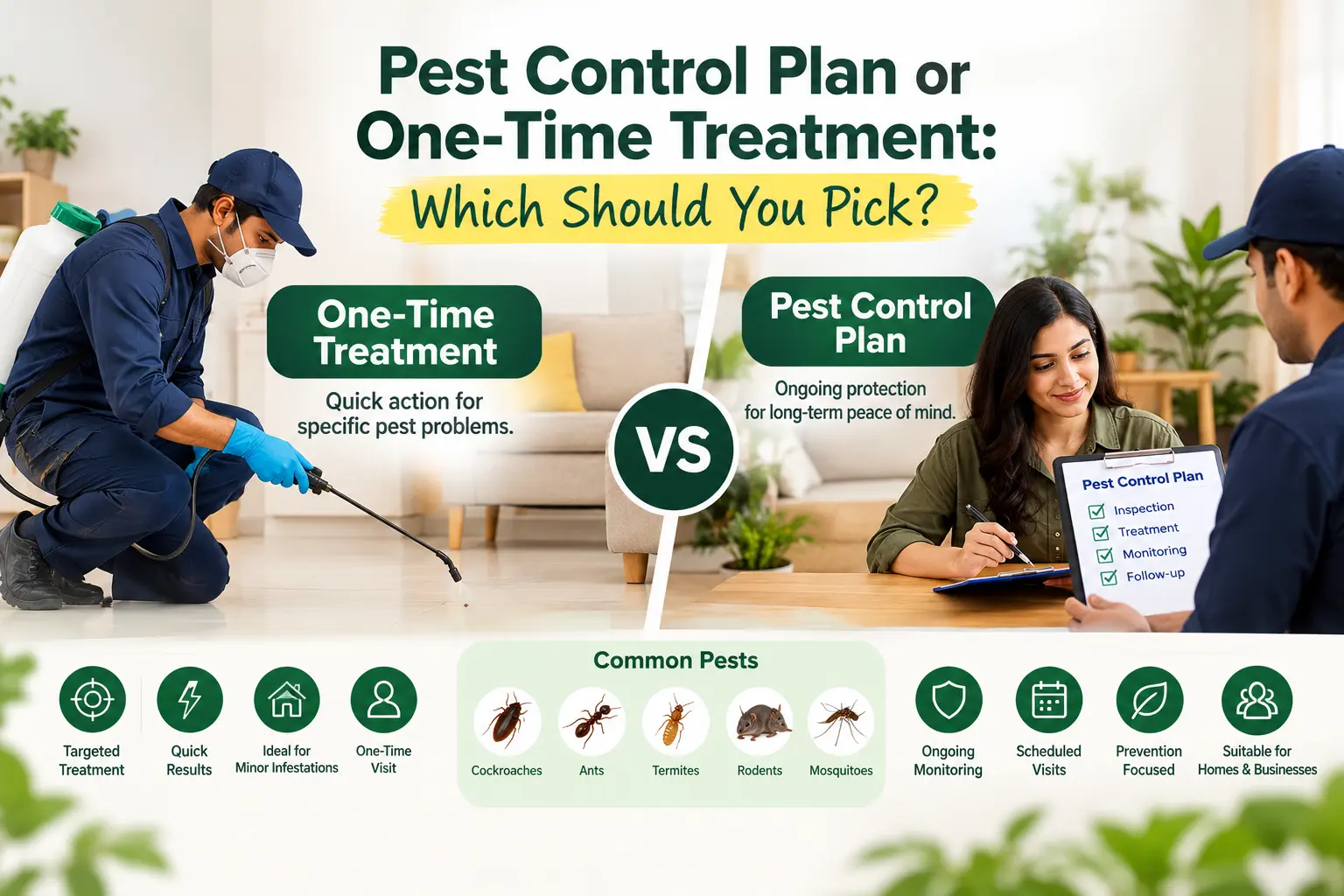
Not every pest problem needs a professional. DIY treatment can be reasonable for minor issues, basic prevention, or situations where a product's label clearly permits general household use ant trails along a windowsill, for instance, or occasional mosquito repellent use in a garden.
Professional pest control tends to make more sense for persistent infestations, termites, large or recurring cockroach populations, bed bugs, pest activity in hard-to-reach areas, and situations where an incorrect DIY application could do more harm than good. The line isn't always obvious, and when in doubt, a proper inspection from a trained technician is usually more useful than guesswork with an over-the-counter spray.
How Responsible Pest Control Can Reduce Unnecessary Pesticide Use
Good pest control isn't just about applying more chemicals; it's about applying the right response to the right problem, following a structured approach known as Integrated Pest Management (IPM).
IPM typically involves inspection to understand the actual pest activity, correct identification of the species involved, prevention through sealing entry points and removing attractants, sanitation improvements, exclusion measures, ongoing monitoring, and targeted treatment only where it's genuinely needed, followed by a check to confirm the treatment worked. This approach tends to produce more durable results than blanket spraying, and it generally means less pesticide is used overall, not more.
What Homeowners Should Do Before and After Pest Treatment
Before treatment: ask what's planned and why, remove or cover exposed food, follow any preparation instructions the provider gives, keep children and pets away from the work area as instructed, and flag any sensitive areas a baby's room, a pet's feeding corner to the technician directly.
After treatment: follow the re-entry guidance given for that specific product and treatment, avoid disturbing treated surfaces unnecessarily, follow any cleaning instructions provided, keep an eye on pest activity over the following days, and contact the provider if the problem doesn't improve. Re-entry times genuinely vary by product and method, so it's worth asking rather than assuming a standard waiting period applies.
Frequently Asked Questions
What are EPA pesticide regulations? EPA pesticide regulations are U.S. federal rules, established mainly under FIFRA, that require pesticide products to be reviewed and registered before sale or use. They govern approved uses, labeling, and safety requirements within the United States specifically.
What new EPA pesticide rules should homeowners know about in 2026? The EPA continuously reviews registered pesticides rather than issuing one single annual rule. Changes can be final, proposed, or ingredient-specific. Homeowners and providers concerned with a particular product should check the EPA's official registration pages for that product's current status.
Does the EPA regulate pesticides used inside homes? Yes, within the U.S., indoor pesticide products fall under EPA registration requirements, including specific approved indoor uses on the label. This regulation applies to products sold and used in the United States, not products used in other countries.
Do EPA pesticide rules apply to pest control services in Kochi? No. EPA regulations are part of the U.S. regulatory framework and don't automatically apply to pest control companies in Kochi. Providers here follow Indian regulatory requirements, while EPA developments can still offer useful safety context.
How can homeowners use pesticides safely? Always read and follow the product label, use it only for its intended purpose, store it securely away from children and pets, and avoid mixing products without clear guidance. For difficult infestations, a trained professional is generally the safer route.
What should I ask a pest control company before treatment? Ask what pest has been identified, which product and method will be used, what precautions the household should follow, how long re-entry should wait, and what preventive steps can reduce future problems. A transparent provider will answer these directly.
Is professional pest control safer than DIY pesticide use? It depends on the situation. For minor issues, well-labeled DIY products can be perfectly appropriate. For persistent, large-scale, or hard-to-locate infestations, professional treatment usually reduces the risk of incorrect or excessive pesticide use.
How does Integrated Pest Management reduce pesticide use? IPM focuses on inspection, prevention, and targeted treatment rather than routine spraying. By addressing the actual cause of an infestation — entry points, sanitation, moisture it often resolves problems with less pesticide than a purely chemical approach would require.
Conclusion
Pesticide regulation, whether in the U.S. or in India, exists for the same basic reason: to make sure powerful products are used correctly, not indiscriminately. Homeowners in Kochi don't need to track every EPA development to benefit from that principle. What helps more is a habit of asking questions, reading labels, and choosing a pest control service in Kochi that treats safety as a standard practice rather than an afterthought.