How Cockroaches Spread Germs Inside Your Home
Indroduction
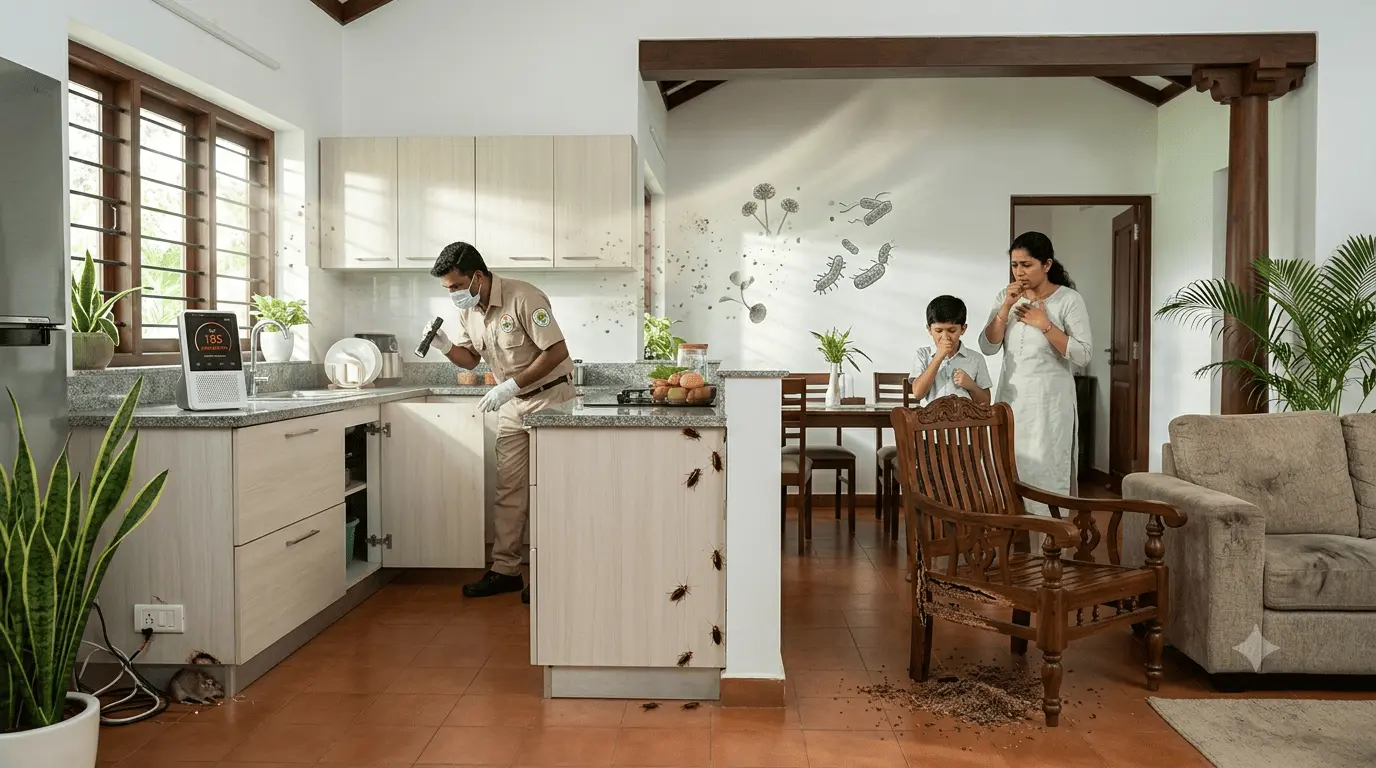
If you've ever spotted a cockroach scurrying across your kitchen counter late at night, you already know the gross-out factor. But here's what most homeowners don't realize: that one roach you saw is only the tip of the problem. Cockroaches don't just startle you; they leave behind a trail of bacteria, allergens, and contamination everywhere they crawl.
These insects live in some of the dirtiest places imaginable sewer lines, garbage bins, drains, and decaying matter before making their way straight into your kitchen cabinets, dining table, and even your child's toy box. Every surface they touch picks up whatever they carried from their last stop.
At PestTrack, we've inspected hundreds of homes across Kochi and Kerala, and the pattern is always the same: a small, ignored infestation quietly turns into a serious hygiene and health issue. This guide breaks down exactly how cockroaches spread germs inside your home, the diseases linked to infestations, and what actually works to stop them for good.
Why Cockroaches Are a Serious Health Hazard
Cockroaches aren't picky about where they live. They thrive in warm, damp, and dark spaces; drainpipes, sewage lines, garbage chutes, and rotting food waste are their favorite hangouts. That's exactly what makes them such effective carriers of disease.
Unlike mosquitoes or flies that pick up germs from a single source, cockroaches move between filth and food constantly. One moment they're inside a drain, the next they're walking across your dining table or kitchen counter. Their bodies, legs, and antennae act like tiny sponges, picking up bacteria, fungi, and parasite eggs along the way.
Here's why this matters for your household:
- Cockroaches don't need direct contact with food to contaminate it; they can spread germs simply by walking over a surface.
- They multiply fast, so a small population today can become a full-blown infestation within weeks.
- Their waste and shed skin release allergens into the air, affecting indoor air quality even without visible cockroaches around.
This combination of dirty habitats, rapid breeding, and constant movement is what turns a minor pest issue into a genuine health hazard for families, restaurants, and offices alike.
How Cockroaches Spread Germs Throughout Your Home
This is where most people underestimate the problem. Cockroaches don't stay confined to one room; they travel through your entire home, contaminating multiple surfaces along the way.
Kitchen Surfaces and Food Contamination
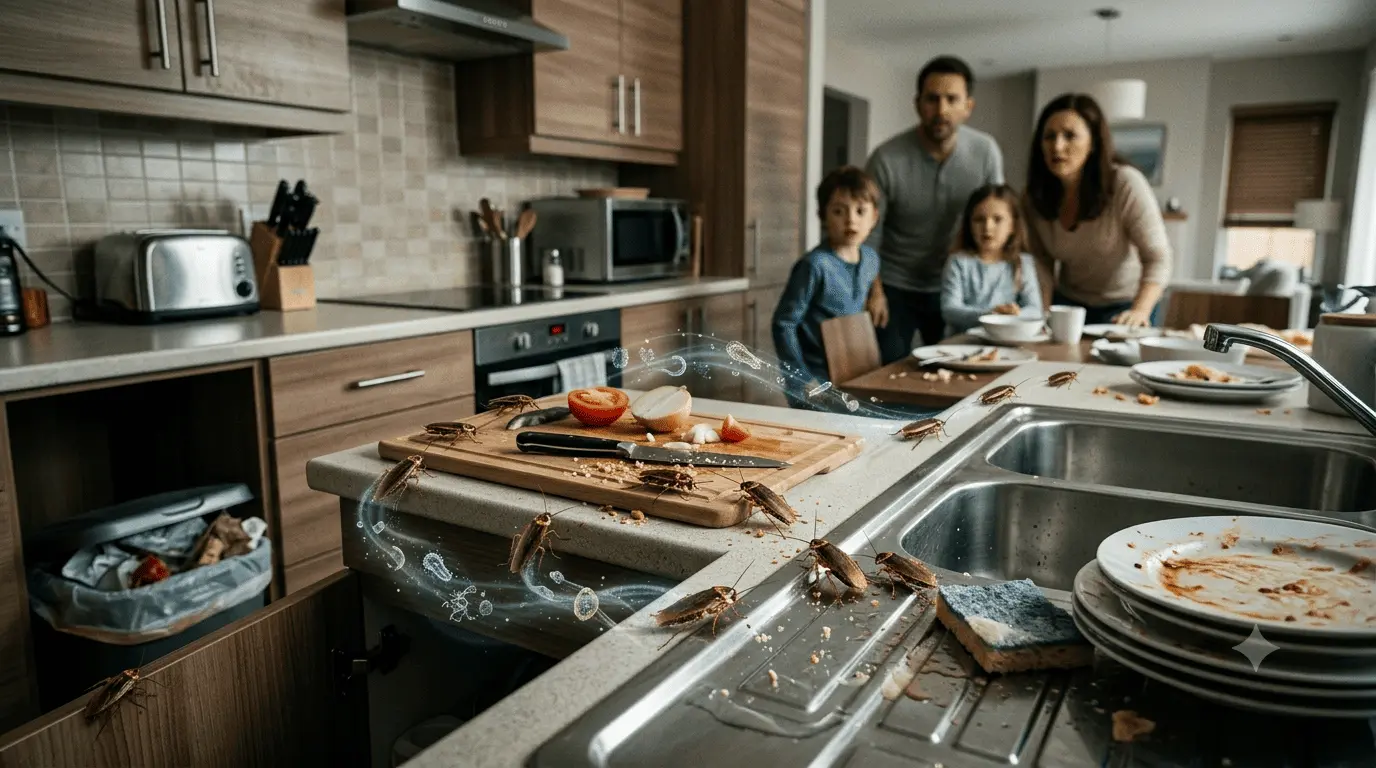
Kitchens are a cockroach's paradise: warm appliances, food crumbs, and moisture near sinks create the perfect environment. When roaches walk across countertops, cutting boards, or stored food, they transfer bacteria picked up from garbage bins and drains directly onto surfaces where you prepare meals.
Kitchen Utensils and Dining Tables
Spoons, plates, and containers left out overnight are common targets. Roaches crawl over utensils and dining tables searching for food residue, leaving behind saliva and droppings that are often invisible to the naked eye.
Bathrooms and Water Containers
Bathrooms provide the moisture cockroaches need to survive. They frequently visit stored water containers, buckets, and taps, contaminating water sources your family uses daily.
Children's Toys and Bedding
This one surprises most parents. Cockroaches don't avoid bedrooms they're drawn to leftover food crumbs near beds or toy storage. Toys and bedding can pick up allergens and bacteria, which is particularly risky for young children who put objects in their mouths.
Storage Cabinets and Garbage Bins
Cabinets holding grains, spices, or packaged food are prime cockroach territory, especially if there are cracks or gaps nearby. Garbage bins, meanwhile, act as a constant re-infection source since roaches feed there before moving to cleaner parts of your home.
How Germs Actually Transfer
Cockroaches spread contamination through several methods:
- Legs and body – picking up bacteria from filth and depositing it wherever they walk
- Wings – carrying dust, allergens, and microorganisms as they move
- Saliva – left behind on food and surfaces during feeding
- Droppings – a major source of bacterial contamination and allergens
- Egg cases (oothecae) – often tucked into cracks, continuing the infestation cycle even after adults are removed
Understanding these transfer points is the first step toward effective kitchen pest control and long-term prevention.
Diseases Linked to Cockroach Infestations
Cockroaches are known carriers of several disease-causing organisms. According to the CDC, cockroaches can carry bacteria and pathogens on their bodies that may contribute to illness when they contaminate food or surfaces.
- Food poisoning – caused by bacteria transferred from roach droppings or saliva onto food
- Salmonella – linked to stomach cramps, fever, and diarrhea
- E. coli – can cause severe digestive infections, particularly dangerous for children and the elderly
- Dysentery – triggers painful intestinal inflammation and diarrhea
- Typhoid – a serious bacterial infection spread through contaminated food and water
- Cholera – though less common today, roaches can still contribute to its spread in unsanitary conditions
- Asthma and allergies – cockroach droppings and shed skin are well-documented asthma triggers, especially in children, as noted by health authorities including the WHO
- Skin infections – can occur from indirect contact with contaminated surfaces
If you're wondering, "can cockroaches make you sick?" the honest answer from years of pest inspections is yes, especially in kitchens and food-prep areas where contamination goes unnoticed for weeks.
Signs You Have a Cockroach Infestation
Cockroaches are nocturnal and skilled at hiding, so most homeowners don't realize how serious an infestation is until it's well established. Watch for:
- Droppings – small, dark specks resembling coffee grounds or black pepper near food storage areas
- Bad odor – a persistent, musty smell in kitchens or cabinets
- Egg capsules – oval-shaped casings tucked into cracks or corners
- Live cockroaches – especially spotted at night when lights are switched on suddenly
- Dead cockroaches – a sign of an active, breeding population nearby
- Smear marks – dark streaks along walls or floors near water sources
- Shed skins – left behind as roaches grow
- Night-time sightings – cockroaches are most active after dark, so seeing one in daylight often means overcrowding
If you notice even two or three of these signs, it's time for a proper pest inspection rather than waiting for the problem to grow.
Common Places Cockroaches Hide
Knowing where cockroaches breed makes it easier to target treatment effectively. The most common hiding spots we find during inspections include:
- Kitchen cabinets and pantry shelves
- Behind and underneath refrigerators
- Sink areas and plumbing gaps
- Drains and sewage connections
- False ceilings
- Wall cracks and crevices
- Bathrooms, particularly around pipes
- Storage rooms and unused corners
- Inside or behind electrical appliances
- Garbage bins and disposal areas
Cracks and crevices are especially important; they offer roaches shelter, warmth, and easy access to food and water, making them ideal breeding places.
How to Prevent Cockroaches Naturally
Prevention goes a long way in reducing infestations, even though severe cases still need professional treatment. Here's what actually helps:
- Store food properly – use airtight containers instead of open packaging
- Dispose of waste regularly – don't let garbage bins sit uncovered overnight
- Fix water leaks – cockroaches need moisture to survive, so dry environments discourage them
- Deep clean regularly – pay attention to areas behind appliances and under sinks
- Seal entry points – close cracks, gaps around pipes, and openings near doors and windows
- Reduce clutter – stacks of newspapers, boxes, and unused items give roaches places to hide
- Inspect regularly – catching small infestations early prevents them from spreading through the home
These habits work well for keeping cockroaches away from the kitchen and slowing down new infestations. That said, if you're already seeing roaches regularly, natural methods alone usually aren't enough; that's when professional treatment becomes necessary.
Why Professional Cockroach Control Is More Effective
DIY sprays might kill the cockroaches you can see, but they rarely touch the hidden colony breeding behind your walls or under appliances. A proper cockroach control service in Kochi follows a structured process that actually addresses the root of the infestation:
- Inspection – identifying entry points, breeding sites, and infestation severity
- Species identification – German cockroaches, for instance, require different treatment than American cockroaches
- Safe chemicals – government-approved, low-toxicity formulations designed for residential and commercial use
- Gel bait treatment – targets hidden colonies by letting roaches carry bait back to their nests
- Residual spraying – creates a protective barrier along entry points and hiding spots
- Crack and crevice treatment – reaches spaces regular cleaning simply can't access
- Monitoring – tracks activity after treatment to confirm effectiveness
- Long-term prevention advice – customized to your home or business layout
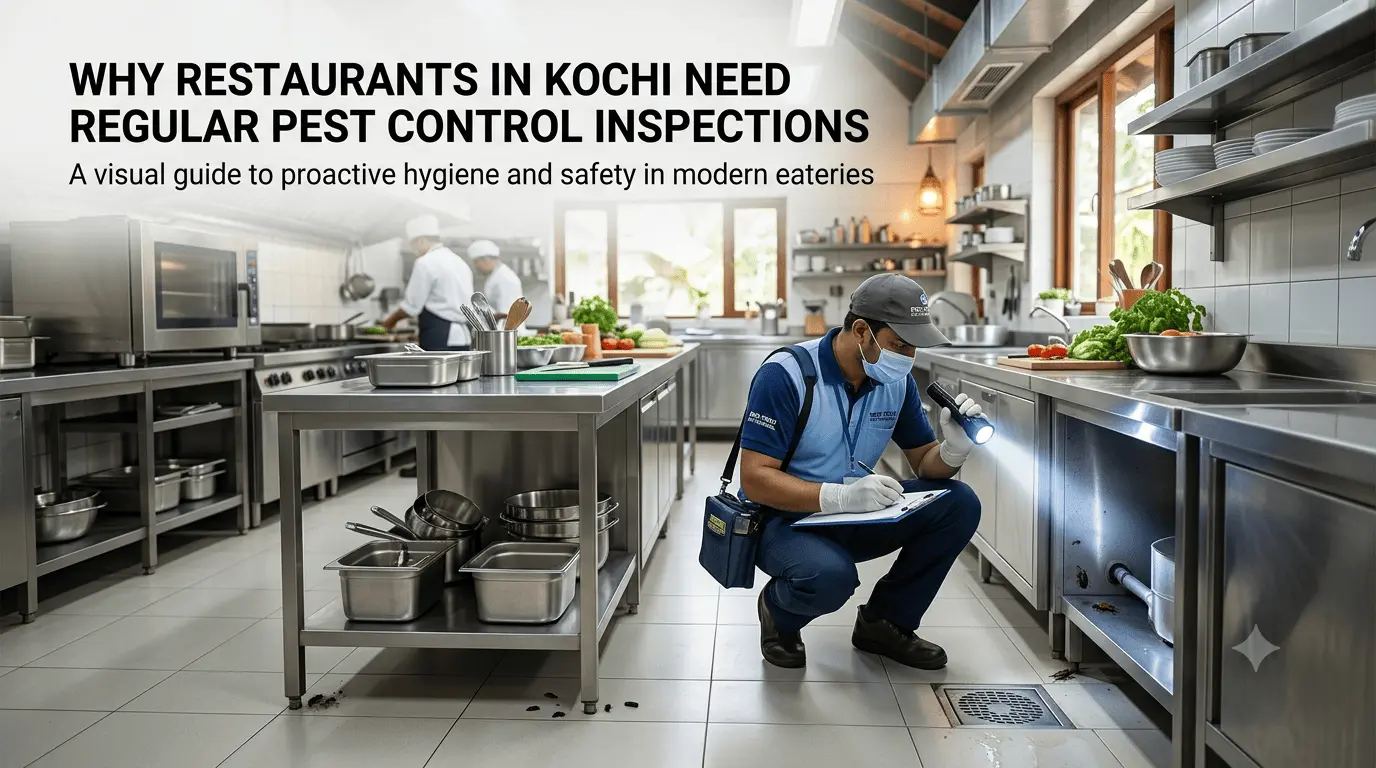
Whether you're searching for a pest control service in Kochi for your home or a cockroach control service in Kerala for a restaurant or office, professional treatment addresses both visible roaches and the hidden colony driving the infestation.
Why Choose PestTrack
We understand that inviting a pest control team into your home or business is a decision built on trust. That's why our approach focuses on results that last, not just a quick fix.
- Experienced technicians who understand cockroach behavior and breeding patterns specific to Kerala's climate
- Eco-friendly solutions that minimize environmental impact
- Family-safe treatments, including options suitable for homes with children
- Government-approved chemicals that meet safety standards
- Affordable pricing with transparent quotes, no hidden charges
- Quick response times for both scheduled and emergency pest control in Kochi
- Customized treatment plans based on your property type and infestation level
- Residential and commercial pest control services, from apartments to hotels, restaurants, and hospitals
- Follow-up service to ensure the infestation doesn't return
- Long-term protection plans for ongoing peace of mind
Key Takeaways
- Cockroaches pick up bacteria from sewers, drains, and garbage before contaminating your kitchen, dining table, and even children's toys.
- Germs spread through their legs, wings, saliva, droppings, and egg cases.
- Infestations are linked to food poisoning, salmonella, E. coli, asthma, and allergies.
- Early signs like droppings, odor, and shed skins should never be ignored.
- Natural prevention helps, but established infestations need professional cockroach control.
- PestTrack offers safe, effective, and affordable pest control services in Kochi and across Kerala.
Don't Wait Until the Infestation Gets Worse
Cockroaches multiply fast, and every day you delay treatment is another day they spend contaminating your kitchen, furniture, and living spaces. If you've noticed droppings, a musty smell, or roaches scurrying at night, it's time to act.
Book a professional inspection with PestTrack today. Kochi and Kerala's trusted choice for cockroach control service in Kochi and complete pest control service in Kochi. Our team will assess your property, identify the infestation source, and deliver a treatment plan that keeps your home genuinely germ-free.
Frequently Asked Questions
1. How do cockroaches spread germs? Cockroaches pick up bacteria from drains, sewers, and garbage, then transfer it to kitchen surfaces, food, and utensils through their legs, saliva, and droppings as they move through your home.
2. Are cockroaches dangerous? Yes. Beyond being unsettling, cockroaches carry bacteria linked to food poisoning, allergies, and asthma, making them a genuine health risk rather than just a nuisance pest.
3. Can cockroaches contaminate food? Absolutely. Cockroaches don't need to touch food directly; simply walking across an open food item or container can transfer harmful bacteria and allergens.
4. What diseases do cockroaches carry? Cockroaches are linked to salmonella, E. coli, dysentery, typhoid, and asthma-related allergies, largely due to the bacteria they pick up from unsanitary environments.
5. How often should cockroach treatment be done? Most homes benefit from treatment every 3–6 months, though this depends on infestation severity, property type, and environmental factors like moisture and food storage habits.
6. How much does cockroach control cost in Kochi? Pricing varies based on property size, infestation level, and treatment type. PestTrack offers affordable pest control in Kochi with transparent, customized quotes after inspection.
7. Is pest control safe for pets? Yes, when handled by professionals. PestTrack uses government-approved, low-toxicity products and provides guidance on keeping pets safe during and after treatment.
8. How can I permanently eliminate cockroaches? Permanent control combines professional gel baiting, residual spraying, and crack-and-crevice treatment with ongoing prevention habits like proper food storage and sealing entry points.
9. Why do cockroaches keep coming back? Untreated breeding sites, unsealed entry points, and leftover food sources allow new roaches to enter even after visible ones are removed. Professional follow-up prevents this cycle.
10. Which is the best cockroach control service in Kochi? PestTrack is trusted across Kochi and Kerala for its experienced technicians, eco-friendly treatments, and long-term prevention plans for both homes and businesses.