
How Seasonal Humidity Affects Pest Infestations in Kerala Homes
If you've lived in Kerala for even one monsoon season, you already know the drill. The rains arrive, the air turns thick and sticky, and somehow, within days, you're spotting flying termites near the tube light or finding cockroaches scurrying out from under the kitchen sink. This isn't bad luck. It's biology.
Kerala's tropical climate warm temperatures, heavy rainfall, and humidity that often stays above 80% for months at a stretch creates near-perfect breeding conditions for pests. For homeowners, apartment residents, villa owners, and commercial property managers across Kochi, understanding this connection is the first step toward protecting your property. And when prevention isn't enough, knowing when to call a reliable pest control company in Kochi can save you from expensive structural damage down the line.
In this guide, we'll break down exactly how humidity drives pest activity, which pests to watch for, and what you can do both on your own and with professional help to keep your home pest-free through every season.
Why Kerala's Humid Climate Creates the Perfect Environment for Pests
Pests don't just tolerate humidity; many species depend on it to survive and reproduce. Kerala's climate checks nearly every box on a pest's wish list.
- High moisture levels: Damp walls, wet flooring, and condensation give pests the water source they need without ever leaving your home.
- Warm temperatures: Consistent warmth throughout the year speeds up insect metabolism and breeding cycles.
- Continuous breeding cycles: Unlike colder regions where winter slows pest activity, Kerala's mild climate allows pests to breed almost year-round, with sharp spikes during monsoon.
- Damp indoor spaces: Poorly ventilated bathrooms, storerooms, and false ceilings trap moisture, creating hidden nesting zones.
- Water accumulation: Clogged drains, waterlogged compounds, and stagnant puddles after rain become breeding grounds within 48 hours.
Put simply, when the outside air is heavy with moisture, your home becomes an extension of that environment, and pests notice long before you do.
Common Pests That Thrive During Humid Seasons
Termites
Termites are arguably the most destructive humidity-loving pest in Kerala homes. They need moisture to survive, which is why humidity and pest infestation in Kerala homes are so closely linked when it comes to termite activity.
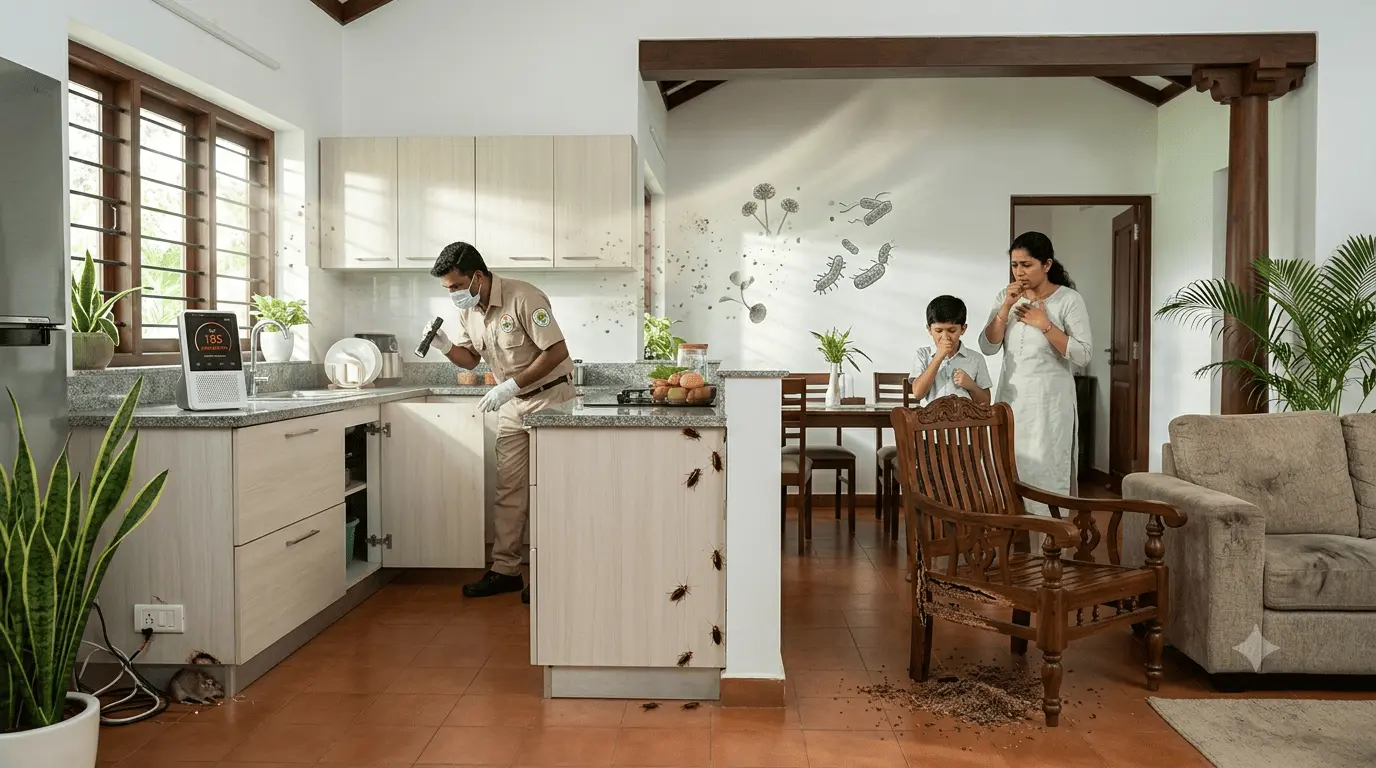
Once inside, termites feed silently on wooden furniture, door frames, and roof structures for months before any visible damage appears. Early warning signs include:
- Mud tubes running along walls or foundations
- Hollow-sounding wood when tapped
- Discarded wings near windowsills (a sign of swarming termites)
- Sagging or blistered wood surfaces
By the time most homeowners notice damage, the infestation is often well established, which is exactly why a proper termite control service in Kochi should be part of every homeowner's pre-monsoon checklist.
Cockroaches
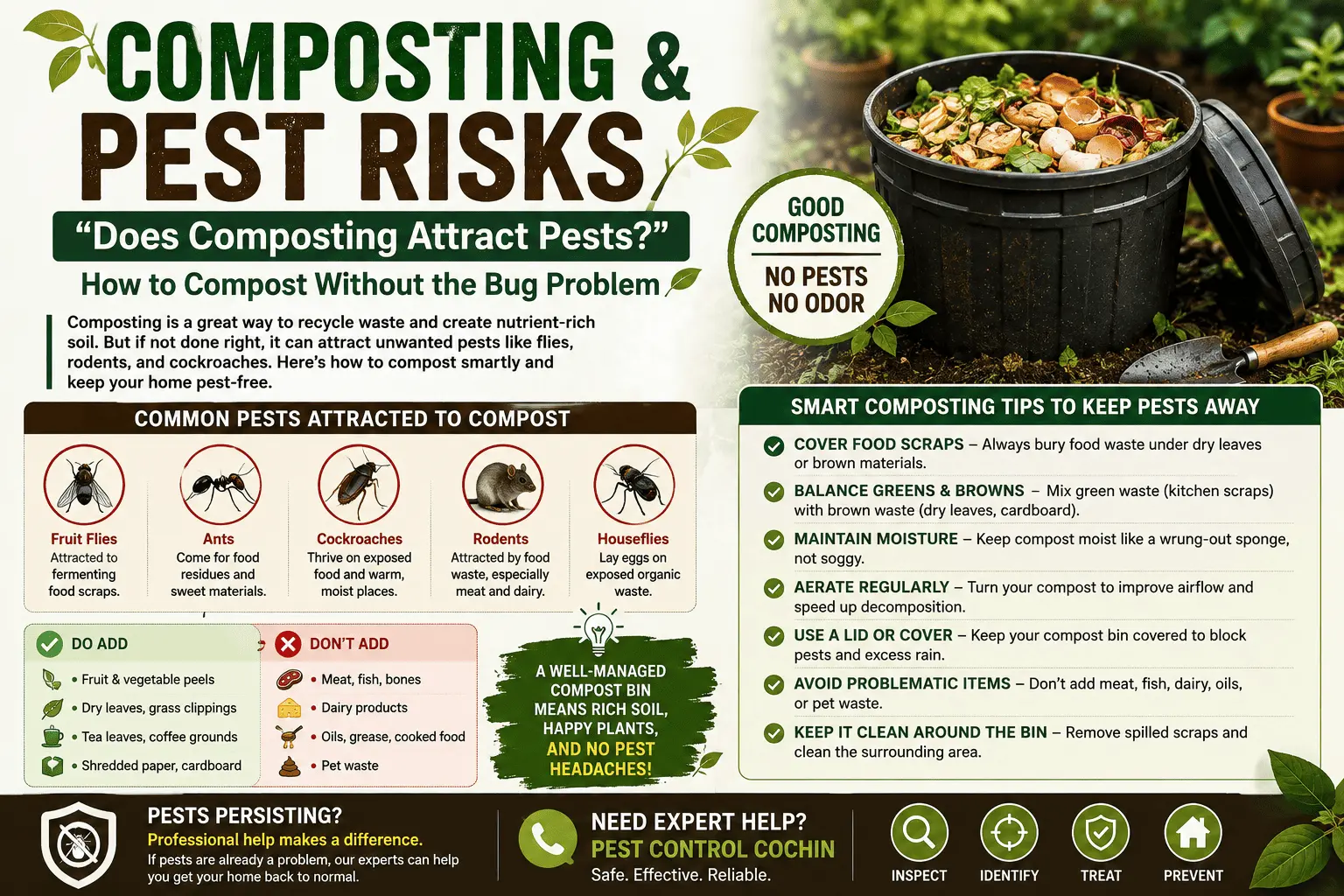
Cockroaches are drawn to Kerala's humid weather because moisture helps them regulate body temperature and survive longer between meals. Kitchens, bathrooms, and areas around drainage pipes are prime real estate for them.
Beyond being unpleasant, cockroaches carry bacteria that can trigger allergies, asthma, and food contamination, making a cockroach control service in Kochi important not just for comfort, but for health.
Mosquitoes
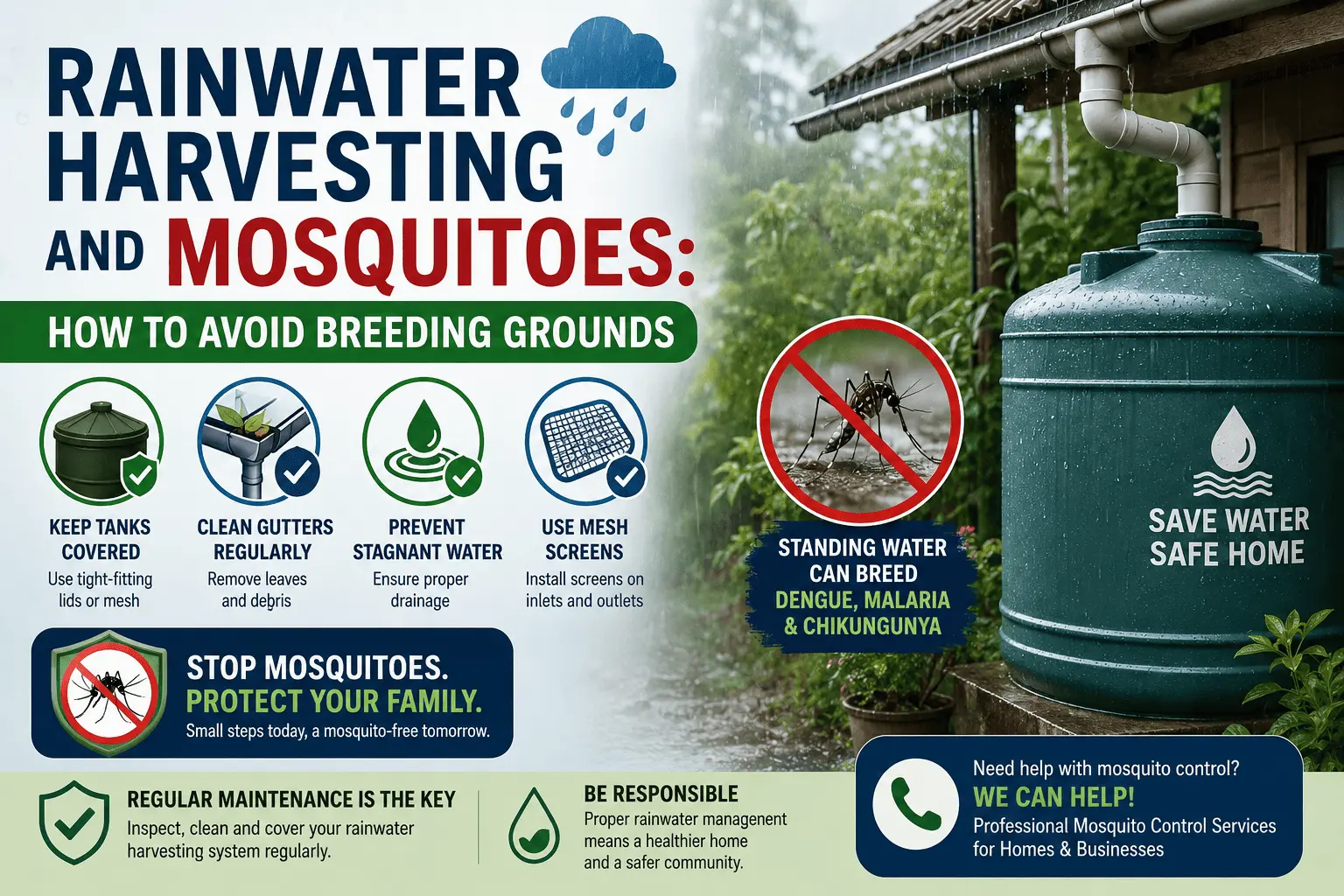
Standing water is mosquito breeding ground number one, and Kerala's monsoon provides plenty of it: clogged gutters, plant saucers, open sumps, and rainwater collecting on terraces. Mosquitoes multiply fast in these conditions and are known carriers of dengue and chikungunya, both of which see seasonal spikes across Kochi.
Ants
Ants seek out damp kitchen corners, leaking pipe joints, and moisture trapped near foundations. Once a colony finds a reliable food and water source indoors, it can be difficult to eliminate without addressing the underlying moisture issue.
Rodents
Heavy rains often push rats and mice to seek shelter indoors, particularly in false ceilings, store rooms, and around drainage openings. Rodents contaminate food, gnaw through electrical wiring, and can pose serious health risks.
Silverfish
Often overlooked, silverfish thrive in damp, dark spaces like bookshelves, cupboards, and storage boxes. They feed on paper, glue, and fabric — a quiet but real threat to books, documents, and clothing stored in humid rooms.
Signs Your Home Has a Humidity-Related Pest Problem
Don't wait for a full-blown infestation to take action. Watch for these early indicators:
- Musty odours in closed rooms or cupboards
- Small piles of wood dust near furniture or window frames
- Damp patches or water stains on walls and ceilings
- Increased sightings of house lizards (a sign there's more insect activity than usual for them to feed on)
- Unexplained bites or itching, especially during evenings
- Droppings near kitchen shelves or storage areas
If you notice two or more of these signs together, it's worth scheduling a professional pest inspection before the problem spreads.
Simple Ways to Reduce Humidity and Prevent Pest Infestations
The good news is that many humidity-related pest problems are preventable with consistent home maintenance:
- Improve ventilation in bathrooms, kitchens, and storage areas to prevent moisture buildup.
- Repair leaks in pipes, taps, and roofs as soon as they appear; even minor drips add up over a monsoon season.
- Keep wooden furniture dry and avoid placing it directly against damp walls.
- Seal cracks and entry points around doors, windows, and utility openings where pests slip in.
- Store food properly in airtight containers to avoid attracting ants and cockroaches.
- Reduce standing water around your compound, terrace, and plant saucers.
- Clean drains regularly to prevent clogging and water accumulation near the foundation.
These steps won't eliminate risk entirely, but they go a long way in making your home less attractive to pests in the first place.
Why DIY Pest Control Often Fails During Kerala's Monsoon
Many homeowners try spray treatments or store-bought repellents first, and it's understandable. They're quick and inexpensive. But during Kerala's monsoon, DIY methods usually fall short for a few reasons:
- Hidden nesting areas: Termite colonies and rodent nests are often deep inside walls, ceilings, or underground — far beyond what surface sprays can reach.
- Recurring infestations: Without addressing the moisture source, pests simply return within weeks.
- Lack of professional equipment: Termite baiting systems, moisture meters, and targeted treatments require tools most households don't have.
- Temporary results: Over-the-counter products often kill visible pests but leave eggs and colonies untouched.
This is exactly why persistent or recurring pest problems call for expert intervention rather than repeated DIY attempts.
When Should You Call a Professional Pest Control Company in Kochi?
Not every pest sighting requires a professional visit. But certain situations should prompt an immediate call:
- You spot mud tubes, discarded wings, or hollow wood classic termite indicators
- Cockroach or ant activity persists despite regular cleaning
- You notice rodent droppings or chewed wiring
- Pest problems return repeatedly after DIY treatment
- You're moving into a new property and want a pre-occupancy inspection
- You manage a commercial space where pest activity could affect health compliance
In these cases, a qualified pest control company in Kochi can identify the root cause, often linked to moisture or structural gaps — and apply targeted treatment rather than a temporary fix. For termite-specific concerns, a dedicated termite control service in Kochi uses soil treatment and baiting systems designed to eliminate colonies at the source, not just the pests you can see.
Why Choose PestTrack?
At PestTrack, we understand that Kerala's climate demands a different approach to pest management than what works in drier regions. Our technicians are trained specifically to handle humidity-driven infestations common across Kochi homes and businesses.
Here's what sets us apart:
- Experienced technicians familiar with Kerala's seasonal pest patterns
- Safe and eco-friendly treatments suitable for homes with children and pets
- Residential and commercial pest control tailored to different property types
- Customized treatment plans based on a thorough inspection, not a one-size-fits-all spray
- Long-lasting protection through follow-up visits and preventive monitoring
- Fast response across Kochi, so infestations are addressed before they spread
Whether you need routine home pest control in Kochi or specialized termite treatment, our goal is to give you lasting results, not just short-term relief.
Conclusion
Kerala's humid, tropical climate isn't going to change, but how prepared your home is for it can. Termites, cockroaches, mosquitoes, ants, rodents, and silverfish all thrive on moisture, and every monsoon season brings a fresh wave of activity if the right precautions aren't in place.
Regular inspections, prompt repairs, and timely professional treatment are the most reliable ways to prevent costly structural and health-related damage. Don't wait until you spot mud tubes on your wall or discarded wings on your windowsill.
Contact PestTrack today for a professional inspection and dependable termite control service in Kochi because protecting your home should never wait for the next monsoon.
Frequently Asked Questions
1. Why do pests increase during Kerala's humid season?
Humidity provides the moisture pests need to survive, breed, and build nests. Combined with Kerala's warm temperatures, this creates ideal conditions for termites, cockroaches, and mosquitoes to multiply rapidly.
2. Does humidity attract termites?
Yes. Termites require consistent moisture to survive, and damp wood or soil near a home's foundation makes it significantly more vulnerable to infestation, especially during monsoon.
3. How can I protect my home from termites during monsoon?
Fix leaks promptly, keep wooden furniture away from damp walls, ensure proper drainage around your foundation, and schedule a professional termite inspection before the rains begin.
4. What pests are most common in Kerala homes?
Termites, cockroaches, mosquitoes, ants, rodents, and silverfish are the most frequently reported pests in Kerala homes, particularly during the rainy season.
5. How often should I schedule pest control in Kochi?
Most homes benefit from professional pest control every three to six months, with an additional inspection recommended just before monsoon season.
6. Are professional termite treatments safe for families?
Reputable pest control companies use treatments formulated to be safe for households, including homes with children and pets, when applied by trained technicians.
7. What are the signs of termite infestation?
Look for mud tubes along walls, hollow-sounding wood, discarded wings near windows, and blistered or sagging wooden surfaces.
8. How much does pest control cost in Kochi?
Costs vary depending on property size, pest type, and treatment method. It's best to request a property inspection for an accurate quote tailored to your home.
9. Can humidity cause recurring cockroach infestations?
Yes. If underlying moisture issues in kitchens or bathrooms aren't resolved, cockroach infestations often return even after initial treatment.
10. Which is the best pest control company in Kochi?
Look for a company with experience in Kerala's specific climate challenges, transparent treatment plans, and a track record of long-lasting results qualities PestTrack is built around.