Mosquito Breeding Spots in Your Backyard You'd Never Think to Check
Indroduction
It started with a simple evening walk in the garden.
Riya, a homeowner in Kakkanad, Kochi, couldn't figure out why her family kept getting mosquito bites — even after buying three different repellent sprays. Her yard looked clean. No puddles. No visible stagnant water. Yet every evening, the mosquitoes came in full force.
When a technician from a professional pest control company in Kochi finally inspected her backyard, he found seven hidden breeding spots all in places she walked past every single day.
If that story sounds familiar, you're not alone.
Why Kochi Is a Mosquito Hotspot (And Why It's Getting Worse in 2026)
Let's be honest — Kochi's climate is not doing us any favors.
With coastal humidity hovering between 75–90%, warm temperatures year-round, and the monsoon season dumping hundreds of millimetres of rain between June and September, our city is practically a paradise for Aedes aegypti and Culex quinquefasciatus mosquitoes — the two species responsible for dengue, chikungunya, and malaria.
In 2026, Kerala's health department flagged an uptick in vector-borne disease cases in urban pockets like Edappally, Thrippunithura, and Aluva. The culprit, more often than not, isn't dirty drains or swamps. It's our own backyards.
The scariest part? Most mosquito breeding happens in spots homeowners never think to check.
The Mosquito Breeding Spots You're Almost Certainly Missing
Here's what every reputable pest control company in Kochi has learned after thousands of home inspections: mosquitoes are clever. They don't need a pond. They need as little as a bottle cap's worth of still water — and roughly 7 to 10 days to go from egg to biting adult.
Let's walk through the spots that consistently fly under the radar.
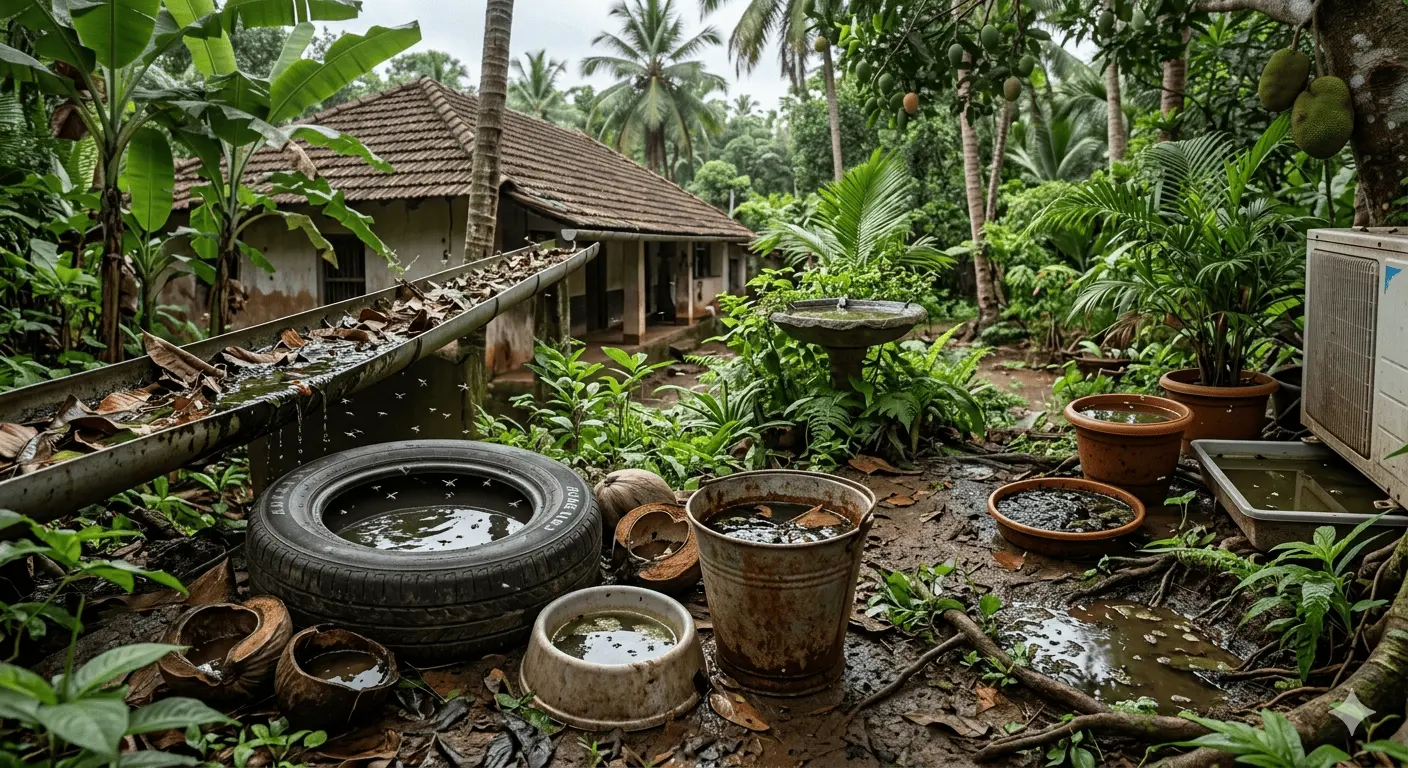
1. The Saucer Under Your Potted Plants
You water your plants every morning. But the little plastic or ceramic saucer sitting underneath? That collects water and sits there quietly for days.
Multiply that by 10 or 15 pots on a typical Kochi home's veranda or terrace, and you've essentially built a mosquito nursery. This is one of the most common findings our local pest experts report.
Fix it: Empty and dry plant saucers at least twice a week. Or switch to self-draining pots.
2. Your Overhead Tank or Sump Lid That "Looks Fine."
Many homes in areas like Palarivattom or Vyttila have overhead tanks or underground sumps. If the lid has even a tiny crack or doesn't seal properly, mosquitoes will find it.
And unlike a small saucer, a partially covered tank can breed thousands of mosquitoes at once.
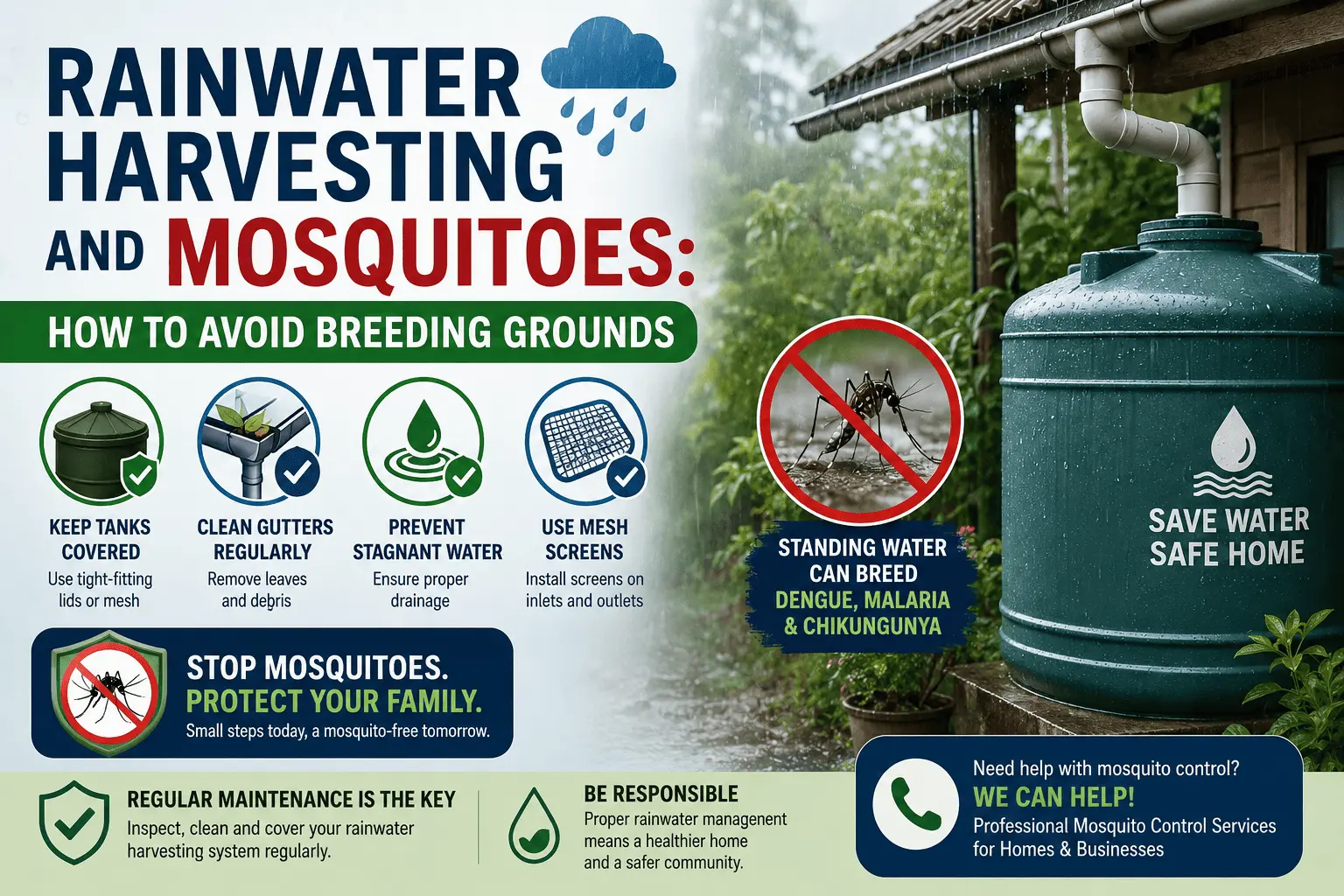
Fix it: Inspect your tank lids quarterly. Use fine mesh screens over ventilation pipes. A professional pest control company in Kochi can help identify structural vulnerabilities in your water storage setup.
3. Blocked or Slow-Draining Roof Gutters
Kerala homes deal with heavy monsoon rains. Gutters get clogged with leaves, coconut fronds, and debris constantly. When water pools in a clogged gutter, it becomes a warm, sheltered breeding ground.
You rarely look up there. Mosquitoes know that.
Fix it: Clean gutters before and after monsoon season. Check for low-lying sections where water might pool even when the gutter appears clear.
4. That Old Tyre in the Corner
If you have an old motorcycle tyre, bicycle tyre, or vehicle tyre stored anywhere outdoors — even partially covered with a tarpaulin — it almost certainly holds water.
Tyres are curved, dark, and warm. They hold water with almost no evaporation. They're so notorious as mosquito breeding sites that the WHO has a specific monitoring protocol just for them.
Fix it: Drill drainage holes in stored tyres, or store them indoors in a dry shed.
5. Your Children's Outdoor Toys and Play Equipment
That plastic slide. The bucket in the sandbox. The toy watering can your child left outside. All of these can collect water in the smallest crevices and go unnoticed for days.
This is especially common in family homes on Thrissur Road or residential colonies in Kakkanad.
Fix it: Turn toy containers upside down when not in use. Inspect play equipment weekly during and after the monsoon.
6. Decorative Fountains and Birdbaths With Still Water
The aesthetic charm of a garden water feature can come at a cost. If the water isn't moving or being changed regularly, it becomes a mosquito breeding ground within days.
Birdbaths are especially problematic — they sit at a convenient height, are rarely cleaned, and often go unnoticed for weeks.
Fix it: Change birdbath water every 3–4 days. Add a small pump to keep the fountain water circulating. Use biological larvicides like Bacillus thuringiensis israelensis (Bti), which is safe for birds and fish.
7. Spaces Between Concrete and the Ground (Air Gaps)
This one surprises almost everyone.
Older homes in Fort Kochi, Mattancherry, or Thrikkakara often have raised plinth structures. The tiny gap between the concrete slab and the ground can trap rainwater. It's dark, sheltered, and barely evaporates.
A trained technician from a pest control company in Kochi will often flag these structural gaps during a site inspection.
Fix it: Seal low-lying gaps with mortar or waterproof filler. Improve drainage grading around your home's foundation.
8. Tarpaulins and Plastic Covers on Vehicles or Woodpiles
When you cover your car, bike, or a woodpile with a tarp, the folds and creases collect water in small pockets. It looks covered and safe from the outside, but underneath? It's a dark, undisturbed micro-habitat.
Fix it: Use taut covers that shed water cleanly, and shake out tarps after rain.
9. Broken Flower Pots and Garden Ornaments
Half a broken clay pot. An old garden gnome. A decorative stone basin. These items often sit forgotten in a corner of the yard, and they all collect rainwater.
This is also a common finding near temple courtyards and community gardens in areas like Thrippunithura and Angamaly.
Fix it: Remove broken containers. Drill drainage holes in any outdoor ornaments that hold water.
10. Septic Tank Overflow and Drainage Channels
In older residential layouts across Kochi, septic tanks and drainage channels are not always well-sealed. Any overflow or slow-draining outlet creates standing water that's rich in organic matter — a perfect mosquito breeding environment.
This is a job for professionals. A certified pest control company in Kochi can apply larvicide treatments, inspect drainage outlets, and recommend structural fixes.
What Does a Professional Mosquito Inspection Actually Look Like?
Many homeowners assume pest control is just about spraying. It's not — at least not when done right.
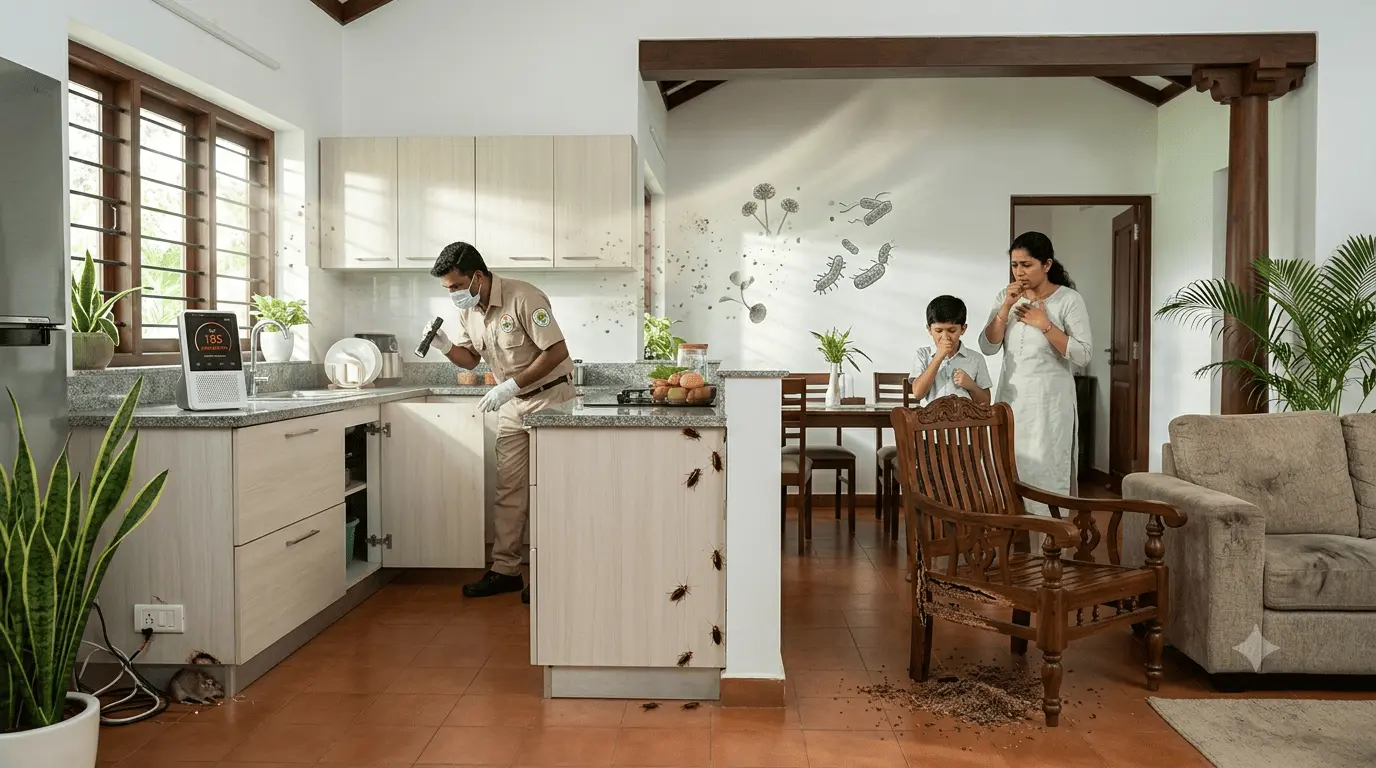
A thorough inspection by a qualified pest control company in Kochi typically involves:
- Source identification: Mapping every potential breeding site, both obvious and hidden
- Larval surveys: Checking for mosquito larvae in water sources using specialized dipping tools
- Thermal or moisture scanning: Identifying damp structural zones not visible to the naked eye
- Larviciding: Treating water bodies that can't be drained with safe, WHO-approved products
- Residual spraying: Targeting adult mosquito resting areas (wall crevices, dense foliage, dark corners)
- Follow-up monitoring: Verifying breeding site elimination over 2–4 weeks
This is precisely the kind of systematic approach offered by PestTrack (pesttrack.co.in), a trusted pest control company in Kochi serving both residential and commercial clients across Ernakulam district.
Why DIY Isn't Enough Anymore (2026 Reality Check)
Walk into any supermarket in Kochi, and you'll find mosquito coils, repellent mats, sprays, and even ultrasonic devices. They sell well. But here's what they don't do: eliminate the source.
Every mosquito you swat or repel is replaced by dozens hatching from that plant saucer or roof gutter you forgot about.
In 2026, with newer dengue strains showing higher urban transmission rates and Kochi's rapid residential development creating more waterlogging pockets, source reduction — finding and eliminating every breeding site — is the only strategy that works long-term.
That's why both B2B clients (hotels, hospitals, housing societies, warehouses in Kochi's industrial corridors) and B2C homeowners are increasingly turning to professional services rather than relying on off-the-shelf products.
When Should You Call a Pest Control Company in Kochi?
Here's a simple guide:
Call immediately if:
- You or a family member has been diagnosed with dengue, chikungunya, or malaria
- You notice mosquito larvae in any water source on your property
- You've tried DIY methods for 2+ weeks with no improvement
Schedule a preventive visit if:
- You live near a water body, rice field, or low-lying area in Kochi
- Your home is older, with a complex drainage architecture
- You're in a high-risk zone like Edappally, Kalamassery, or Fort Kochi
Annual inspections are recommended for:
- Housing societies and apartment complexes
- Restaurants, hotels, and food processing units
- Schools, hospitals, and community centers
Frequently Asked Questions
How long does a professional mosquito treatment last?
Most treatments provide effective protection for 30–45 days. A quarterly treatment schedule is recommended for Kochi's climate, with additional sessions during and after the monsoon.
Are the chemicals used safe for children and pets?
Reputable pest control companies in Kochi use WHO/EPA-approved formulations. Always ask for the Safety Data Sheet (SDS) before treatment and follow post-treatment ventilation guidelines.
Can mosquito control be done for apartments?
Absolutely. Professional services can treat individual units, common areas, terrace gardens, and drainage systems in apartment complexes.
What's the difference between larviciding and fogging?
Larviciding targets mosquito larvae in water sources before they become adults. Fogging targets adult mosquitoes in the air and on surfaces. An effective treatment plan uses both.
Conclusion
Mosquitoes are not just an annoyance in Kochi — they're a genuine public health risk. And the breeding spots that cause the most trouble are almost never the obvious ones.
The plant saucer. The cracked tank lid. The tyre in the corner. The fold in the tarpaulin.
Once you know where to look, you'll see them everywhere. But seeing them is only half the job. Eliminating them systematically and keeping them gone is where professional expertise makes all the difference.
If you're ready to take your backyard back, reach out to a certified pest control company in Kochi that combines thorough inspections, safe treatments, and honest follow-through.
Visit PestTrack — Your Trusted Pest Control Partner in Kochi →