How Mosquitoes Inside Your Home Are Making Your Family Sick
Introduction
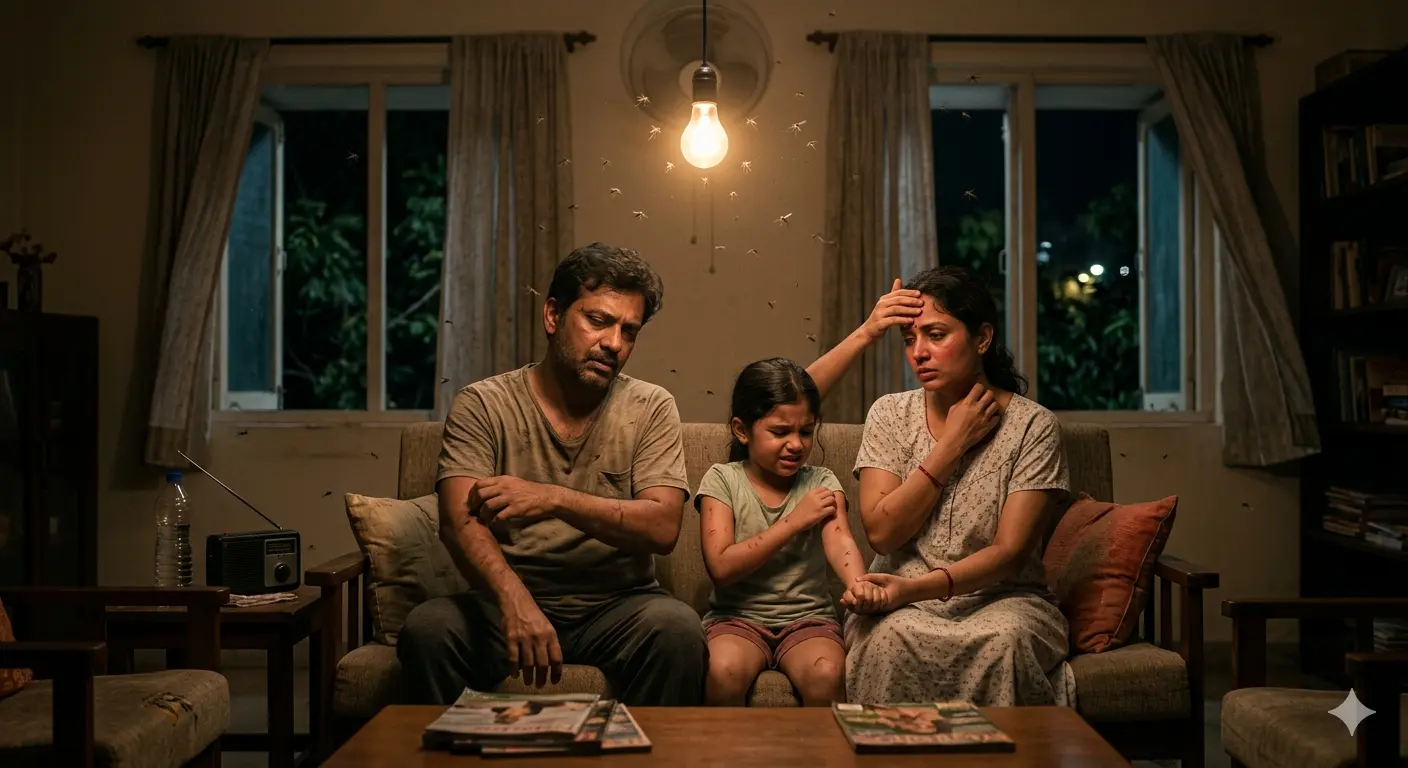
You switched off the lights. Everyone's in bed. The house is quiet — except for that one tiny, high-pitched hum circling near your ear.
Most of us swat it away and go back to sleep without a second thought. But that single mosquito sitting on your child's arm at 2 AM is not just an annoyance. It could be carrying dengue fever, chikungunya, or malaria directly into your home — and into your family's bloodstream.
Here's the uncomfortable truth that most Kochi families don't want to hear: the mosquitoes inside your house right now are potentially more dangerous than the ones buzzing in your garden. Indoor mosquitoes are fed, sheltered, and left undisturbed. They breed quietly in places you'd never think to look — a small puddle behind your bathroom cabinet, the water tray under a potted plant, the inside of your air cooler.
Kerala is not just a beautiful state with lush greenery and monsoon rains. According to a 2025 study, Kerala accounted for three-quarters of the country's dengue-related deaths and was ranked second in total dengue cases across India. In the very first month of 2026 alone, Kerala reported 378 confirmed dengue cases and four deaths. These are not faraway statistics. These are families in neighbourhoods just like yours — in Ernakulam, Kakkanad, Aluva, and right across the city of Kochi.
This article is for every Kochi family that wants to understand the real risk hiding inside their four walls — and what professional mosquito control in Kochi can do to stop it for good.
Why Are Mosquitoes Inside My Home More Dangerous Than Outdoor Ones?
Most people think of mosquitoes as an outdoor problem. You put on a repellent before stepping out, light a coil on the balcony, and consider the job done. But the species that cause the most dangerous diseases in Kerala — Aedes aegypti and Aedes albopictus — are domesticated mosquitoes. They evolved to live with humans. They prefer to breed inside or near homes.
The mosquitoes that carry dengue and Zika love to live inside with you. They hide in dark corners, under beds, and behind curtains.
Unlike outdoor mosquitoes that bite at dawn and dusk, the Aedes aegypti mosquito bites aggressively throughout the day — when your children are playing, when you're cooking in the kitchen, when the family is together in the living room. Every bite is a potential delivery of a virus.
And the breeding happens right at home. Mosquitoes can breed in as little as a tablespoon of water. That's less water than what collects in a bottle cap, in the fold of a curtain after rain comes through a window, or in the drip tray of your refrigerator.
A multi-district mosquito survey conducted in 2025 across five districts of Kerala identified 14 known disease vectors, with artificial, human-made habitats accounting for nearly 78 percent of breeding sites — meaning your household containers, tyres, storage pots, and water coolers are the primary nurseries for the very mosquitoes causing Kerala's dengue crisis.
This is why calling in a pest control company in Kochi that specialises in mosquito treatment isn't a luxury. For families in a city like Kochi, it's one of the most sensible health decisions you can make.
What Diseases Can Mosquitoes Inside Your Home Actually Spread?
1. Dengue Fever — Kerala's Most Persistent Crisis
Dengue is not a distant threat. It is firmly embedded in Kerala's disease landscape. Dengue trends from recent years show the scale of the problem: 10,886 cases and 56 deaths in 2025; 20,674 cases and 128 deaths in 2024; and 17,426 cases and 153 deaths in 2023.
Dengue begins deceptively — a sudden high fever, severe headache, and pain behind the eyes. Within days it can escalate to Dengue Hemorrhagic Fever, causing dangerous internal bleeding. Children and elderly family members are at the highest risk of severe complications. There is no specific antiviral treatment available. The only defence is prevention — and that starts with eliminating the mosquitoes breeding inside your living space.
2. Chikungunya — The Disease That Leaves You Unable to Walk
Chikungunya is a virus transmitted by Aedes aegypti mosquitoes that causes high fever and severe joint pain, often debilitating, along with muscle pain, headache, fatigue, nausea, and rash. Chikungunya can also cause chronic joint pain, which may last from weeks to several months in about 60% of cases.
Imagine being unable to walk, hold a cup, or lift your child because of joint pain so severe it feels like your bones are grinding. That is the reality of chikungunya — and it is spreading. For Kochi's working population, even a mild bout means weeks away from work and daily life. Effective pest control in Kochi that targets the Aedes species directly addresses the vector behind both dengue and chikungunya simultaneously.
3. Malaria — Still Present, Still Dangerous
While dengue dominates the headlines, malaria has not disappeared from Kerala. On-ground surveys across five districts of Kerala revealed the presence of 14 mosquito species that are vectors for several diseases, including malaria, dengue, and chikungunya. Malaria-carrying Anopheles mosquitoes tend to breed in larger water bodies — drains, tanks, waterlogged areas — but can enter homes easily in densely populated parts of Kochi.
4. Zika Virus — The Silent Threat to Pregnant Mothers
Kerala's long battle with mosquito-borne viral diseases has entered a more worrying phase, with the Zika virus potentially evolving into a more resilient, locally established strain. Zika is particularly dangerous for pregnant women. The virus can cause severe birth defects in unborn children, making it critically important for expectant mothers in Kochi to ensure their homes are completely mosquito-free — not just screened, but professionally treated.
5. Filariasis (Elephantiasis) — The Long-Term Silent Damage
Less talked about but very real in Kerala's coastal zones including Kochi, lymphatic filariasis is caused by microscopic worms transmitted through mosquito bites. The infection can remain silent for years, gradually causing permanent swelling and disability. This is one of the most compelling reasons why pest exterminators in Kochi who offer complete mosquito lifecycle treatment — not just adult mosquito spraying — are worth every rupee.
How Do Mosquitoes Get Inside Your Home in the First Place?
This is a question many Kochi homeowners ask — and the answer reveals why DIY solutions so often fail.
Gaps in window and door frames are the most common entry points. Even a gap of 2-3 millimetres around a poorly fitted door or a small tear in a mesh screen is a permanent open door for mosquitoes. Kochi's older apartment buildings and independent houses, particularly in areas like Mattancherry, Fort Kochi, Thrippunithura, and Aluva, frequently have structural gaps that go unnoticed.
Air conditioner drainage pipes are another sneaky entry route. The pipe running from your split AC unit to the outside creates a direct pathway indoors. If the outdoor end is near stagnant water, mosquitoes can follow the dampness straight into your bedroom wall.
Unscreened ventilation openings — kitchen exhaust vents, bathroom ventilation holes, overhead water tank overflow pipes — are all invisible highways for mosquitoes that most homeowners never think about.
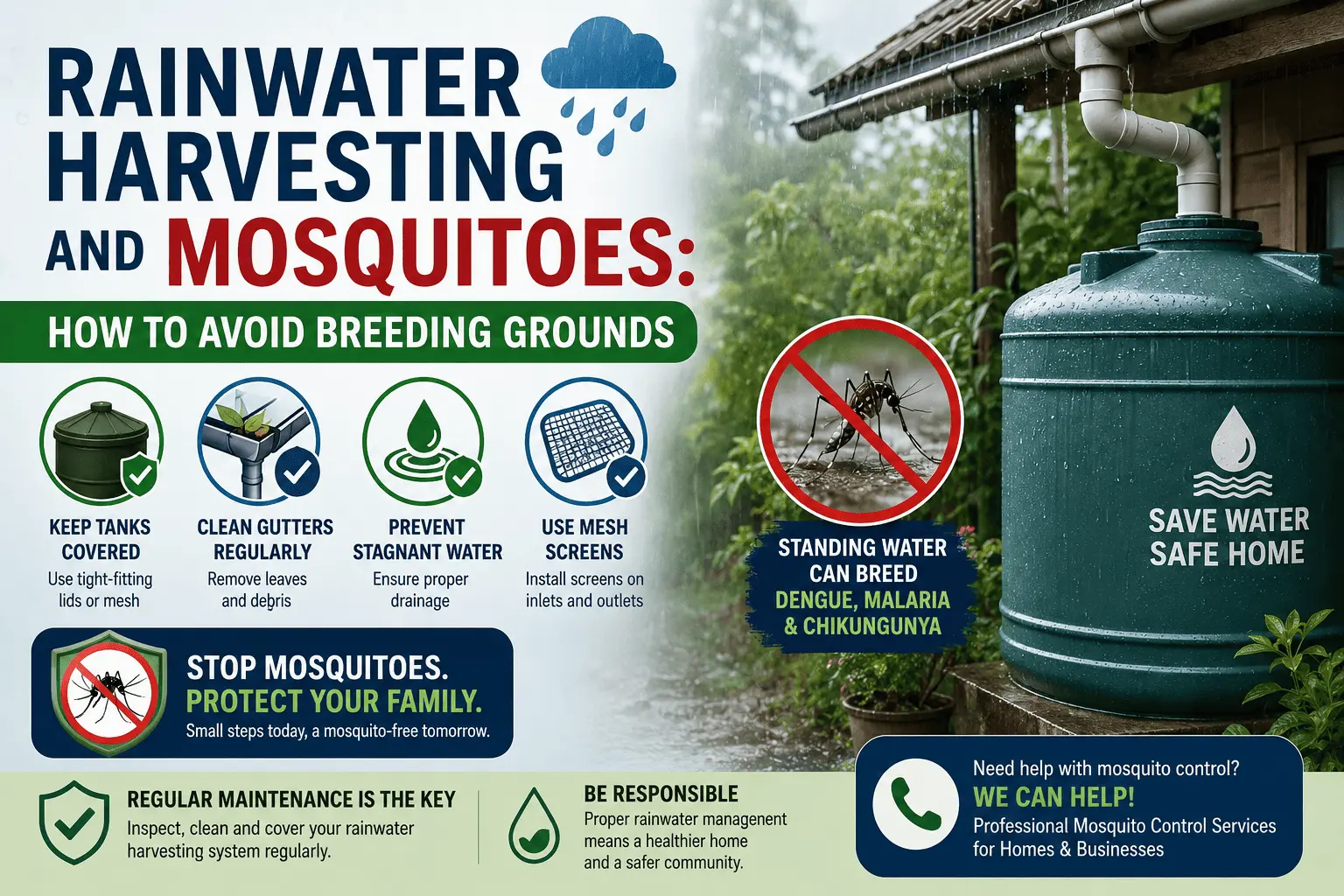
And then there's the breeding that's already happening inside. Flower vase water, the plate under indoor plants, bathroom buckets that are left partially full, the inner rim of toilet bowls, overhead tank inlets — all of these can support mosquito larvae in just 5 to 7 days. By the time you see adult mosquitoes flying around your living room, a full breeding cycle has already completed.
Is Your Home a Mosquito Breeding Ground? (7 Signs to Look For Right Now)
You might be surprised to discover your home is actively producing mosquitoes. Here are the signs that tell you it's time to call pest exterminators in Kochi:
1. You see mosquitoes mostly in the evening indoors — especially in bedrooms and bathrooms. This pattern suggests indoor breeding, not just entry from outside.
2. The mosquitoes in your home look dark with white bands on their legs — that's Aedes albopictus, the tiger mosquito, and a confirmed dengue and chikungunya vector.
3. You or your family members have had unexplained fevers in the last few months — particularly high fever with joint pain or rash. In Kochi, during or after the monsoon, this demands immediate attention.
4. You have indoor plants in water vases or pots with drain trays — these are among the top three breeding sites identified in Kerala's 2025 mosquito survey.
5. Your overhead water tank hasn't been inspected in over 6 months — uncovered or partially covered tanks are prime breeding sites.
6. You use a room cooler — standing water in room coolers is a perfect warm, undisturbed mosquito nursery.
7. Mosquito coils and repellents feel increasingly ineffective — this is often a sign that a large indoor population has established itself and simple repellents can't keep pace.
If three or more of these apply to your home, it's strongly advisable to consult a professional pest control company in Kochi for a full inspection.
Can DIY Mosquito Control Actually Protect Your Family in Kochi?
This is an honest question that deserves an honest answer — and the answer is: not really, not long-term.
Coils, mats, liquidators, and aerosol sprays all work on adult mosquitoes already flying in your space. They do absolutely nothing to larvae developing in water, to pupae about to hatch, or to eggs already laid in the hidden crevices of your home. You're killing the adults but leaving the next generation completely untouched.
Natural repellents like neem oil, citronella candles, and tulsi plants have mild deterrent effects — they are not vector control. In a city like Kochi where dengue is now firmly endemic, treating a clinically significant mosquito problem with a citronella candle is like treating a broken bone with a plaster.
Effective mosquito elimination requires treating multiple life stages — eggs, larvae, pupae, and adults — across both indoor and outdoor environments simultaneously. It also requires identifying and eliminating every single breeding source, which in a typical Kochi home can number over a dozen locations that a homeowner would never identify without training.
This is exactly what professional mosquito control in Kochi is designed to do. Trained pest control technicians use a combination of larvicidal treatment (to eliminate breeding sites), residual spraying (to knock down adult populations), and thermal fogging or ULV misting (for rapid knockdown in high-density areas). The treatment is systematic, thorough, and backed by follow-up inspections.
How Does Professional Mosquito Control Work? What Can You Expect?
When you hire a qualified pest control company in Kochi, a properly conducted mosquito control service involves several key steps:
Site Survey & Breeding Site Audit — A trained technician walks through every room, including the loft, roof area, bathroom, kitchen, and outdoor spaces, mapping every potential and active breeding site. This audit alone often reveals a dozen or more spots that homeowners never noticed.
Larvicidal Treatment — Biological or chemical larvicides are applied to every water body that cannot be drained — overhead tanks, drain pits, garden features, and drainage channels. This breaks the mosquito lifecycle at the most vulnerable stage.
Residual Surface Spray — Insecticide is applied to walls, ceilings, under furniture, and dark corners where adult mosquitoes rest. Unlike aerosol sprays, residual treatments continue working for weeks after application.
Thermal Fogging or ULV Cold Fogging — For immediate knockdown of adult populations, fogging penetrates areas that surface sprays cannot reach. This is especially effective in open kitchen areas, balconies, and courtyards.
Breeding Source Reduction Guidance — A good pest exterminator in Kochi won't just spray and leave. They'll provide you with a clear, actionable list of changes to make — what to cover, what to drain, what to fix — that will prevent reinfestation between treatments.
Scheduled Follow-Up — Mosquito control is not a one-time event. Given Kochi's monsoon season and the year-round humidity, a quarterly or bi-monthly professional treatment schedule is the gold standard for keeping your home protected.
The Kochi Monsoon Factor: Why Timing Your Pest Control Matters
Kochi's geography — coastal, humid, heavily rained — makes it one of the highest-risk cities in Kerala for mosquito-borne disease. A sharp seasonal rise in dengue cases coincides with the southwest monsoon, between May and July.
The window between March and May — just before the monsoon arrives — is the most strategic time to get a thorough professional mosquito treatment done. Treating your home before the rains begin eliminates existing populations and disrupts the rapid breeding cycle that the monsoon triggers. Waiting until you're in the middle of the monsoon means fighting an uphill battle against thousands of new breeding sites created by accumulated rainfall.
Pre-monsoon treatment + a mid-monsoon follow-up is the approach recommended by experienced pest exterminators in Kochi who understand the local climate cycle. It's the difference between preventing an infestation and reacting to one after someone in your family is already sick.
Conclusion: One Mosquito Is One Too Many When Your Family's Health Is at Stake
There's a line that most of us cross without realising it — from "there are some mosquitoes around" to "someone in my family has dengue." That line is thinner and closer than most Kochi families realise, especially given Kerala's status as one of India's most dengue-affected states in recent years.
The mosquitoes in your home are not just an inconvenience. They are a genuine, documented, medically proven public health threat. They carry diseases that hospitalise and kill. They breed in places you can't see. And they are active all year round in a city like Kochi.
The good news is that this is entirely manageable. Professional mosquito control in Kochi by a qualified, experienced pest control team can reduce your family's exposure by over 90% when done consistently. It is safe, it is targeted, and compared to even a single hospitalisation for dengue, it is extraordinarily cost-effective.
Don't wait for a fever to remind you. Take action before the mosquitoes do.
👉 Contact PestTrack — your trusted pest control company in Kochi — for a free home inspection and personalised mosquito control plan today.
Frequently Asked Questions About Mosquito Control in Kochi
How frequently should professional mosquito control in Kochi be done?
Mosquito control at Kochi should be conducted monthly or bi-monthly (in the monsoon) (June–October) because of the high breeding activity. Quarterly treatment is typically adequate the rest of the year. Houses that have children or senior citizens might require a more regular service.
Is children and pet-safe professional mosquito pest control?
Yes, when conducted by certified professionals in the use of CIBRC approved products, professional mosquito control is safe. Technicians use precautionary measures such as ventilation and controlled application in order to reduce risk. Always tell them beforehand about children or pets.
Which is the most effective way of dealing with mosquitos in Kochi apartments?
The most effective is a mixture of personal flat application and the societal level of regulation. This involves indoor spraying, larvicidal treatment of water bodies and fogging of common places such as cellars and corridors.
Will the dengue mosquitoes breed in a clean house?
Yes, dengue mosquitoes may breed in clean water. Still water in the smallest of things such as flower vases or pet bowls can turn into breeding grounds, no matter how clean the home is.
What is making the mosquitoes in Kochi grow each year?
The tropical climate, urbanization and population density of Kochi contribute to the rising population of mosquitoes. They become adjusted to man-made water bodies, such as containers and drains, and thus the vice becomes increasingly critical every year.
Should I hire professional pest control in Kochi?
You should hire an expert in case the mosquitos are still on the DIY-treatment even after the efforts, there has been a new case of fever, you see the larvae in the water, and your house has not been treated after monsoon.