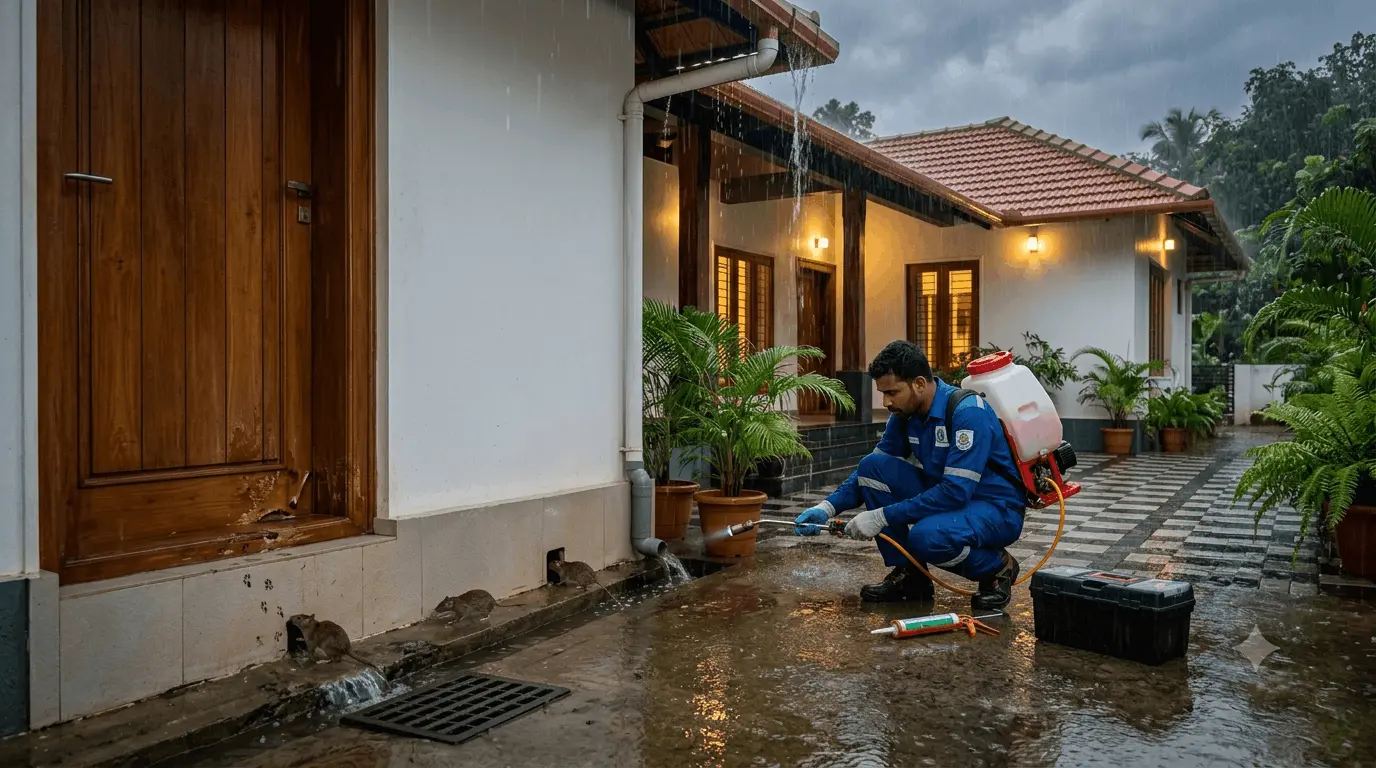
Why Rats Enter Homes During Heavy Rainfall and How to Prevent It
Indroduction
If you've ever heard scratching in the ceiling right after a heavy downpour, you're not imagining things. Rats don't just wander into homes randomly during monsoon season; they're pushed there. Flooded burrows, waterlogged drains, and overflowing sewers leave rodents with nowhere dry to hide, and your warm, food-stocked home suddenly looks like the safest place around.
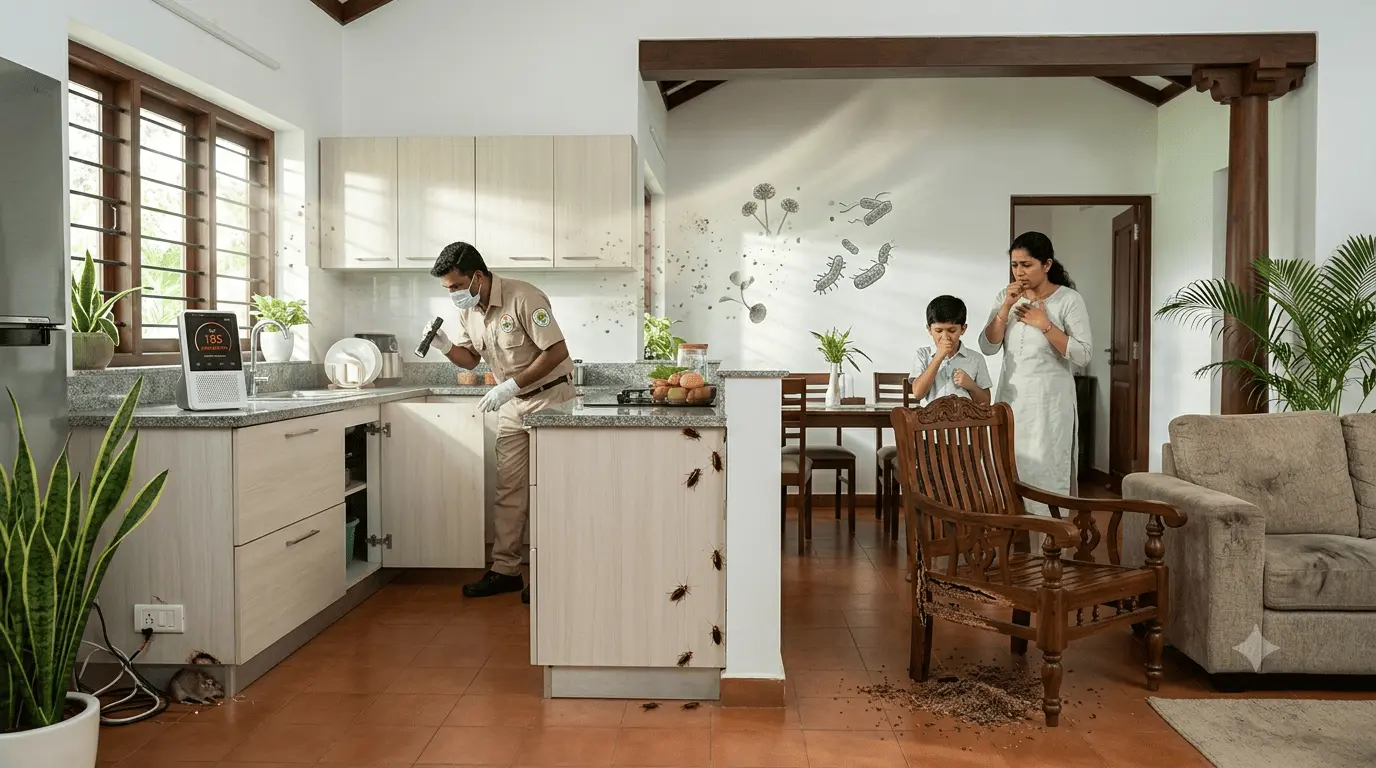
Most homeowners notice the problem the same way: a strange smell near the kitchen, droppings in a cupboard, a chewed-up cereal box, or wires that look suspiciously gnawed. By the time you spot these signs, the rats have usually already settled in. That's why understanding what draws them indoors and acting early makes such a big difference.
In this guide, we'll walk through why rats invade homes during heavy rain, how to spot an infestation early, and what you can do to keep your house rodent-free. And if things have already gotten out of hand, we'll cover when it's time to call in a pest control service near me instead of tackling it alone.
Why Heavy Rainfall Drives Rats into Homes
Rats are surprisingly good swimmers, but they still hate being wet and cold. During heavy rainfall, several things happen at once that force them out of their natural habitats:
- Flooded burrows – Rats that live in gardens, drains, or open ground get flooded out and need new shelter fast.
- Overflowing drainage systems – Sewer lines and storm drains, a favorite rat highway, become unlivable when water levels rise.
- Loss of dry shelter – Wet nesting material and cold conditions push rats toward warm, dry spaces like your attic or wall cavities.
- Easier access to buildings – Rainwater often loosens soil, cracks foundations further, and creates fresh gaps rats can squeeze through.
- Search for food and warmth – A dry kitchen with accessible food is far more appealing than a flooded burrow.
In short, rats aren't choosing your home out of preference; they're escaping a crisis. And once they're in, they don't leave on their own.
Common Entry Points Rats Use
Rats can squeeze through a gap as small as a coin, so even homes that look well-sealed often have hidden vulnerabilities. During an inspection, pay close attention to:
- Drain pipes and gaps around plumbing
- Roof gaps, broken tiles, or damaged eaves
- Broken or unscreened vents
- Cracks in exterior walls or foundations
- Openings around utility pipes and cables
- Gaps under doors and windows
- Garage entry points, especially where doors don't seal tightly
- Ceiling gaps near the roofline
Practical tip: Walk around your home's exterior after rain and look for muddy smear marks or fresh dirt near small openings; these are often the first clue that rodents have been testing entry points.
Signs You May Already Have a Rat Infestation
Rats are nocturnal and cautious, so you may not see them directly at first. Instead, look for these telltale signs:
SignWhat to Look ForDroppingsSmall, dark, pellet-shaped droppings near food or along wallsGnaw marksChewed food packaging, wood, or wiringDamaged foodTorn bags, nibbled corners on stored grains or snacksGrease marksDark smudges along walls where rats repeatedly travelUnusual smellsA musky, ammonia-like odor in enclosed spacesNight soundsScratching or scurrying in walls, ceilings, or atticsNesting materialsShredded paper, fabric, or insulation bunched into a nestPet behaviorCats or dogs suddenly alert or fixated on a wall or cupboard
If you're noticing two or more of these signs, it's a strong indicator of an active rodent infestation, not just a one-off visitor.
Health Risks Associated with Rats
Beyond the obvious "ick" factor, rats pose real health and safety risks to your household:
- Food contamination – Rats can spread bacteria through droppings, urine, and fur, contaminating stored food and kitchen surfaces.
- Leptospirosis – Spread through contact with rat urine, this bacterial infection can affect the kidneys and liver.
- Salmonella – A common cause of food poisoning linked directly to rodent contamination.
- Hantavirus – A serious respiratory illness transmitted through rodent droppings and nesting material.
- Allergies and asthma – Rat dander and droppings can trigger allergic reactions, especially in children.
- Parasites – Fleas and mites that live on rats can transfer to pets and people.
- Fire hazards – Rats gnaw on electrical wiring, which can cause short circuits or house fires.
This is exactly why rodent control isn't just about property damage; it's a genuine family health issue.
How to Prevent Rats During Heavy Rainfall
The good news is that most rat problems are preventable with consistent maintenance. Here's what actually works:
- Seal cracks and holes around the foundation, pipes, and vents using steel wool or metal mesh; rats can't chew through metal the way they chew through plastic or wood.
- Store food in sealed containers, especially grains, pet food, and snacks.
- Clean your kitchen daily, wiping down counters and sweeping up crumbs.
- Dispose of garbage correctly using bins with tight-fitting lids.
- Trim vegetation away from your home's exterior walls; overgrown plants give rats cover to approach unnoticed.
- Repair leaking pipes promptly, since damp areas attract rodents looking for water.
- Fix roof damage before monsoon season sets in, not after.
- Install door sweeps on exterior doors, including garage doors.
- Cover drain openings with rodent-proof grates.
- Keep surroundings dry by clearing standing water wherever possible.
- Reduce clutter in garages, basements, and storage rooms; clutter makes ideal nesting spots.
- Inspect your attic and basement regularly, especially after heavy storms.
Natural Rat Prevention Methods
While natural methods won't solve an established infestation, they're useful as part of your everyday pest prevention routine:
- Peppermint oil – Rats dislike the strong scent; soak cotton balls and place them near suspected entry points.
- Steel wool – Pack it tightly into small gaps, since rats can't chew through it easily.
- Metal mesh – Use on vents and larger openings for a longer-lasting barrier.
- Proper sanitation – Removing food sources and clutter makes your home far less attractive.
- Removing outdoor food sources – Pet food bowls, bird feeders, and open compost bins are common attractants.
Think of these as prevention tools, not cures. If rats are already nesting inside your walls, natural deterrents alone won't remove them.
When Should You Call a Professional Pest Control Service?
DIY methods work well for prevention, but there are moments when it's time to bring in the experts. Consider calling a pest control service near me if you notice:
- Frequent rat sightings, even during the day
- Multiple droppings across different rooms
- Persistent scratching sounds at night
- Visible structural or wiring damage
- Signs of a large, established colony
- Rodent issues in commercial or multi-unit properties
- Any health concerns for family members, especially children or elderly residents
At this stage, trying to handle the problem alone often wastes time while the infestation grows. A trained rat control service can identify the full scope of the problem quickly and safely.
Benefits of Hiring Professional Rat Control Experts
A professional rodent control service does more than just remove the rats you can see. It typically includes:
- Complete property inspection to locate nests, entry points, and damage
- Safe, targeted treatment using methods appropriate for homes with kids or pets
- Long-term prevention planning, not just short-term removal
- Entry point sealing to stop future invasions
- Follow-up visits to confirm the infestation is fully resolved
- Family-safe methods that avoid unnecessary chemical exposure
- Cost-effective solutions that prevent costlier structural or electrical damage later
- Faster, more reliable results than most DIY approaches
Working with a professional pest control company also gives you peace of mind heading into the next rainy season.
Monsoon Rat Prevention Checklist
Keep this quick checklist handy as rains approach:
- Inspect the roof for gaps or damage
- Seal visible cracks around the foundation
- Store all food in airtight containers
- Empty trash bins daily
- Clean and cover drains
- Remove standing water around the property
- Check the garage for gaps and clutter
- Trim plants and shrubs near exterior walls
- Schedule a professional pest inspection before peak monsoon season
Conclusion
Heavy rainfall doesn't cause rat infestations by itself, but it does create the perfect conditions for rats to seek shelter exactly where you don't want them: inside your home. The earlier you seal entry points, clean up attractants, and stay alert to warning signs, the less likely you are to deal with a full-blown infestation later.
If you're already noticing droppings, strange noises, or chewed wiring, don't wait for the problem to grow. A quick search for a trusted pest control service near me can connect you with professionals who'll handle the issue safely, thoroughly, and for good.
Frequently Asked Questions
1. Why do rats enter homes during heavy rainfall? Heavy rain floods rat burrows, drains, and sewers, leaving them without shelter. Homes offer dry, warm spaces along with easy access to food, making them an attractive refuge during monsoon season.
2. How can I stop rats from entering my house? Seal cracks and gaps around your foundation, pipes, and vents using steel wool or metal mesh. Store food properly, keep your kitchen clean, manage garbage disposal, and fix any roof or drainage issues before rains begin.
3. What smell keeps rats away? Peppermint oil is a well-known natural deterrent, along with strong scents like ammonia or vinegar. However, these only discourage rats temporarily and work best alongside proper sealing and sanitation, not as a standalone solution.
4. Can rats damage electrical wiring? Yes. Rats constantly gnaw to keep their teeth short, and electrical wiring is a common target. This can cause short circuits, appliance damage, and in some cases, house fires, making early intervention important.
5. What diseases can rats spread? Rats can transmit leptospirosis, salmonella, and hantavirus, along with parasites like fleas and mites. They also contaminate food and surfaces with droppings and urine, posing a real risk to household health.
6. How do professionals remove rats? Professionals conduct a full inspection, identify nesting sites and entry points, apply safe targeted treatments, and seal off access points to prevent re-entry. Follow-up visits ensure the infestation is completely resolved.
7. How often should homes be inspected for rodents? A seasonal inspection, especially before monsoon season, is recommended. Homes near drains, vegetation, or older construction may benefit from more frequent checks, roughly every three to six months.
8. Is DIY rat control effective? DIY methods like sealing gaps and using natural deterrents work well for prevention. However, for active or large infestations, professional treatment is usually needed to fully remove rats and stop them from returning.
9. What attracts rats during monsoon? Flooded shelters, accessible food sources, clutter, and standing water all attract rats during monsoon. Damp, dark spaces like basements and garages become especially appealing when outdoor conditions turn wet and cold.
10. When should I call a pest control service? Call a professional if you notice frequent sightings, multiple droppings, persistent scratching sounds, or visible damage to wiring or structures. Early professional help prevents small problems from becoming costly infestations.