How to Protect Wooden Interiors from Termites During Kerala's Humid Season
Walk into most Kerala homes, and you'll find wood everywhere: carved doors, teak wardrobes, wooden staircases, modular kitchen cabinets. It's part of what makes our homes feel warm and personal. But that same wood is also what makes Kerala one of the most termite-prone regions in India.
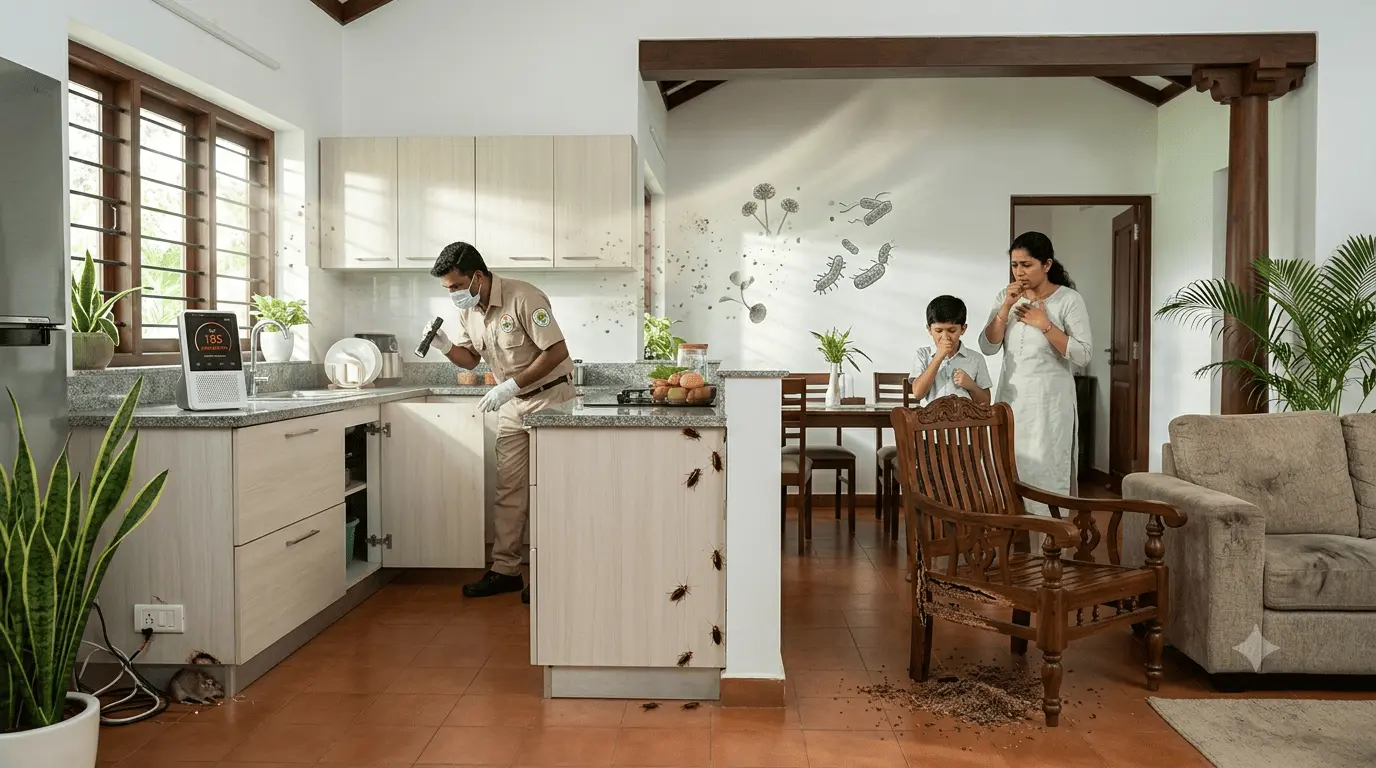
Between the long monsoon stretch and humidity levels that rarely dip below 75%, our homes offer termites exactly what they're looking for: moisture, warmth, and an endless supply of timber to feed on. And termites don't announce themselves. They work quietly, inside walls and beneath furniture, often for months before the damage becomes visible.
That's why prevention matters so much here. Repairing a termite-damaged wardrobe or replacing a rotted door frame costs far more in money and hassle than catching the problem early. In this guide, we'll walk through why Kerala's climate is such fertile ground for termites, which parts of your home are most at risk, and how a professional termite control service in Kochi can help you stay ahead of an infestation rather than reacting to one.
Why Kerala's Humid Climate Increases Termite Activity
Termites are, quite literally, built for weather like ours. A few climate factors work together to keep them active almost year-round:
- High moisture levels: Termites need moisture to survive, and Kerala's air rarely gives them a reason to look elsewhere.
- Warm temperatures: Consistent warmth accelerates termite metabolism, meaning faster feeding and faster colony growth.
- Ideal breeding conditions: Unlike regions with a cold season that slows insect activity, Kerala's mild winters allow termite colonies to keep expanding continuously.
- Soil moisture: Subterranean termites, the most common species here, travel through damp soil to reach wooden structures, entering through tiny cracks in foundations.
- Continuous termite colonies: A single colony can survive for years, growing to hundreds of thousands of members if left undisturbed.
- Hidden infestations: Termites avoid light and open air, which means most activity happens inside walls, under flooring, or within furniture, completely out of sight.
This combination is exactly why homeowners across Kochi and the wider state benefit from routine termite control service in Kerala, rather than waiting for visible damage to appear.
Wooden Interiors Most at Risk from Termites
Wooden Doors
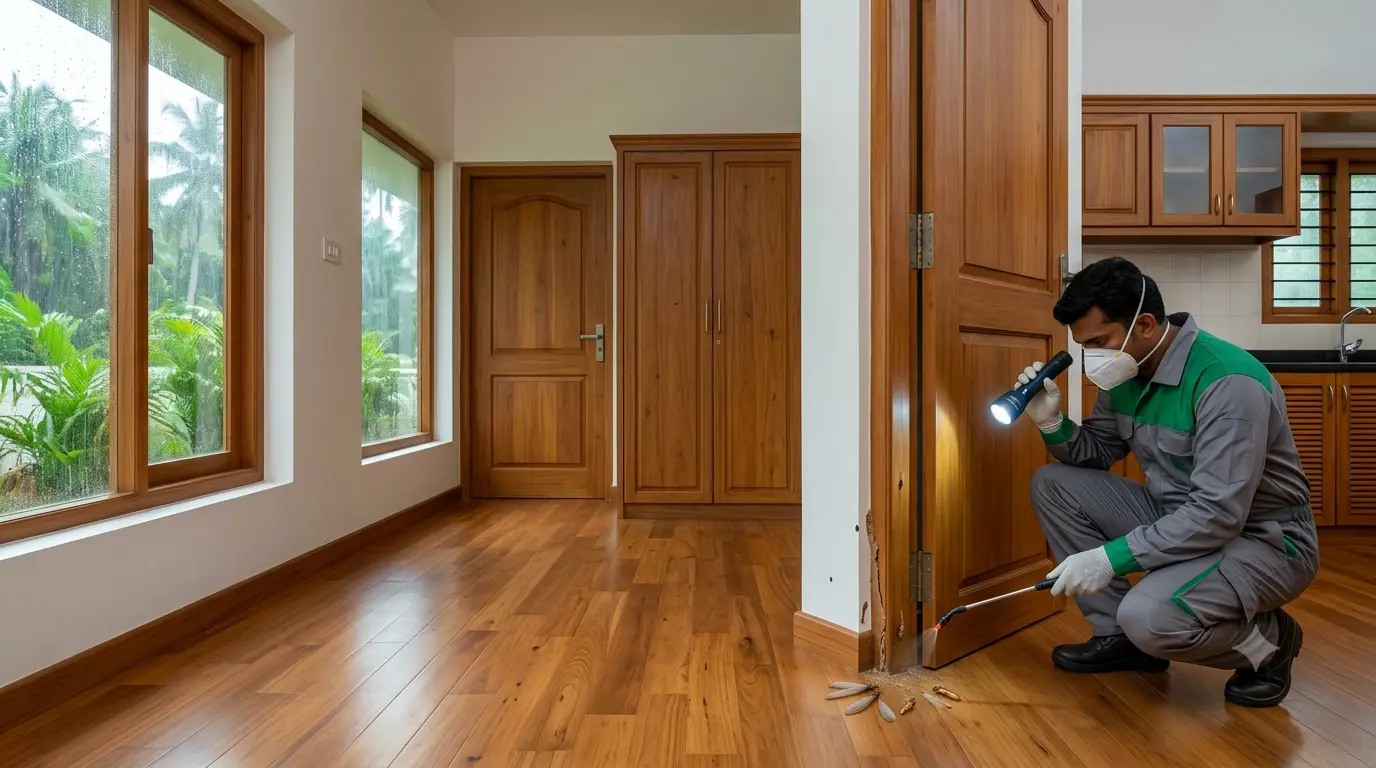
Doors sit close to the ground and are frequently exposed to rain splashback, especially at entryways. Moisture seeping into the base makes them a common termite entry point.
Kitchen Cabinets
Kitchens combine two termite favourites: moisture and warmth, thanks to daily cooking, washing, and occasional leaks under the sink.
Wardrobes
Wardrobes are rarely moved or inspected, which makes them an easy long-term target. Damage often stays hidden until a shelf collapses or clothes show signs of wood dust.
Wooden Flooring
Flooring in direct or near contact with damp subfloor material is especially vulnerable, particularly on ground floors during monsoon.
False Ceilings
Moisture trapped above false ceilings, combined with poor ventilation, creates a dark, humid cavity ideal for termite territory that's rarely checked.
Wooden Staircases
Staircases with wooden treads or support beams near external walls can absorb moisture from wall seepage, weakening structural integrity over time.
Window Frames
Like doors, window frames face constant exposure to rain and humidity, especially on the windward side of a building during monsoon.
Office Furniture
Commercial spaces aren't immune. Wooden desks, cabinets, and partitions in ground-floor offices or basements face similar risks, particularly in older buildings with damp-prone walls.
Early Signs of Termite Infestation You Should Never Ignore
Catching an infestation early can be the difference between a quick treatment and a full furniture replacement. Watch for:
- Mud tubes running along walls, skirting, or foundations
- Hollow-sounding wood when tapped with a knuckle
- Tiny holes in wooden surfaces, sometimes with fine dust nearby
- Discarded wings near windowsills or light fixtures, a sign of a recent termite swarm
- Sagging wood or surfaces that feel soft or spongy
- Bubbling or peeling paint, which can indicate moisture and termite activity beneath
- Fine wood dust collecting near furniture joints or skirting boards
- Sticking doors and windows, often caused by swelling or internal damage
If you notice even one or two of these signs, it's time for a closer inspection, ideally by a professional who knows what to look for beyond the surface.
Practical Ways to Protect Wooden Interiors from Termites
While professional treatment is essential for existing infestations, these habits go a long way in prevention:
- Keep humidity under control using exhaust fans and dehumidifiers in enclosed rooms.
- Improve ventilation in kitchens, bathrooms, and storage spaces to prevent moisture buildup.
- Repair plumbing leaks immediately; even a slow drip under a sink can sustain a termite colony for months.
- Avoid wood-to-soil contact for furniture, door frames, and structural wood elements.
- Seal cracks and gaps in walls and foundations where termites commonly enter.
- Use termite-resistant wood or treated timber for new construction and furniture.
- Apply wood preservatives periodically to doors, window frames, and exposed wooden surfaces.
- Conduct regular furniture inspections, especially in wardrobes and storage units that are rarely opened.
- Keep storage areas dry, avoiding cardboard or paper directly on wooden shelving.
- Schedule annual termite inspections, even if you haven't noticed any visible problems.
Common Mistakes Homeowners Make
Even well-intentioned homeowners often make choices that let termite problems grow unchecked:
- Ignoring small signs, assuming a few wood shavings or a sticking door isn't serious
- Relying on DIY sprays, which kill visible termites but rarely reach the colony
- Delaying inspections, especially in older homes that "seem fine"
- Poor ventilation, particularly in storerooms, false ceilings, and basements
- Allowing moisture buildup from unresolved leaks or poor drainage
- Storing wood or cardboard in damp areas, unintentionally inviting termites indoors
These mistakes are understandable, but they often turn a manageable problem into an expensive repair.
Why Professional Termite Control Is the Best Long-Term Solution
DIY treatments and store-bought sprays typically address what's visible, not what's underlying. Professional termite control takes a fundamentally different approach:
- Advanced inspection methods, including moisture meters and acoustic detection, to locate hidden colonies
- Complete colony elimination through targeted baiting and soil treatment, not just surface spraying
- Safe treatments formulated for use in occupied homes
- Long-lasting protection, often backed by warranty periods
- Preventive monitoring to catch new activity before it spreads
- Eco-friendly solutions that minimize impact on family members, pets, and the surrounding environment
Whether you need a one-time treatment or an annual maintenance plan, a trusted termite control service in Kochi, termite control service in Kerala, or termite control service in Cochin gives you protection that DIY methods simply can't match.
DIY vs. Professional Termite Control:
Factor DIY Sprays & Home Remedies Professional Termite Control
Reaches hidden colonies No Yes Long-term protection Temporary Long-lasting, often warrantied Equipment used Basic sprays Moisture meters, baiting systems, soil treatment Safety for families Varies Formulated for occupied homes Cost over time Repeated purchases One inspection, targeted treatment Risk of recurrence High Low, with monitoring Why Choose PestTrack?
PestTrack has built its reputation on understanding Kerala's specific termite challenges, not applying a generic, one-size-fits-all treatment.
- Experienced termite specialists trained in Kerala's climate-driven infestation patterns
- Advanced termite detection to identify hidden colonies before they cause structural damage
- Safe treatments for families, suitable for homes with children and pets
- Residential & commercial solutions, from individual homes to large office spaces
- Customized termite management plans based on your property's specific risk factors
- Quick response across Kerala, so infestations are handled before they spread further
- Long-term protection plans, including preventive monitoring and annual inspections
If you're planning new construction, our team also offers pre-construction termite treatment to build protection into your home from the ground up, along with post-construction termite treatment for existing properties.
Related reading: explore our Termite Control Service page, browse our full range of pest control services, or check our blog on termite inspection best practices for more homeowner guidance.
Conclusion
Kerala's humid, monsoon-heavy climate isn't going away, and neither is the risk it poses to wooden interiors. Doors, wardrobes, flooring, and false ceilings are all vulnerable when moisture and warmth combine, often without any visible warning until real damage has been done.
The good news is that prevention works. Controlling indoor humidity, fixing leaks promptly, and scheduling regular inspections can dramatically reduce your risk. And when professional treatment is needed, acting early always costs less than repairing termite-damaged wood later.
Contact PestTrack today for a thorough inspection and dependable termite control service in Kochi, termite control service in Kerala, or termite control service in Cochin and give your wooden interiors the protection they deserve.
Frequently Asked Questions
1. Why are termites more active during Kerala's humid season? Termites depend on moisture to survive, and Kerala's high humidity and long monsoon season provide constant access to the water they need, along with warm temperatures that speed up breeding.
2. How can I protect wooden furniture from termites? Keep furniture away from damp walls, use wood preservatives periodically, ensure good ventilation around storage areas, and schedule regular inspections, especially for wardrobes and cabinets that are rarely moved.
3. What are the first signs of termite damage? Mud tubes along walls, hollow-sounding wood, small holes with fine dust nearby, and discarded wings near windows are among the earliest and most reliable signs.
4. How often should I schedule a termite inspection? Most homes in Kerala benefit from an annual termite inspection, with an additional check recommended just before monsoon season if your home has had past infestations.
5. Is termite treatment safe for homes with children and pets? Reputable termite control services use treatments specifically formulated to be safe for occupied homes when applied correctly by trained technicians.
6. What is the best termite control service in Kochi? Look for a provider with local climate expertise, advanced detection methods, and a track record of long-lasting results qualities PestTrack is built around.
7. How long does professional termite treatment last? Depending on the treatment method, protection can last anywhere from several years to a decade, particularly with soil treatments and periodic monitoring.
8. Can termites damage modular kitchens and wardrobes? Yes. Modular units made with particle board or untreated wood are especially vulnerable, particularly in humid kitchen and storage environments.
9. What is the difference between pre-construction and post-construction termite treatment? Pre-construction treatment involves applying a chemical barrier to soil and foundations before building, while post-construction treatment addresses existing structures, often through soil injection and localized wood treatment.
10. How much does termite control cost in Kerala? Costs depend on property size, infestation severity, and treatment type. It's best to request a property inspection for an accurate, tailored quote.