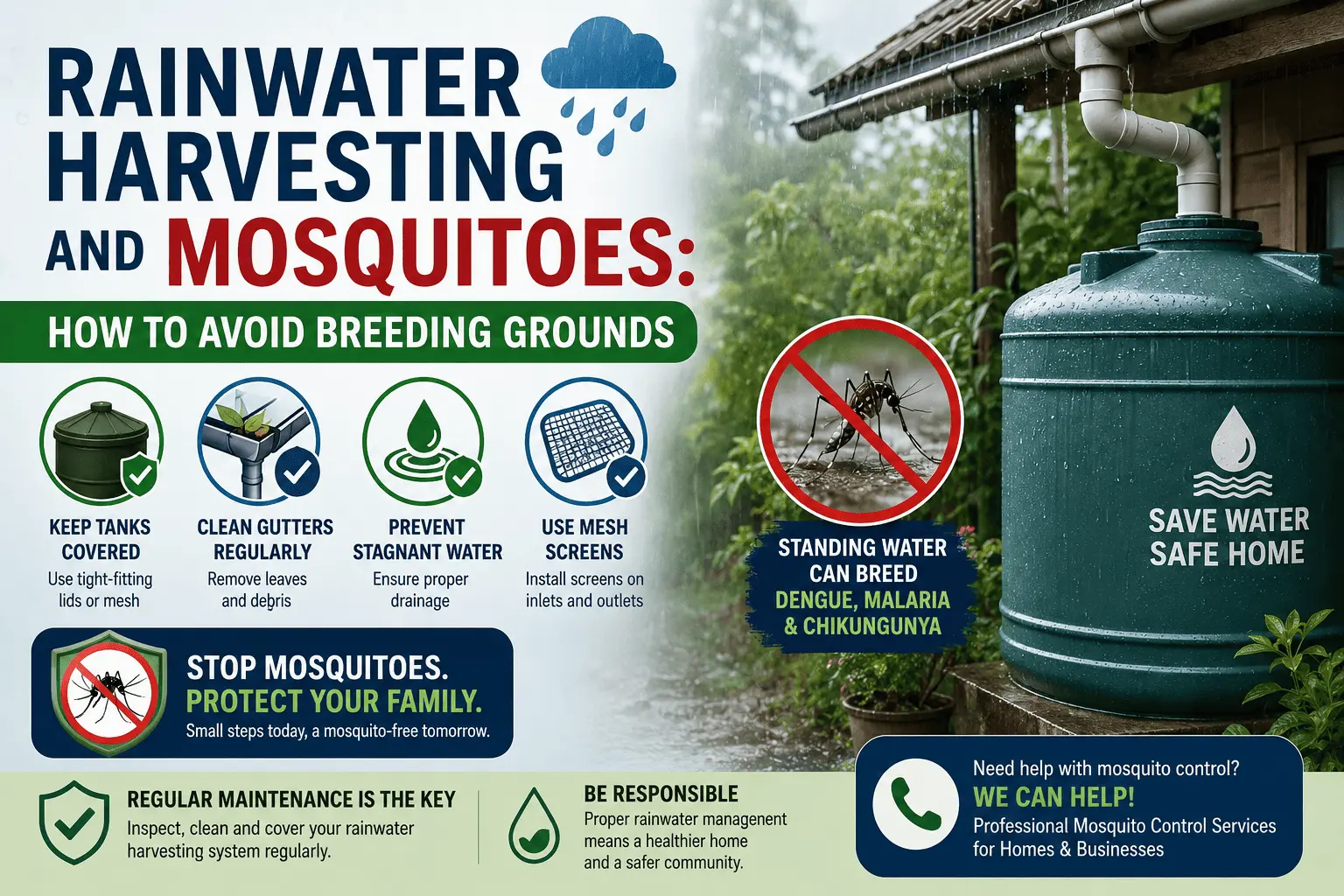
Rainwater Harvesting and Mosquitoes: How to Avoid Breeding Grounds
Indroduction
Anyone who has installed a rainwater harvesting system in Kochi or Ernakulam knows the satisfaction of watching a tank fill up during a good monsoon downpour. It feels like a small win for the household and for the environment. But a few weeks later, that same tank or the pipes and filters feeding it can quietly turn into something far less welcome: a mosquito breeding ground.
This isn't a flaw in rainwater harvesting itself. It's what happens when a system that collects and stores water isn't checked often enough. Mosquitoes don't need much. A few centimetres of still water sitting undisturbed for a week is often enough for eggs to hatch and larvae to mature. In a city that gets as much rain and humidity as Kochi does, that risk is worth taking seriously not with alarm, but with a bit of regular attention.
Can Rainwater Harvesting Attract Mosquitoes?
Yes, but only under the wrong conditions. A rainwater harvesting system that is properly sealed, filtered, and inspected is no more attractive to mosquitoes than any other part of a well-maintained home. The trouble starts when water is left exposed, when covers don't fit properly, or when parts of the system are simply forgotten about for months at a time.
Mosquitoes are opportunists. They're drawn to still water because it gives their larvae a safe, undisturbed place to develop: no current, no fish, no predators. A rainwater harvesting setup, by its very design, holds water. If any part of that system allows water to sit exposed to open air, it becomes a candidate.
The good news is that this is almost entirely preventable. Understanding where the risk actually lies is the first step.
Common Mosquito Breeding Spots in Rainwater Harvesting Systems
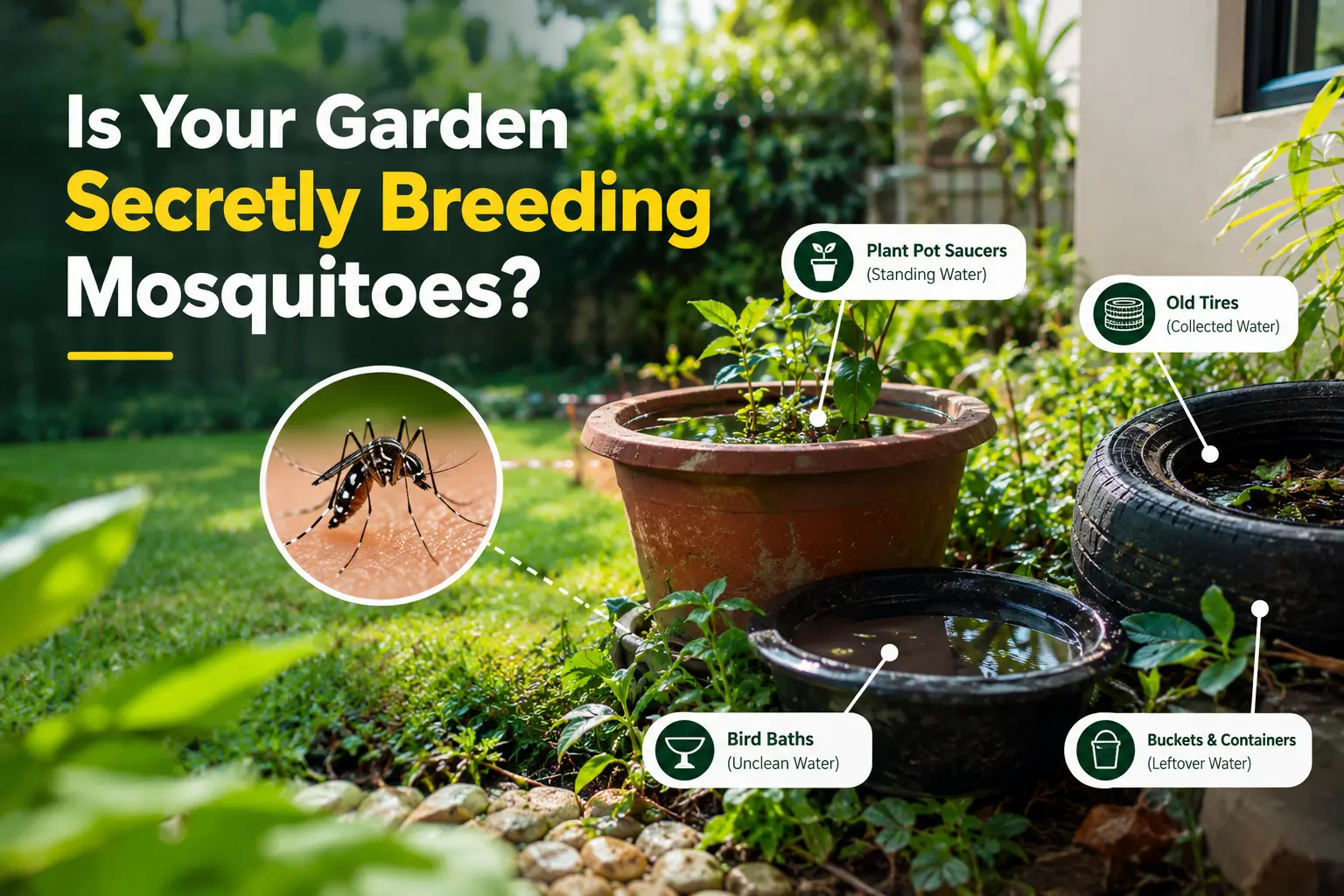
Most homeowners assume the main storage tank is the only area to worry about, but mosquitoes are just as happy breeding in smaller, easy-to-miss spots around the system.
- Collection tanks with loose or damaged covers even a small gap is enough for a mosquito to get in and lay eggs.
- Storage containers or sumps that aren't part of the main tank but still hold water between uses.
- Gutters that collect leaves and debris, allowing small pools of water to sit rather than draining away.
- Downpipes with bends or blockages where water can pool instead of flowing through.
- Filters and mesh screens that have degraded, torn, or come loose over time.
- Overflow outlets that don't drain properly and allow water to collect at the base of the tank.
- Blocked drainage points around the property that back up after rainfall.
- Puddles or waterlogging near the tank, often caused by uneven ground or a leaking joint.
- Unused containers, buckets, or old paint tins left near the harvesting setup, which fill with rain and are easy to overlook.
None of these are unusual or unfixable. They're simply the kind of small maintenance details that get pushed down the priority list, especially during a busy monsoon season.
Why Mosquitoes Are a Concern in Kochi and Ernakulam
Kerala's climate does a lot of the work for mosquitoes without anyone realising it. Kochi and Ernakulam see extended monsoon rainfall, high humidity through most of the year, and warm temperatures that rarely dip low enough to slow mosquito activity. This combination means that any standing water, whether it's in a rainwater harvesting tank, a clogged gutter, or a forgotten container, has near-ideal conditions to become a breeding site almost immediately.
Mosquito-borne illnesses are a genuine public health concern in many parts of Kerala, and mosquito control plays a role in reducing exposure. That said, pest control services are not a substitute for medical care or public health guidance. If you or a family member shows symptoms consistent with a mosquito-borne illness, the right first step is always to consult a doctor. Pest control's role is preventive, reducing the conditions that allow mosquito populations to grow around a property in the first place.
How to Prevent Mosquito Breeding Around Rainwater Harvesting Systems
Most prevention comes down to consistency rather than complexity. A few practical habits go a long way:
- Keep storage tanks properly covered with tight-fitting lids; check that covers haven't warped, cracked, or shifted out of place.
- Inspect gutters regularly, especially before and during the monsoon, to clear leaves and sediment.
- Remove leaves and debris from around the tank and filter area, since organic matter breaks down and holds moisture.
- Prevent unnecessary standing water near the base of the tank by checking for uneven ground or drainage issues.
- Check overflow and drainage points to make sure water is actually flowing away rather than pooling.
- Clean filters and screens on a regular schedule, replacing any that are torn or degraded.
- Inspect the system after heavy rainfall, when the risk of overflow and pooling is highest.
- Repair leaks and damaged covers as soon as they're noticed rather than waiting for the next dry spell.
- Remove containers holding stagnant water anywhere on the property, not just near the harvesting system.
- Schedule a professional inspection if mosquito activity continues despite these steps.
None of these require special equipment. What they do require is a routine checking the system with the same regularity you'd check anything else that matters to the household.
How Often Should You Inspect a Rainwater Harvesting System?
There isn't a single inspection schedule that fits every property. How often a system needs checking depends on its design, the surrounding landscape, local rainfall patterns, and whether mosquito activity has already been noticed nearby.
That said, a reasonable approach for most homes in Kochi and Ernakulam is to inspect more frequently during and immediately after the monsoon, when rainfall is heaviest, and water accumulates fastest. During drier months, a monthly check is often enough, unless the property has a history of drainage issues or nearby standing water. If mosquitoes are already a visible problem, inspections should happen more often until the source is identified and addressed.
When Should You Consider Professional Mosquito Control?
Some situations go beyond what routine home maintenance can resolve. It's worth considering professional mosquito control in Kochi & Ernakulam when:
- Mosquito activity around the property keeps increasing despite regular cleaning.
- Breeding recurs in the same spots even after you've addressed the obvious causes.
- There are larger areas of stagnant water that are difficult to drain or access.
- Mosquitoes are consistently seen around the tank, filters, or drainage areas.
- Problems persist for days or weeks after rainfall rather than settling down.
- You've checked the visible parts of the system but can't pinpoint where the breeding is actually happening.
In these cases, a trained eye often finds sources that aren't obvious from the outside: inside pipe joints, beneath loose paving, or in parts of the drainage network that aren't easy to inspect without the right tools.
How Professional Pest Control Can Help
A professional pest control team brings a level of thoroughness that's hard to replicate with a weekend inspection. Typically, this involves:
- A full property inspection to trace mosquito activity back to its source.
- Identifying breeding sites that aren't immediately visible, including within the rainwater harvesting system itself.
- Recommending specific preventive measures suited to your property's layout and drainage.
- Treating identified resting and breeding areas using appropriate methods.
- Helping reduce the likelihood of the same problem recurring.
- Providing practical maintenance guidance so the system stays low-risk going forward.
It's worth being upfront here: no pest control service can promise complete, permanent elimination of mosquitoes, especially in a climate like Kerala's. What a good service can offer is a meaningful reduction in breeding sites and mosquito activity, along with the knowledge to keep it that way. Pairing professional pest control with consistent property maintenance tends to produce the best long-term results.
Rainwater Harvesting and Mosquito Prevention: A Simple Checklist
Use this as a quick reference during routine inspections:
- Tank cover is intact and fits tightly
- No cracks, gaps, or damage on the tank or lid
- Gutters are clear of leaves and debris
- Downpipes are free-flowing with no blockages
- Filters and mesh screens are clean and undamaged
- Overflow outlet drains properly, with no pooling at the base
- No standing water around the tank or nearby drainage points
- No unused containers nearby collecting rainwater
- System has been checked within the last month (or sooner after heavy rain)
- No visible mosquito activity around the tank or storage areas
Frequently Asked Questions
Can rainwater harvesting tanks attract mosquitoes? Yes, if water is left exposed or the tank isn't properly sealed. A well-covered, well-maintained tank is not an attractive breeding site.
How can I stop mosquitoes from breeding in collected rainwater? Keep tanks tightly covered, clean filters regularly, check drainage points, and inspect the system frequently, especially after heavy rainfall.
Does covering a rainwater tank prevent mosquitoes? A tight-fitting, undamaged cover significantly reduces the risk, since it stops mosquitoes from reaching the water to lay eggs.
How often should rainwater harvesting systems be inspected? It depends on the system and local conditions, but more frequent checks during and after monsoon season are generally advisable.
Why are mosquitoes increasing around my property after rain? Rainfall creates temporary pools of standing water in gutters, drains, and low-lying areas, which can quickly become breeding sites if not cleared.
When should I contact mosquito control services in Kochi? If mosquito activity continues despite regular cleaning and inspection, or if you can't identify where the breeding is happening, it's a good time to bring in a professional.
Can professional pest control prevent recurring mosquito problems? Professional pest control can significantly reduce recurring issues by identifying and treating breeding sources, though ongoing property maintenance is also important.
Is rainwater harvesting safe from mosquitoes if the system is properly maintained? Yes. A properly sealed, regularly inspected system carries a much lower risk of becoming a mosquito breeding ground.
Conclusion
Rainwater harvesting remains one of the most practical steps a household in Kochi can take, both for water conservation and for reducing dependence on other sources during dry spells. The mosquito risk isn't a reason to avoid it; it's simply a maintenance detail worth building into your routine. A quick monthly check, a bit of extra attention after heavy rain, and a call to a mosquito control or pest control service when something doesn't add up will keep your system doing what it's meant to do, without the side effects.