
What Impact Do Post-Harvest Pest Control Innovations Have on Reducing Food Loss in Grain Storage?
Introduction
Food loss is one of the most critical agricultural issues that are experienced in the world and grains are amongst the most affected. Understanding the grains, they are not only threatened by moisture and temperature, but also insects, rodents, and fungi after harvest. These parasites have the ability to cause serious financial damages to farmers and food shortages among the population by destroying a good percentage of the grains stored by farmers.
The post harvest pest management has been significantly transformed due to the modern science and innovation. Current technologies and environmentally friendly pest management practices are contributing to fewer wastes, higher quality grain and food security.
In places such as Kochi where agriculture is one of the crucial sectors of the economy, it is important to embrace efficient measures in pest management systems. This is why the right influence on the preservation of grains stored and the reduction of losses with food can be made by using professional pest control service in Kochi.
Conceptualizing Post-Harvest Grain Loss.
Harvest loss occurs during handling, transportation as well as storage (grain). When the grains have been harvested, they are subject to a number of pests, which include:
Weevils, beetles and moths are examples of insects.
Rodents who defile food with droppings and cut sacks with their teeth.
Microbial pests, such as the molds and fungi that grow in a moist environment.
Major economic damage could be achieved even with minor infestation. Global research reveals that in certain areas, post-harvest losses may go as high as 2030 percent of the stored grains. These losses do not only decrease availability of food, but also raise prices and impact on the livelihood of farmers.
The pest control service providers of Kochi have taken note of this problem and are embracing new technologies to curb and prevent the occurrence of the pests more efficiently.
Innovation and its role in Post-Harvest Pests Control.
The application of technological advancements has entirely transformed the way the pest management in the grain storage facilities is conducted. Due to the reason of change of focus, emphasis is now not on chemical-heavy methods, but on eco-friendly and sustainable solutions. The following are some of the prominent innovations:
a. Hermetic Storage Technologies.
Hermetic (airtight) storage systems do not allow oxygen to get into and out of an interior environment thus the survival of pests is not possible. These systems preserve the moisture content and quality of the grain and get rid of chemical fumigation.
b. Greater Control of the Atmosphere.
This process alters the amount of oxygen, carbon dioxide and nitrogen in grain silos thereby eliminating pests without toxic chemicals. It is safe, effective, and it does not affect the nutritional value of grains.
c. Sophisticated Surveillance Systems.
The new storage facilities have now been equipped with IoT sensors to provide real-time monitoring of temperature, humidity and pest activity. These smart gadgets warn their operators in advance of an infestation before it spreads and assists in averting massive grain losses.
d. Biological Pest Control
Biological management involves the use of natural predators or microbes in managing pests. It is a more natural and safer method that is becoming more common with eco-friendly farmers.
e. Better Fumigation Process.
Pest elimination is being done by using new-generation fumigants such as phosphine which are applied in airtight containers, thereby allowing precise and safe elimination of pests. This process minimizes residue and is safer to the environment than the conventional processes.
These Innovations and their effect on Food Security.
The introduction of the new technologies has impressed the world food security. The benefits are as follows:
a. A Credible Decrease in Food Wastage.
Farmers would have up to 90 percent of the grain losses that are incurred in the storage process saved by effectively keeping the pest populations under control. This makes sure that profits of food to consumers are increased and less wasted.
b. Economic Favors to Farmers.
Less losses will translate to more profits to farmers and grain traders. The quality of the stored grains would fetch high prices in the market and they could be exported with confidence.
c. Environment Sustainability.
The innovations that reduce the use of chemicals can be used to protect the environment and encourage biodiversity. This transition to sustainable pest management will add to healthier soils and ecosystems.
d. Safer Food Supply Chain
Safety of grains: Pest control without chemicals provides benefits of maintaining all chemical-free grains intact, not leaving any harmful leftovers that can impair the health conditions of consumers.
Combined with professional services such as pest control service in Kochi, the innovations can assist farmers and grain dealers in guaranteeing their future safety of food and financial stability.
The Value of Professional Pest Control Services.
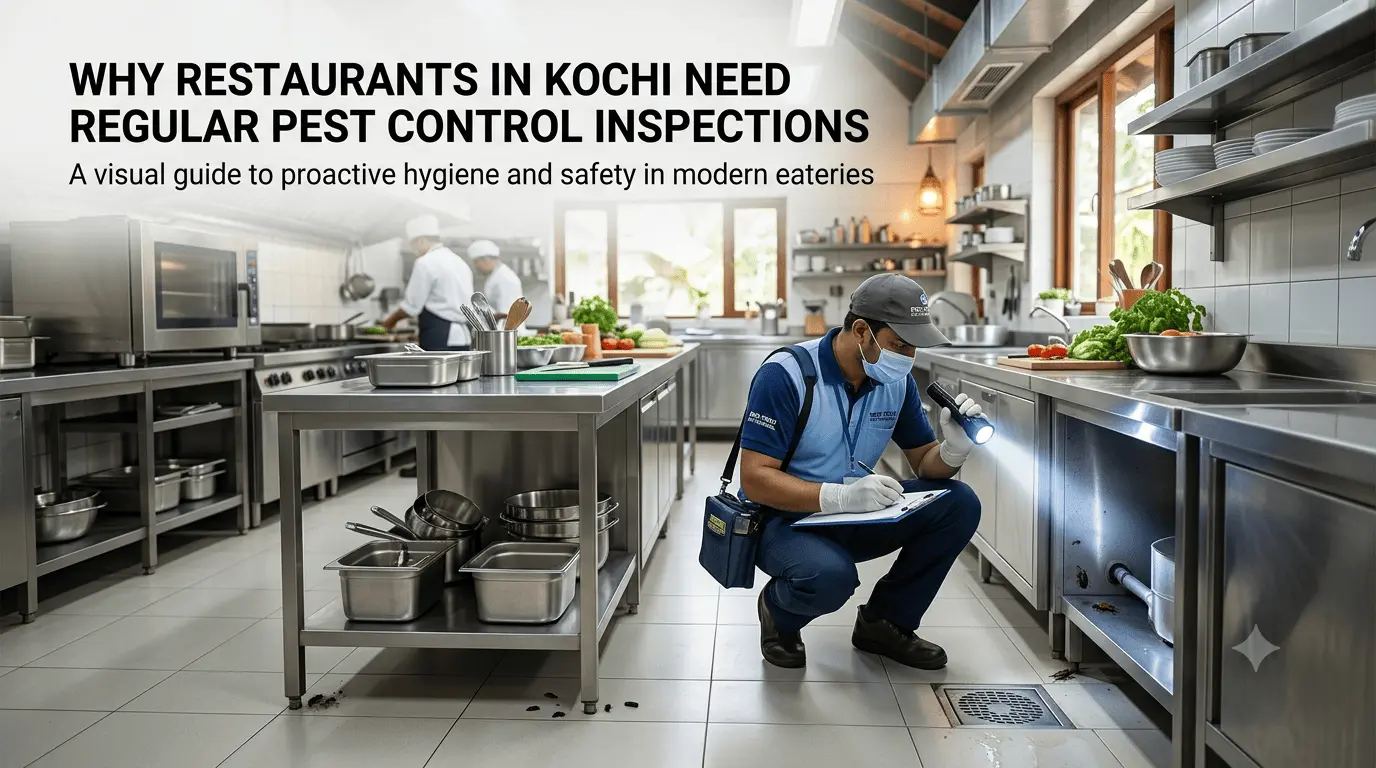
Although technology is a significant factor, the skills of pest management experts are also an important factor. The trained technicians are aware of the biology of the pests, their construction of the storage facilities and the environmental issues that lead to infestations.
An effective pest management company in Kochi provides:
- Frequent checks and inspecting of grain warehouses.
- An environment-specific, grain-specific pest management plans.
- Global standards of safe fumigation and treatment procedures.
Environmentally-friendly solutions that maintain the quality of food.
Prevention measures, such as cleaning, cracks sealing, and the creation of ideal storage conditions also are implemented with the help of the professional pest control specialists.
Difficulties in Favoring Innovations.
In spite of the obvious benefits, the implementation of new pest control technologies has difficulties:
Appreciable Start-up Costs: Other sophisticated systems need an investment amount that would not be easily affordable by small farmers.
Ignorance: A number of storage operators are not conscious of modern and chemical-free choices.
Training Requirement: For efficient utilization of technology, technical skills and regular observation are required.
Nevertheless, these problems are slowly being defeated by government aid, awareness, and the provision of professional pest control services to make the gap between innovation and practice narrow.
The future of post harvest pest control.
In the future, the use of artificial intelligence (AI) and machine learning (ML) to control pests will put efficiency at a higher level. Predictive analytics may predict the impact of pests and they may occur before the outbreaks happen, which will assist in proactive management.
There will also be biodegradable pesticides, ultrasonic detergent, and drone-based inspections that will modernize the area more. Pest control service in Kochi among other local service providers is supposed to adopt such smart technologies in order to offer safer and more sustainable food storage solutions.
Conclusion
The loss of food during grain storage has been greatly minimized through post-harvest pest control inventions that have enhanced food detection, prevention, and treatment. The technologies do not only assist in ensuring the income of the farmers but also enhance the food security and sustainability across the globe.
In cases where agriculture and food trade is still a major part of the economy such as in Kochi, expert pest controlling services are important to invest in. By selecting a reliable pest control company in Kochi, there is a guarantee that the latest technology and expertise will be utilized to ensure the storage of grain, less wastage of food, and the creation of a healthier food system to the general population.