Hantavirus: What Is Hantavirus, Where It Comes From, and How to Protect Yourself from Infected Rats
Breaking (May 2026): A confirmed hantavirus cluster has been reported aboard a cruise ship linked to Argentina. The WHO has identified 5+ confirmed cases, including 3 deaths. The outbreak is linked to the Andes strain of hantavirus — carried by rats in South America. WHO currently assesses global risk as low, but the event is a reminder of why rat control at home matters.
Indroduction
Most of us know rats are a nuisance; they chew wires, contaminate food, and make unsettling sounds in the walls at night. But there is something far more dangerous that rats carry silently, without any visible signs: hantavirus.
Hantavirus is a rare but serious disease that spreads from rodents to humans. It does not need a bite. It does not need direct contact with the rat itself. Something as simple as sweeping old rat droppings in your storeroom can put you at risk. In Kerala's humid climate, where rat infestations are common in homes, warehouses, and even apartment complexes, understanding hantavirus is not just useful. It could save a life.
In this blog, we cover everything you need to know: what hantavirus is, where it comes from, how it spreads, what symptoms to watch for, and most importantly, how proper rat control and pest control can protect your family.
What Is Hantavirus?
Hantavirus is a group of viruses belonging to the family Hantaviridae. These viruses are found in rodents, primarily rats and mice and can be transmitted to humans through contact with infected animals or their waste. What makes hantavirus particularly dangerous is that the rodent itself shows no signs of illness. A rat carrying hantavirus looks perfectly healthy, eats normally, and moves around your home without any visible indication that it is infected.
In humans, hantavirus can cause two serious diseases depending on the region:
• Hantavirus Pulmonary Syndrome (HPS) — primarily found in the Americas. It attacks the lungs and can be fatal in up to 50% of severe cases.
• Haemorrhagic Fever with Renal Syndrome (HFRS) — more common in Europe and Asia, affecting the kidneys.
There is currently no licensed vaccine or specific antiviral treatment for hantavirus. Early supportive care in an ICU is the primary way to improve survival odds. This makes prevention — through rodent control — the only reliable defence.
Where Does Hantavirus Come From? The Origin Story
Hantaviruses have existed for thousands of years, living quietly in rodent populations worldwide. Each strain of hantavirus is typically associated with a specific rodent species, a biological relationship that has evolved over millennia.
The virus first caught major global attention in 1993 in the Four Corners region of the southwestern United States, where a sudden cluster of previously healthy young adults died from an unexplained respiratory illness. Scientists eventually identified the culprit: the Sin Nombre virus, carried by the deer mouse (Peromyscus maniculatus). This was the discovery that put hantavirus on the medical map.
But hantavirus was not new. Historical records from Asia and Europe describe similar diseases going back centuries. In Asia, the virus carried by striped field mice and rats has been causing kidney disease (HFRS) for a long time, but it was just not identified by name until modern virology arrived.
Which Rats and Rodents Carry Hantavirus?
Different hantavirus strains are linked to different rodent species. In South America (including Argentina and Chile), the Andes virus is carried by the long-tailed pygmy rice rat. In North America, deer mice carry the Sin Nombre virus. In Europe and Asia, bank voles and striped field rats are common carriers.
In India and Kerala, the common house rat (Rattus rattus) and Norway rat (Rattus norvegicus) are the most prevalent rodent species in homes and commercial properties. Families across Kochi and Ernakulam who have sought rat control service in Kochi report finding both species nesting inside kitchen walls, attics, and store rooms. While specific large-scale hantavirus studies in Kerala are limited, these species are known globally to carry multiple zoonotic diseases, and the risk of rodent-borne illness in humid, tropical regions like Kerala is well established.
How Does Hantavirus Spread to Humans?
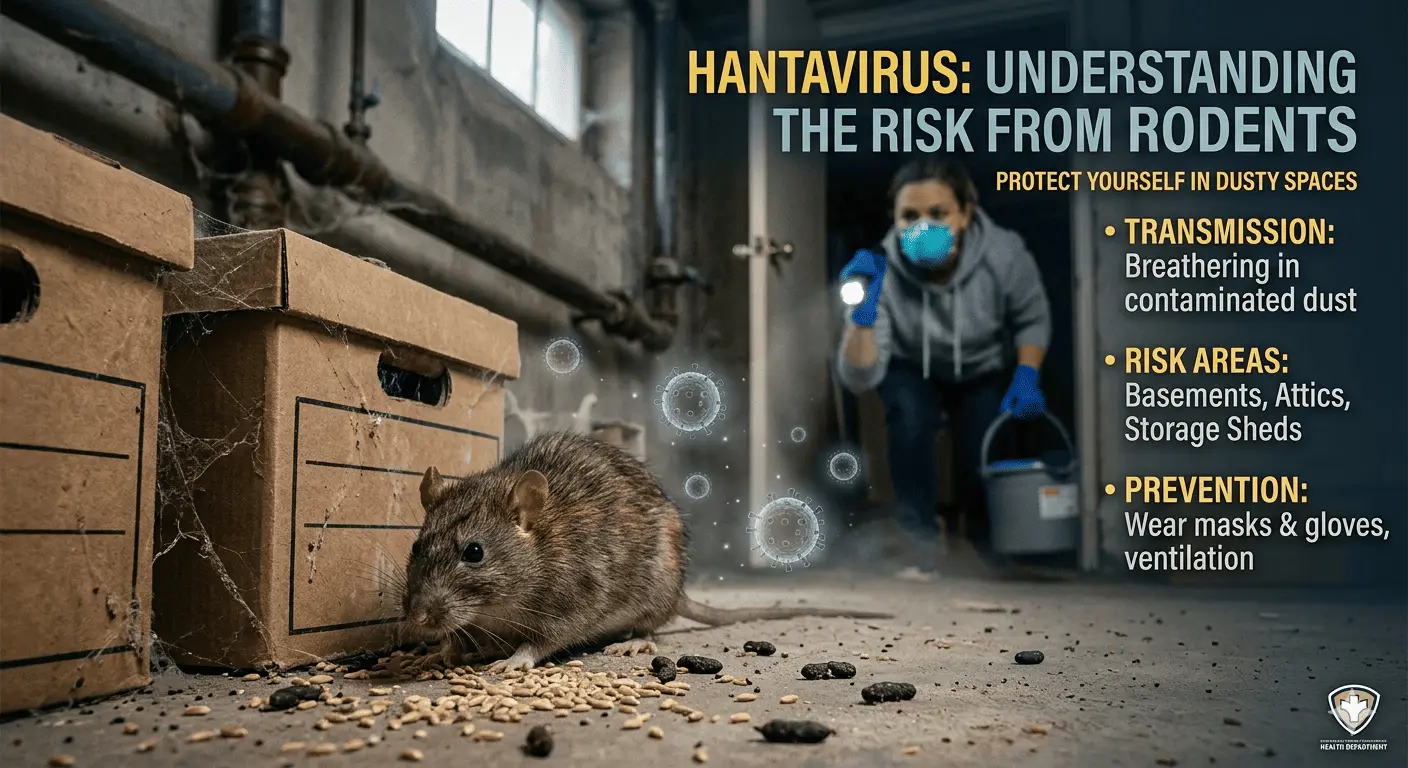
This is the part most people get wrong. You do not need to be bitten by a rat to get hantavirus. The most common route of transmission is breathing in airborne particles — tiny droplets or dust contaminated with infected rat urine, droppings, or saliva.
The main ways hantavirus spreads:
1. Inhaling contaminated dust — When dried rat droppings or urine are disturbed (for example, by sweeping, cleaning, or renovation work), the particles become airborne. If you breathe them in, the virus can enter your respiratory system. This is the most common way people get infected.
2. Direct contact — Touching rat droppings, urine, nesting material, or a dead rat and then touching your face, mouth, or eyes.
3. Rodent bites — Less common, but a rat or mouse bite can also transmit the virus directly.
4. Person-to-person — Currently only documented for the Andes virus in South America. Other hantavirus strains do not spread between people.
Important: Never dry-sweep or vacuum rat droppings. Always wet-mop or use a damp cloth with disinfectant. Dry sweeping launches particles into the air, exactly how most hantavirus infections happen.
What Are the Symptoms of Hantavirus?
Symptoms appear 4 to 42 days after exposure; the wide range makes it difficult to link back to the source. Early symptoms resemble the flu, which is why hantavirus is often missed in its initial phase.
Early Stage Symptoms (First 3-5 Days)
• High fever
• Fatigue and severe muscle aches
• Headache and dizziness
• Chills, nausea, vomiting
• Abdominal pain and diarrhoea
Late Stage Symptoms (Day 4-10 for HPS)
• Cough and shortness of breath
• Fluid filling in the lungs (pulmonary oedema)
• Acute respiratory distress: breathing becomes extremely difficult
• Drop in blood pressure and shock in severe cases
If you or anyone in your household has recently been exposed to rat droppings, nests, or a rat infestation AND is experiencing any of these symptoms, see a doctor immediately. Mention the potential rodent exposure clearly. Early intensive care significantly improves outcomes.
How Can You Prevent Hantavirus? Precautions That Actually Work
Because there is no vaccine or cure for hantavirus, prevention is everything. And the single most effective prevention strategy is straightforward: get rid of rats and keep them out of your home.
1. Eliminate Rats from Your Home — Hire Professional Rat Control
DIY rat traps and over-the-counter poisons are temporary fixes. Rats are smart, reproduce rapidly, and find new entry points quickly. A professional rat control service in Kochi locates entry points, eliminates the existing colony, and puts long-term proofing in place so they cannot return. In Kochi and Ernakulam, where older buildings, open drainage, and dense neighbourhoods create perfect rat habitats, choosing a trusted pest control service in Kochi is not optional it is essential for your family's health.
2. Never Dry-Sweep Rat Droppings — Wet Clean Only
If you find rat droppings in your home, never sweep or vacuum them dry. This sends virus particles airborne. Instead, spray the area with a disinfectant solution (1 part bleach to 10 parts water), let it soak for 5 minutes, then wipe with a damp cloth or paper towels. Wear gloves and a mask. Dispose of the waste in a sealed bag.
3. Seal Entry Points Around Your Home
Rats can squeeze through gaps as small as 2.5 cm, about the width of a two-rupee coin. Seal cracks in walls, gaps around pipes, holes in the floor, and spaces under doors with steel wool, metal mesh, or concrete. Pay special attention to the kitchen, bathroom drains, and utility areas where pipes enter walls. This kind of structural rodent-proofing is a core part of any professional pest control service in Kerala.
4. Store Food Properly and Remove Clutter
Rats enter homes for three reasons: food, water, and shelter. Store all food, including pet food and bird seed, in airtight containers. Fix water leaks promptly. Remove clutter from storerooms, lofts, and garages that create nesting spots. The less attractive your home is to rats, the less likely you are to have an infestation, especially in high-density localities across Ernakulam and Kochi.
5. Ventilate Before Entering Long-Closed Rooms or Storerooms
Rooms that have been shut for a long time, such as attics, store rooms, basements, or unused portions of a home, are common rat nesting areas. Before cleaning them out, open windows and doors and let fresh air circulate for at least 30 minutes. The concentration of airborne particles from dried rat waste is highest in enclosed, unventilated spaces.
6. Wear Protective Gear When Cleaning Rat-Affected Areas
If you must clean up after a rodent infestation yourself, always wear rubber or plastic gloves, a mask (N95 if possible), and eye protection. Wash your hands thoroughly afterwards. Better still, let a professional pest control team handle the cleanup and treatment.
Why Rat Control and Pest Control Are Your Best Defence Against Hantavirus in Kerala
Kerala's tropical climate, with high humidity, heavy monsoons, and dense vegetation, creates ideal conditions for rodent populations to thrive year-round. Families and businesses looking for a reliable rat control service in Kochi or a comprehensive pest control service in Ernakulam understand this challenge well. Older residential buildings, canal-side housing, and busy commercial areas in Kochi and Ernakulam allow rats to move freely between sewers, buildings, and homes, making professional intervention critical.
A professional pest control company does more than just set traps. At PestTrack, our rodent control service includes a thorough property inspection to identify entry points and nesting zones, baiting with government-approved rodenticides from trusted brands, physical proofing to seal access points, and guidance on post-treatment hygiene to safely manage any residual droppings.
We also provide Annual Maintenance Contracts (AMC) for homes and commercial properties in Kochi and across Ernakulam, which include scheduled inspections and early detection of new rodent activity before it becomes a full infestation. Because hantavirus risk starts the moment rats move in, not just when you see them.
Frequently Asked Questions About Hantavirus
Can hantavirus spread from person to person?
In most parts of the world, hantavirus does not spread between people. The only known exception is the Andes virus in South America, which has shown limited human-to-human transmission through prolonged close contact. The strains found in Asia and Europe are not known to spread person to person.
Is hantavirus found in India or Kerala?
Hantavirus has been documented in Asia, including India, primarily through seroprevalence studies showing evidence of past exposure in rodent and human populations. While large-scale clinical outbreaks have not been well-reported in Kerala specifically, the rodent species that carry hantavirus globally are common in Kerala. The risk is real, particularly where rat infestations are present in homes and workplaces across Kochi, Ernakulam, and other parts of Kerala.
What should I do if I find rat droppings at home?
Do not sweep or vacuum the droppings. Spray the area with a bleach solution, leave it for 5 minutes, then wipe with a damp cloth using gloves. More importantly, call a professional rat control service in Kochi to assess your home for an active infestation. Where there are droppings, there are rats, and they may be nesting nearby.
Is there a vaccine for hantavirus?
No. As of 2026, there is no licensed vaccine or specific antiviral drug for hantavirus. Treatment is supportive, focused on managing symptoms and organ function in an ICU. Prevention through rodent control is the only effective protection currently available.
How do I know if my home has a rat problem?
Common signs include droppings along walls or in cupboards, gnaw marks on wiring, wood, or food packaging, greasy rub marks along skirting boards, scratching noises at night, and a musky smell in enclosed spaces. If you notice any of these, contact a pest control service in Kochi for a free inspection before the infestation grows.
Conclusion: Rats Are More Than a Nuisance — They Are a Health Risk
Hantavirus is a powerful reminder that the rats in your home are not just a minor inconvenience; they are a genuine health threat. The virus travels silently, hides in dried droppings, and causes a disease that has no cure once it takes hold. The only way to protect yourself and your family is to ensure that rats simply do not have a home in your home.
In Kochi and across Kerala, the monsoon season and humid climate make rodent activity significantly higher than in drier parts of India. Families in Ernakulam, Edappally, Kakkanad, and Aluva deal with rat problems year-round, which is exactly why investing in a trusted pest control service in Kochi is not a luxury. It is basic protection for your family's health.
At PestTrack Management Services, we specialise in certified rat control and comprehensive pest control across Kochi, Ernakulam, and Kerala. Our rat control service in Kochi includes end-to-end rodent elimination, property inspection to find entry points and nesting zones, rodent baiting with government-approved products, physical sealing of access points, and safe post-treatment hygiene guidance. Every treatment is safe for children and pets. We also offer Annual Maintenance Contracts (AMC) for homes and businesses, giving you scheduled inspections and early detection year-round so a rat problem never becomes a health crisis.
Worried about rats in your home?
Call PestTrack today for a FREE inspection. We will assess your home, identify the risk, and give you a clear plan to keep your family safe.
Phone: 86064 19293
Website: pesttrack.co.in
Sources: WHO Hantavirus Fact Sheet (May 2026) | WHO DON599 Cruise Ship Cluster | CDC Hantavirus | ECDC Hantavirus Assessment 2026 | PestTrack Management Services, Kochi
hantavirus | pest control | rat control | rodent control Kochi | pest control company in Kerala | rat control service in Kochi | pest control service in Kochi | Ernakulam pest control | Kerala pest control