Best Plants That Actually Repel Mosquitoes — Your Natural Defence Guide
Introduction: The Mosquito Problem Is Real — Especially in Kerala
If you live in Kochi or anywhere across Kerala, you already know the drill. The moment the sun goes down, or after a bout of rain, the mosquitoes come out in full force. They are not just an inconvenience; they are a genuine health threat, carrying diseases like dengue, chikungunya, and malaria that affect thousands of families across the state every single year.
Most people reach for chemical sprays or plug-in repellents. They work, but they come with trade-offs: strong odours, chemical exposure, and the cost of constant refills. What if your garden itself could be part of the solution?
Nature has quietly provided us with a remarkable line of defence. Certain plants produce natural compounds, essential oils, and fragrances that mosquitoes genuinely cannot stand. Better still, many of these plants are easy to grow in Kerala's climate, look beautiful around the home, and serve double duty in the kitchen.
In this blog, we walk you through the best plants that actually repel mosquitoes, plants backed by research, not just folklore, along with tips on growing them in Kerala's tropical conditions
.
What Plants Do Mosquitoes Hate the Most?
This is one of the most searched questions when it comes to natural pest control, and the answer might surprise you with how practical it is.
Mosquitoes primarily navigate using smell. They are drawn to carbon dioxide, body heat, and certain skin chemicals, but they are strongly repelled by a range of plant-based compounds, including citronellal, linalool, limonene, and camphor. Plants that produce these compounds in abundance are your best natural allies.
Here are the top plants proven to keep mosquitoes away, all of which grow well in Kerala's warm, humid climate.
1. Citronella Grass — The Original Mosquito Repellent Plant
If you have ever used a mosquito-repellent candle, there is a good chance it was citronella-scented. Citronella grass (Cymbopogon nardus) is the plant behind that famous scent, and it is considered one of the most effective natural mosquito deterrents in the world.
The plant releases citronellal and geraniol volatile oils that confuse and repel mosquitoes by masking the scents that attract them. Growing it in large pots near your entrance, balcony, or open windows creates a natural fragrant barrier.
Growing tip for Kerala: Citronella loves full sunlight and well-drained soil. It thrives in tropical climates and is low-maintenance once established. Plant it in clusters for maximum effect.
2. Tulsi (Holy Basil) — Nature's Mosquito Guard from Your Own Kitchen
Tulsi is practically a staple in every Kerala household and for good reason beyond its spiritual significance. Studies have shown that Tulsi (Ocimum tenuiflorum) has strong larvicidal properties, meaning it does not just repel adult mosquitoes but also inhibits the development of mosquito larvae in standing water nearby.
The plant emits a sharp, pungent aroma that mosquitoes find deeply unappealing. Place a few Tulsi pots on your windowsill, near your front door, or beside your bed to create a quiet but effective barrier.
Bonus: Fresh Tulsi leaves also boost your immunity, a double win, especially in dengue season.
3. Lemongrass — Does Lemongrass Actually Repel Mosquitoes?
Yes, and very effectively. Lemongrass (Cymbopogon citratus) contains the same citronellal compound as citronella grass, but is more commonly available in Kerala households because it is also a popular cooking ingredient used in curries, teas, and soups.
The strong citrus fragrance creates an invisible scent shield around wherever it is planted. For best results, plant lemongrass in clusters around seating areas, near kitchen windows, or along garden borders.
Growing tip: Lemongrass is incredibly easy to grow in Kerala. It needs minimal care, handles rain well, and spreads naturally. It is one of the most cost-effective natural pest control additions for any home garden.
4. Marigold — Why Do Marigolds Keep Mosquitoes Away?
Marigolds (Tagetes spp.) are one of the most underrated mosquito-repelling plants. They produce a compound called pyrethrum, the same natural insecticide used as a base in many commercial insect repellents. The scent is offensive to mosquitoes, aphids, and a range of other insects.
Beyond pest control, marigolds are cheerful, colourful, and easy to grow in pots and garden beds across Kerala. They bloom vigorously and require very little maintenance.
Where to plant: Window boxes, garden borders, balcony pots, and near outdoor seating areas. Marigolds also deter insects from attacking vegetable plants, making them a smart addition to any kitchen garden.
5. Neem — Kerala's Ancient Mosquito Repellent Tree
Neem (Azadirachta indica) needs no introduction in Kerala. It has been used for centuries in Ayurvedic medicine, and modern research continues to validate its powerful insect-repelling properties. Neem oil is extracted from its seeds and leaves and is one of the most potent natural pesticides known.
A neem tree planted in your compound does several things: it releases bioactive compounds that deter mosquitoes, provides dense shade, and its fallen leaves, when composted, enrich the soil. Neem-based mosquito coils and sprays are widely used in Kerala as a safer alternative to synthetic chemical products.
Fun fact: Burning dried neem leaves in the evenings is a traditional practice in many Kerala homes that has been scientifically validated to reduce mosquito activity in the surrounding area.
6. Lavender — Can Lavender Keep Mosquitoes Out of Your Home?
Lavender (Lavandula angustifolia) is well known for its calming, sleep-promoting fragrance, but mosquitoes feel quite the opposite about it. The linalool and linalyl acetate compounds in lavender are highly effective natural repellents.
While lavender grows best in slightly drier climates, it can be cultivated in pots in Kerala, provided you ensure good drainage and partial sunlight. Indoor lavender plants placed near bedroom windows are a particularly effective way to enjoy fragrant, chemical-free mosquito protection at night.
Tip: Rubbing fresh lavender leaves on exposed skin provides short-term personal protection when outdoors in the evenings.
7. Mint — The Easy-to-Grow Mosquito Deterrent
Mint (Mentha spp.) is one of the simplest and most accessible mosquito-repelling plants for Kerala homes. Mosquitoes intensely dislike the strong menthol scent. Grow it in pots (mint spreads aggressively, so containers are recommended), and place them on kitchen counters, windowsills, and near doors.
Crushed mint leaves can also be applied to the skin as a temporary repellent, and mint tea made from fresh leaves is both refreshing and beneficial during monsoon season.
8. Lemon Balm — What Herb Smells Like Lemon and Repels Mosquitoes?
Lemon balm (Melissa officinalis) is a lesser-known but highly effective member of the mint family. It contains citronellal in high concentrations, the same compound that makes citronella grass so effective. The plant has a pleasant lemon fragrance for humans but is deeply off-putting to mosquitoes.
Lemon balm grows well in pots and partial shade, making it ideal for balconies and shaded courtyards common in Kerala homes. Crush a few leaves between your fingers, then rub them on your wrists and ankles before stepping outdoors for natural, chemical-free protection.
How to Use These Plants for Maximum Mosquito Repelling Effect
Knowing which plants to use is only half the strategy. Placement and maintenance matter enormously.
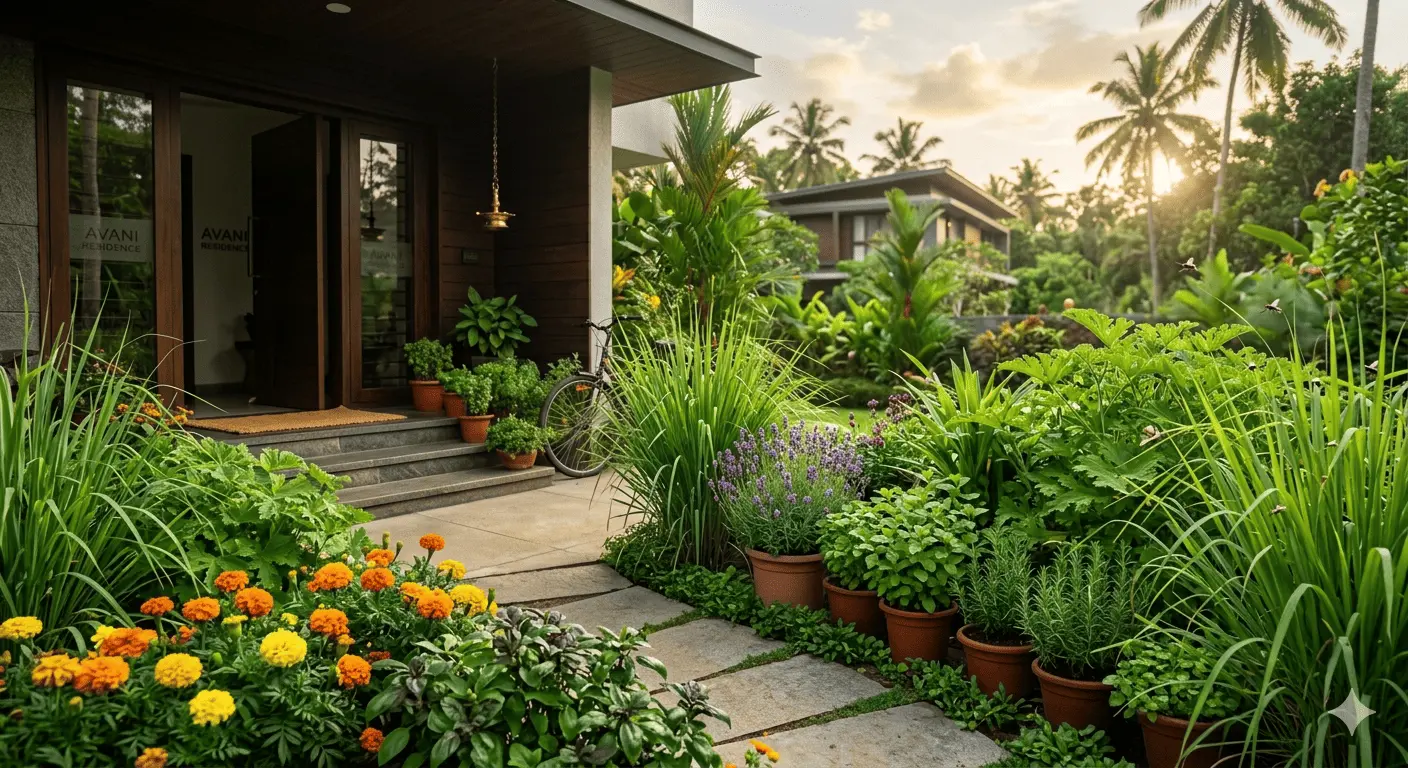
Cluster plants together near entry points, doors, windows, and ventilation gaps. Mosquitoes tend to enter homes through these points, and a scent barrier here is most effective. Regularly bruising or rubbing the leaves of plants like mint, lemongrass, and lemon balm releases more of their volatile oils, intensifying the repellent effect.
Combine fast-growing plants like Tulsi, mint, and lemongrass with structural plants like neem for a layered defence system. Also, eliminate standing water around your home. No plant can compensate for a breeding ground right outside your door. Empty flower pot saucers, check drainage channels, and treat any stagnant water regularly.
Are Plants Alone Enough for Serious Mosquito Problems in Kerala?
This is the honest truth: plants are excellent as a first line of natural defence and as part of a broader mosquito management strategy. They reduce mosquito presence meaningfully, especially in and around the home. However, for serious infestations, particularly during and after the monsoon season, plants alone are not a complete solution.
Kerala's climate creates ideal breeding conditions for mosquitoes across large areas, including drains, construction sites, overgrown vegetation, and waterlogged land. In densely populated areas like Kochi, mosquito activity can remain high regardless of the plants in your immediate environment.
This is where professional pest control in Kochi and expert mosquito service in Kochi make a critical difference.
Conclusion: Grow Green, Stay Protected — and Know When to Call the Experts
Adding mosquito-repelling plants to your home is one of the smartest, most sustainable things you can do as a Kerala homeowner. Plants like Tulsi, lemongrass, neem, marigold, and citronella grass are not just effective, they are affordable, beautiful, and contribute to a healthier home environment.
Start with two or three plants from this list, place them strategically, and build your natural defence layer over time. Combined with good hygiene habits, eliminating standing water, keeping drains clear, and maintaining your garden, these plants can noticeably reduce the mosquito nuisance around your home.
But when mosquitoes become more than a nuisance when your family's health is at risk, or the infestation is simply beyond what natural methods can handle, it is time to bring in professionals.