Dengue Fever Symptoms Every Kerala Family Should Recognize
Kerala reports thousands of dengue cases every year. Most families seek help too late — not because they ignored the illness, but because they did not recognise the warning signs in time.
Dengue fever does not announce itself with a dramatic entrance. It starts like a common cold or ordinary viral fever — and that is exactly what makes it dangerous. In Kerala, where the tropical climate and monsoon season create ideal breeding conditions for the Aedes aegypti mosquito, dengue is a year-round public health concern that peaks between June and November.
Understanding the symptoms early can save a life. And keeping mosquito populations under control — through proper pest control practices at home and in your neighbourhood — is the most reliable way to reduce your family's risk.
This guide covers dengue fever symptoms, the disease's stages, warning signs that demand urgent medical care, and how professional pest control in Kerala can help break the mosquito-dengue cycle before it reaches your doorstep.
What are the early symptoms of dengue fever in adults and children?
Dengue symptoms typically appear 4 to 10 days after the bite of an infected mosquito. In adults, the illness often comes on suddenly and intensely. In children, symptoms can be milder and easier to confuse with other fevers, which is why parents in Kerala need to be especially alert during monsoon months.
The most common early dengue fever symptoms include:
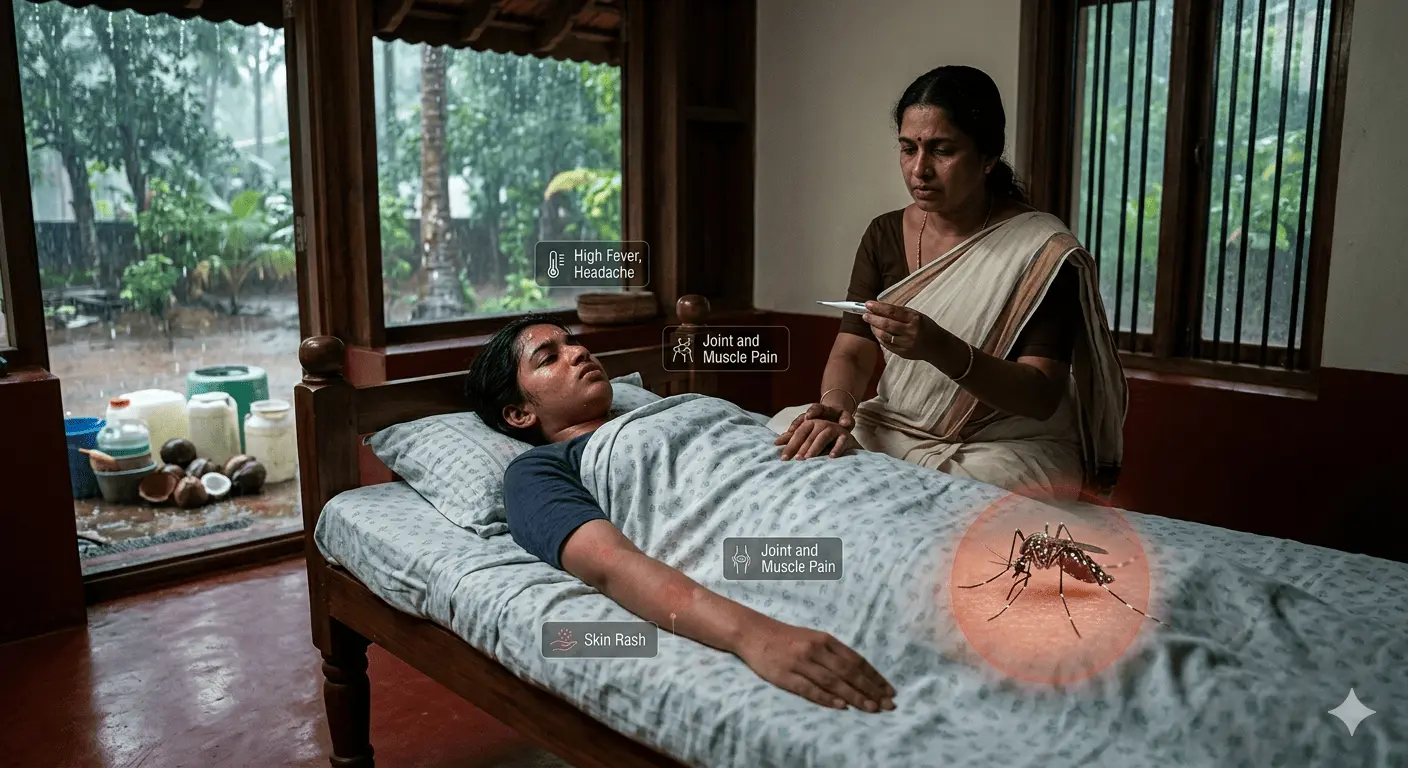
- Sudden high fever — often 39°C to 40°C — that comes on quickly
- Severe headache, particularly behind the eyes (retro-orbital pain)
- Intense joint and muscle pain — the reason dengue is sometimes called "breakbone fever"
- Skin rash that appears 2–5 days after fever onset, often spreading from the trunk outward
- Fatigue, nausea, and loss of appetite
- Mild bleeding from the nose or gums in some cases
These symptoms are easily dismissed as ordinary viral fever, especially in the first 24–48 hours. A dengue NS1 antigen test or complete blood count (CBC) can confirm infection and is widely available at clinics and hospitals across Kochi and other Kerala districts.
What are the three stages of dengue and how does each stage progress?
Dengue is not a single-phase illness. It moves through three distinct stages, and understanding this progression helps families know when home management is adequate and when hospitalisation is urgent.
FEBRILE PHASE
Days 1–3
• High fever
• Headache and body ache
• Rash begins
• Mild bleeding possible
CRITICAL PHASE
Days 4–6
• Fever may drop suddenly
• Plasma leakage risk
• Platelet count falls sharply
• Abdominal pain intensifies
RECOVERY PHASE
Days 7–10
• Fever resolves
• Appetite returns
• Platelet count rises
• Fatigue may linger
•
The critical phase — typically days 4 to 6 — is when most dengue deaths occur. A sudden drop in fever during this period is often mistaken as recovery, but it can actually signal the onset of dengue hemorrhagic fever or dengue shock syndrome, both of which require immediate medical attention.
What are the warning signs of severe dengue that require emergency care?
Kerala's hospitals see a surge in dengue complications every monsoon. Knowing these warning signs — and acting on them immediately — can be the difference between recovery and a medical emergency.
1. Persistent vomiting
2. Severe abdominal pain
3. Bleeding from gums
4. Blood in urine or stool
5. Rapid breathing
6. Cold, clammy skin
7. Restlessness or confusion
8. Sudden drop in temperature
If any of these symptoms appear — especially alongside a history of dengue-like fever — do not wait to see if things improve. Go directly to a government hospital or private facility equipped to monitor platelet counts and provide IV fluid support.
Where does the dengue mosquito breed and how does it enter Kerala homes?
The Aedes aegypti mosquito — the primary vector of dengue virus — is not a wilderness insect. It thrives in and around human homes, preferring small containers of clean, stagnant water over natural water bodies. This is what makes dengue uniquely difficult to control without consistent effort.
1. Flower pots and trays holding standing water
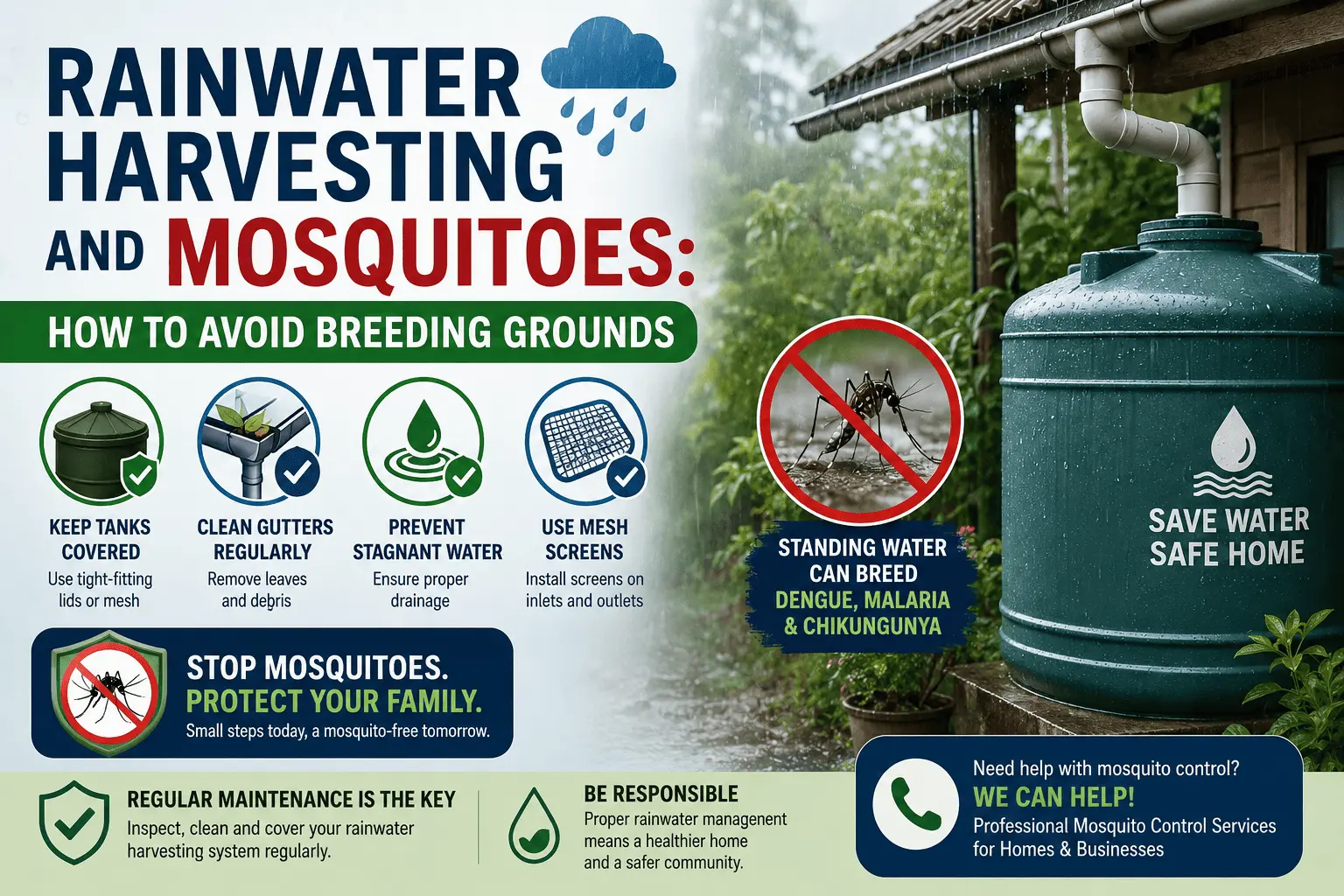
2. Overhead tanks and uncovered water drums
3. Discarded tyres, bottles, and plastic containers
4. AC drain pipes and cooler pans
5. Blocked roof gutters and terrace drains
6. Cemetery vases and construction site water pools
7. Tree holes and plant axils in garden areas
8. Bathroom buckets left filled between uses
Aedes mosquitoes are day-biters, most active in the early morning and late afternoon — times when children are outdoors and adults are active. Standard indoor mosquito protection used at night offers limited protection against dengue transmission.
How does professional pest control help reduce dengue risk in Kerala?
Home remedies and occasional fogging by local bodies are not enough to keep dengue at bay in a dense residential area. Effective dengue prevention requires systematic, professional pest control that targets the full mosquito lifecycle — from larva to adult.
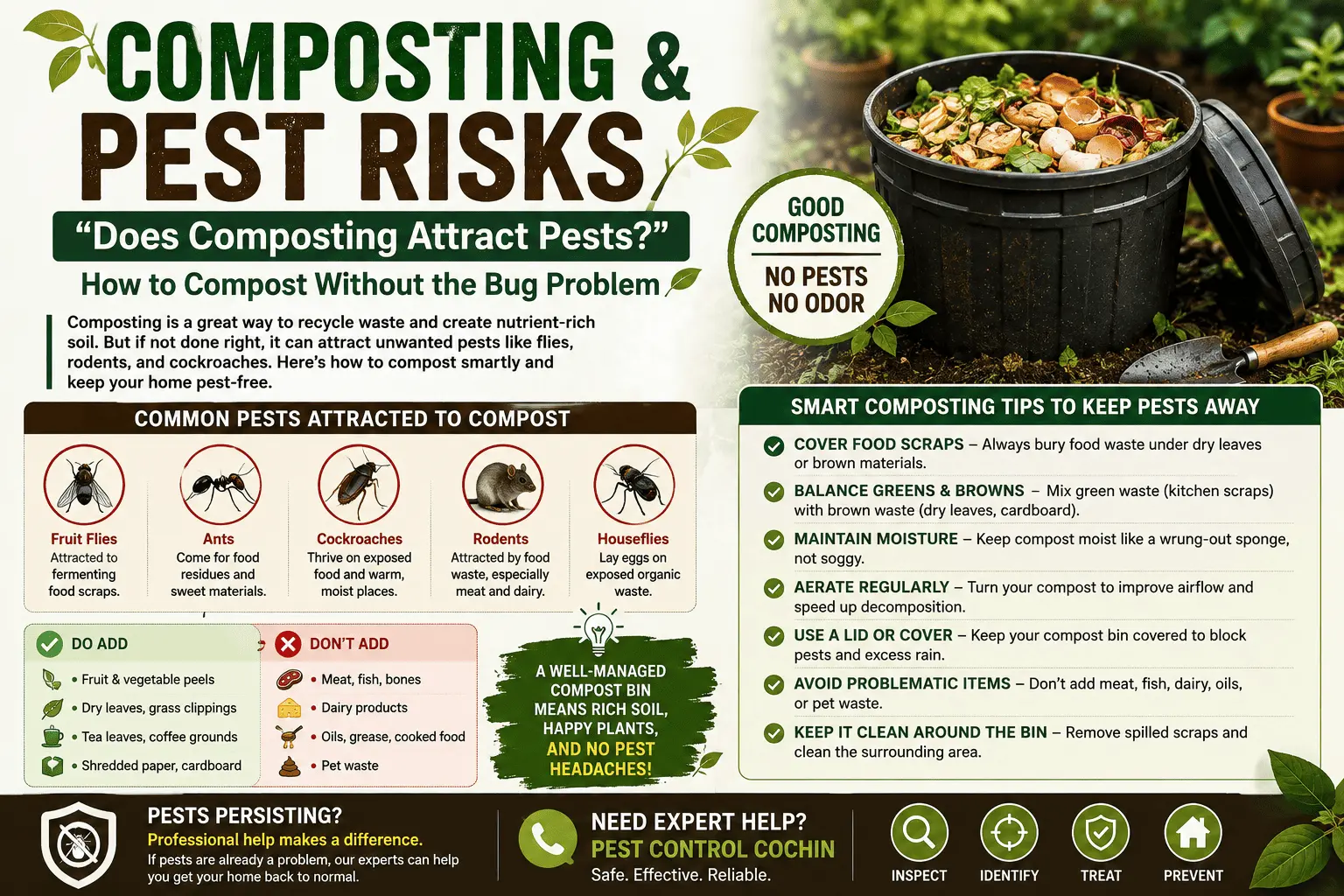
PestTarck's mosquito control programme in Kerala includes:
• Larval source identification — A trained technician surveys your property to locate and treat every active or potential breeding site, including hidden ones like air conditioner drain lines and overhead tank surroundings.
• Larviciding treatment — Application of approved, WHO-safe larvicides to water bodies that cannot be emptied, interrupting the mosquito lifecycle at the larval stage.
• Residual spray and misting — Targeted application of adulticides to resting sites — shaded walls, vegetation, underside of furniture, and drain areas — where adult mosquitoes shelter.
• Fogging for rapid knockdown — Thermal or cold fogging during outbreak periods or after heavy rain to reduce adult mosquito populations quickly.
• Scheduled preventive visits — Monthly or bi-monthly pest control service plans that maintain protection throughout the year, not just during outbreak season.
WHY STANDARD PEST CONTROL IS NOT ENOUGH FOR DENGUE
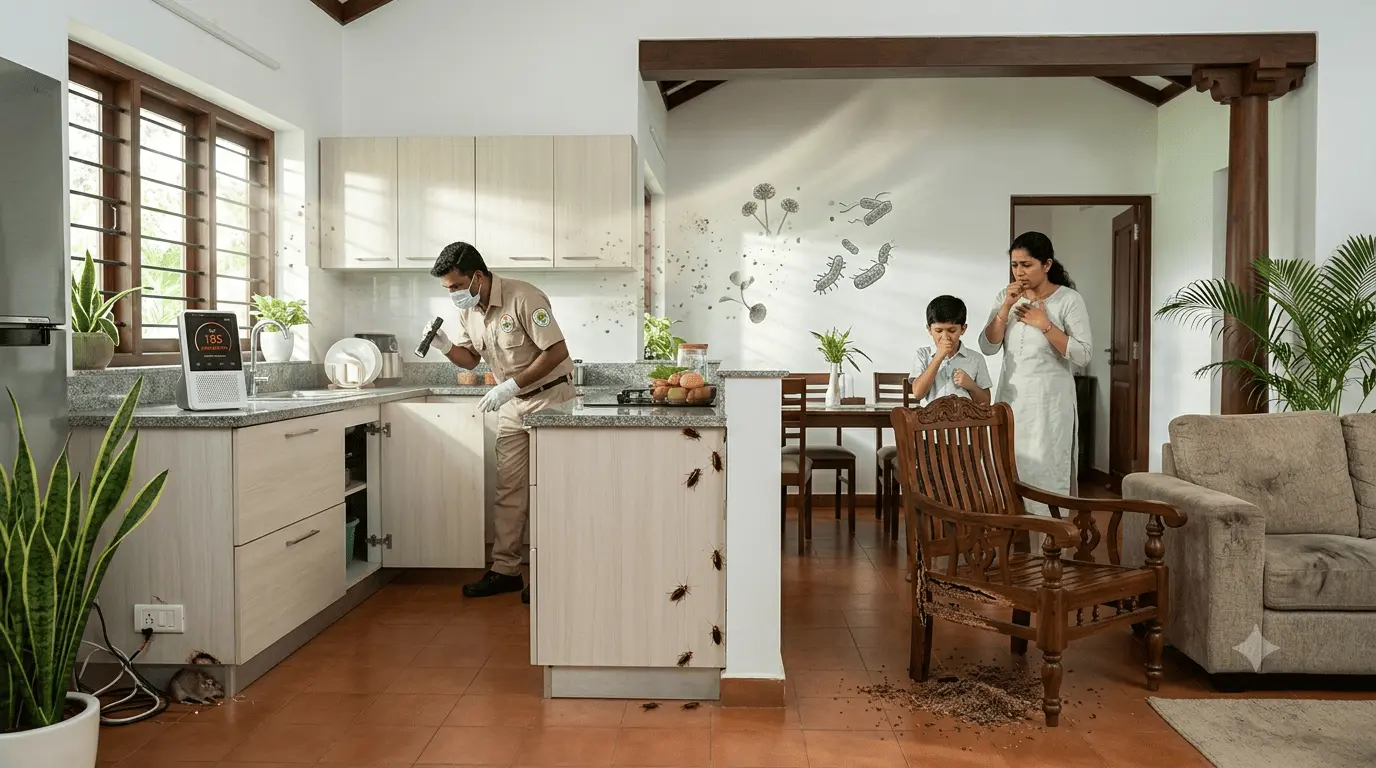
Most general pest control sprays target crawling insects and do not address mosquito larvae or adult resting sites effectively. Dengue-specific vector control requires a trained team that understands Aedes behaviour and Kerala's local environmental conditions.
Can dengue be prevented through household measures alone?
Household vigilance matters — but it has real limits. Emptying flower pot saucers and covering water tanks reduces local breeding sites, but it does not address mosquitoes coming from neighbouring properties, public drains, or construction sites nearby.
The most effective dengue prevention combines household source reduction with community-level and professional pest control intervention. In apartment complexes and residential colonies across Kochi, Thrissur, and Thiruvananthapuram, building-wide mosquito management programmes have been shown to reduce dengue incidence more effectively than individual household efforts alone.
Personal protection measures — window nets, mosquito repellents, and full-sleeve clothing during peak mosquito hours — are important complements to, not substitutes for, proper vector control.
Conclusion: Recognise the symptoms, remove the source
Dengue fever is predictable, preventable, and when caught early treatable. Every Kerala family should know the three stages of dengue, understand which symptoms need immediate medical attention, and take active steps to eliminate mosquito breeding sites before the monsoon arrives.
PestTarck provides reliable, science-backed pest control services across Kerala from Kochi to Thrissur to Kozhikode with mosquito management programmes built around your home's specific risk profile. Protect your family before the rains do the damage
Frequently asked questions
How is dengue different from ordinary fever in Kerala's monsoon season?
Dengue fever comes with sudden high fever, severe eye pain, and body aches. A quick NS1 blood test confirms it within 3 days.
Does pest control spray actually kill dengue mosquitoes?
Regular sprays alone won't stop dengue mosquitoes. You need larviciding, residual spraying, and fogging — methods PestTarck uses specifically for Aedes mosquito control.
Can dengue spread from person to person in a household?
No. Dengue doesn't spread by touch or coughing — only through infected mosquito bites. If someone at home has dengue, treat your home for mosquitoes immediately.
How often should I schedule pest control for mosquito prevention in Kerala?
Start with a pre-monsoon treatment in April–May, then monthly visits through the monsoon until December. Apartments do best with a quarterly pest control plan year-round.