
Dengue Is No Longer a Seasonal Disease:
How to Protect Your Family Year-Round
Expert mosquito control advice for homeowners, parents, and property managers in Kochi and across Kerala
Introduction: Dengue Has Changed. Has Your Protection?
There was a time when dengue fever was something Kochi families worried about for a few months during and after the monsoon. You would drain the flower pots, make sure the water tanks were covered, and get on with your life once the rains eased. That was the old dengue: predictable, seasonal, manageable.
The dengue of 2025 and beyond is a different story. Health authorities across Kerala and the rest of India have documented dengue cases in every month of the calendar year. Cases that used to peak between July and November are now being recorded in February, March, and even April, months that families once considered safe. Globally, the World Health Organisation estimates that dengue infections have increased eightfold over the past two decades, with roughly 400 million people infected annually.
For families in Kochi, Ernakulam, and across Kerala, this shift has a very practical implication: mosquito control can no longer be treated as a seasonal task. It has to be a year-round commitment. And for most households, professional intervention, finding a trusted pest control service near me, is the most reliable way to keep that commitment.
In this guide, we explain why dengue has become a year-round threat, where mosquitoes breed in and around your home, and what professional mosquito control services actually do to protect your family in a way that DIY sprays and coils simply cannot.
Why Dengue Is Becoming a Year-Round Threat
Understanding why dengue no longer follows a predictable seasonal pattern requires looking at a few interconnected factors, all of which are directly relevant to life in coastal Kerala.
Climate Change and Warmer Winters
Kerala's average temperatures have risen by approximately 0.4 degrees Celsius per decade over the past 40 years, according to data from the India Meteorological Department. That may sound modest, but for the Aedes aegypti mosquito, the primary carrier of dengue, it makes a significant difference. Mosquito larvae develop faster, adult mosquitoes survive longer, and the window for active breeding extends further into what was once the cooler, drier part of the year.
In Kochi, where temperatures rarely drop 23 degrees Celsius below, even in December and January, the Aedes mosquito faces very little of the thermal pressure that would suppress it in cooler climates.
Urbanisation and Water Storage Practices
Rapid urban expansion across Ernakulam, the construction of new residential complexes, commercial spaces, and infrastructure, creates an abundance of small, confined water containers that Aedes mosquitoes prefer for breeding. Construction sites accumulate water in hollow concrete blocks, pipes, and excavated areas. Increased water storage due to Kerala's intermittent supply means more overhead tanks, buckets, and containers in homes.
Changing Rainfall Patterns
Kerala has been experiencing increasingly erratic rainfall, with heavier individual rain events interspersed with drier periods. This pattern is ideal for mosquito breeding. Rain creates new water accumulation sites, and the subsequent dry spell concentrates stagnant water in smaller containers where larval survival rates are high.
Human Mobility
The movement of people between urban, peri-urban, and rural areas in Kerala's densely connected geography means dengue can spread rapidly. A case identified in Thrissur today can find a vector in Kochi's Kakkanad neighbourhood within days. Year-round human travel effectively keeps the dengue virus in active circulation regardless of season.
Quick Fact: Dengue in India
India reported over 289,000 confirmed dengue cases in 2023 according to the National Vector Borne Disease Control Programme, and health experts estimate that actual infections are significantly higher due to underreporting. Kerala has consistently ranked among the top five states for dengue incidence.
Understanding the Aedes Mosquito: Know Your Enemy
The Aedes aegypti mosquito is the principal vector of dengue in Kerala and across tropical Asia. Understanding its behaviour is the first step toward effective prevention.
What Is the Aedes Mosquito?
Aedes aegypti is a small, dark mosquito with distinctive white markings on its legs and body. It is the primary carrier of dengue, Zika, chikungunya, and yellow fever. Unlike the common house mosquito, Aedes aegypti is a daytime biter, most active in the two hours after sunrise and the two hours before sunset.
How It Spreads Dengue
An Aedes mosquito becomes infected by biting a person who already carries the dengue virus. After an incubation period of 8 to 12 days, the mosquito is capable of transmitting the virus to every person it bites for the remainder of its life. A single infected mosquito can infect multiple people in a household in a matter of days.
Breeding Behaviour
Aedes aegypti has a strong preference for small, clean, standing water collections rather than the large, stagnant water bodies associated with common mosquitoes. A container holding as little as a teaspoon of water can support a full breeding cycle. Female mosquitoes lay their eggs just above the waterline in containers, and those eggs can survive desiccation for months, remaining viable until the next rainfall or water refill.
Peak Activity Hours
This is one of the most important facts for Kochi families to understand. The Aedes mosquito bites primarily during daylight hours. This means mosquito coils and repellents used at night provide very limited protection against the dengue vector. Daytime protective clothing, window screens, and professional mosquito treatment of breeding sites are far more effective.
Common Hiding and Resting Spots
• Under furniture and in dark corners at ground level
• Behind curtains and in wardrobes
• Inside cupboards and under sinks
• In bathrooms, particularly under basins and around floor drains
• In outdoor plantings, particularly large-leafed plants that collect water
Hidden Mosquito Breeding Areas Around Your Home
Most homeowners are aware of the obvious breeding sites — uncovered water tanks, flower pots, and buckets left out in the rain. But a thorough mosquito control inspection consistently finds breeding activity in places most residents would not think to check.
Inside the Home
• Air conditioner drip trays and drainage pipes — check weekly during summer; these are among the most frequently overlooked indoor breeding sites in Kochi homes
• Refrigerator defrost trays — located underneath many older refrigerators; water accumulates and is rarely inspected
• Unused bathroom fixtures — toilets, basins, and drains in guest bathrooms that are not used regularly can accumulate still water
• Flower vases and water feature bowls — change water at least once every three days
• Pet water bowls — refresh daily and clean the bowl to remove any larvae
Outside the Home
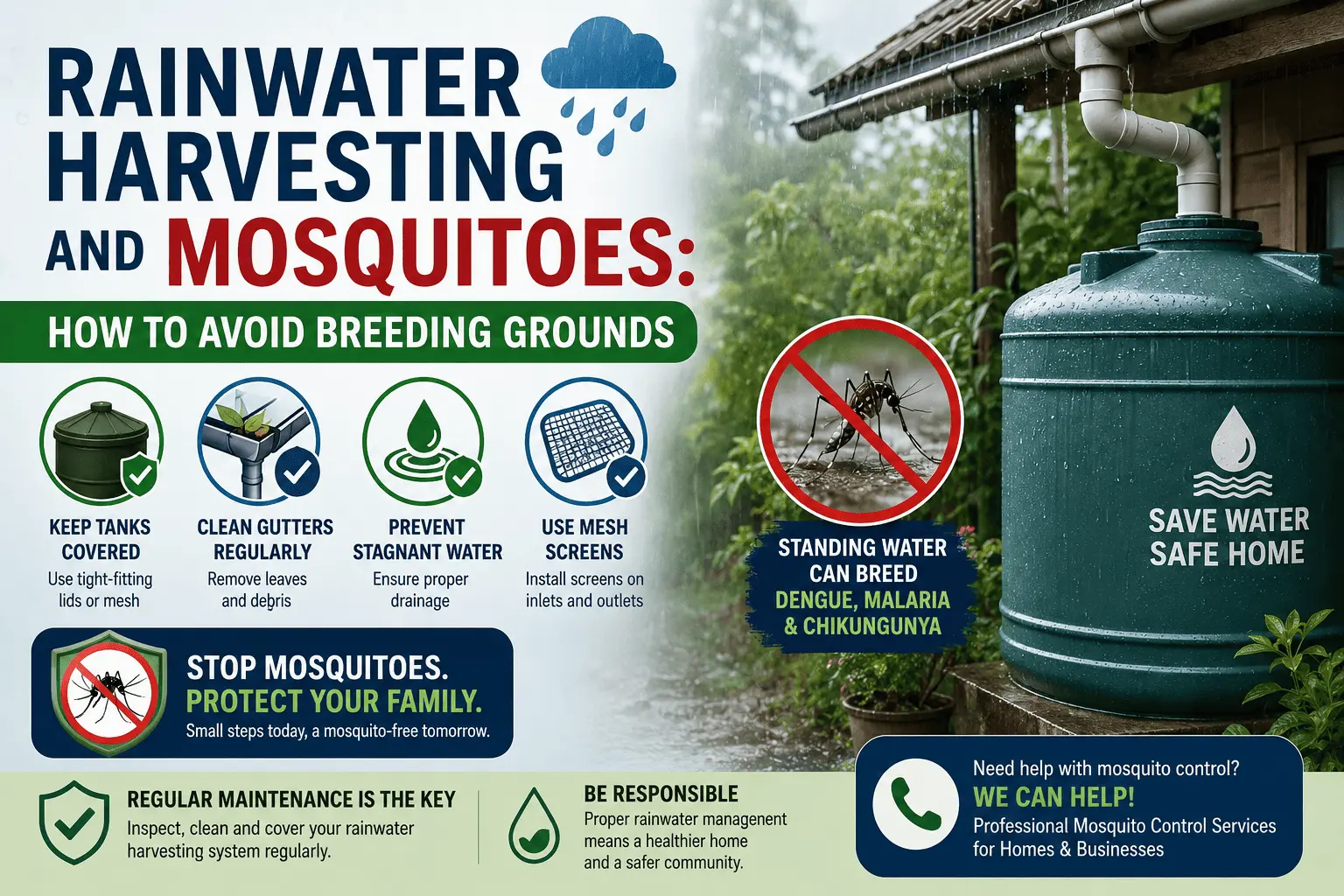
• Roof gutters and downpipe joints — debris accumulates and creates pools that are invisible from ground level but highly productive breeding sites
• Garden pots and saucers — the saucer beneath a potted plant is a common breeding site, especially in the monsoon season
• Coconut shells and cut bamboo — common in Kerala gardens and extremely productive breeding containers
• Tyres, tarpaulins, and plastic sheeting — collect and hold water indefinitely; a single tyre can produce hundreds of mosquitoes per week
• Construction materials — hollow bricks, pipes, and temporary structures on nearby building sites
• Ornamental ponds without fish or aerators — stagnant water with no predation supports rapid larval development
• Drainage channels and blocked storm drains — particularly common in older neighbourhoods of Ernakulam
Prevention Tip: Inspect your garden, terrace, and car park area every five to seven days during and after the monsoon. Remove, invert, or cover any container that can hold water. Even a bottle cap left in the right position can support mosquito breeding.
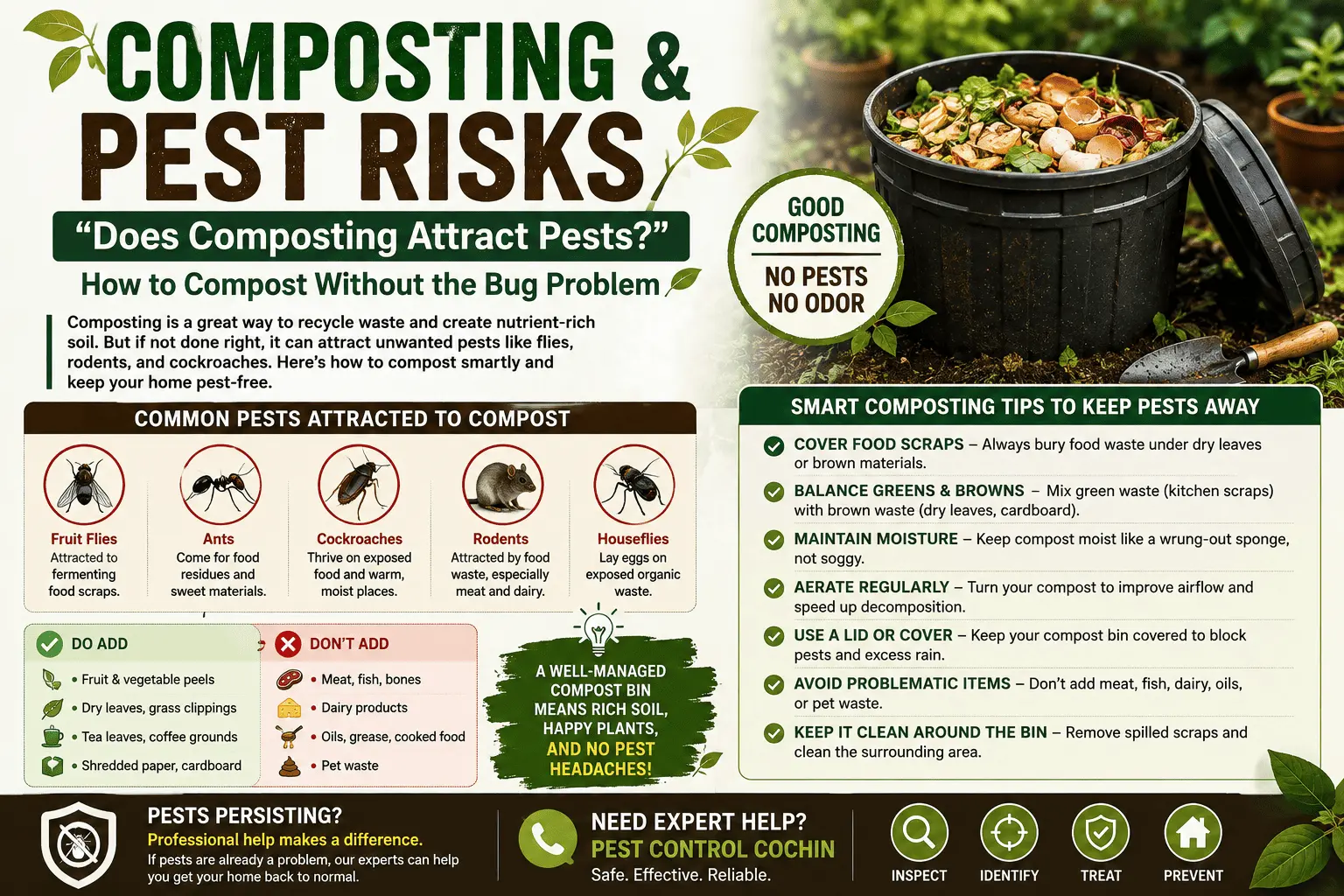
Warning Signs That Your Property Needs a Pest Control Service Near Me
Knowing when to call a professional mosquito control service can make the difference between a manageable situation and a full-scale infestation. Here are the signs that indicate your property needs expert attention:
• You are noticing mosquitoes inside your home during daylight hours. This almost certainly indicates Aedes aegypti activity
• Multiple family members are experiencing mosquito bites during the morning or late afternoon
• You have identified standing water on your property that you cannot easily drain or remove
• Dengue cases have been reported in your neighbourhood, apartment complex, or immediate locality
• Your property has areas, terraces, compound walls, and dense planting that make thorough self-inspection difficult
• You live near a construction site, canal, drainage channel, or area with known mosquito pressure
• Your home has previously had a mosquito or dengue-related issue and has not received a professional preventive treatment since
• You are a property manager or commercial building owner with common areas, car parks, gardens, or water features that require regular professional maintenance
If one or more of these apply to your situation, searching for a reliable pest control service near me and scheduling a professional inspection is the most responsible next step.
How Professional Mosquito Control Services Work
Many people assume that professional mosquito control simply means someone comes and sprays the garden. In practice, a thorough, professional service involves several coordinated steps that address mosquitoes at every stage of their lifecycle.
Step 1: Property Inspection
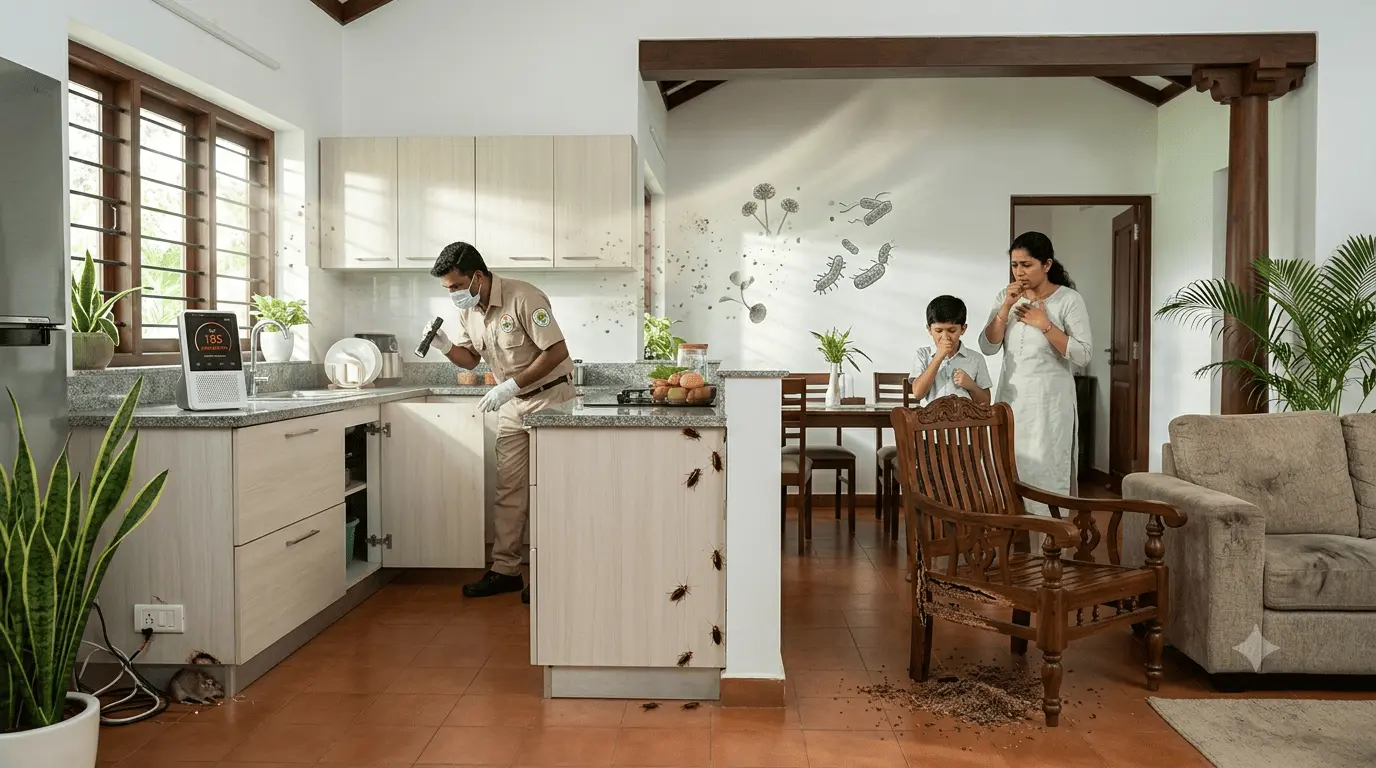
A certified technician conducts a systematic inspection of both the interior and exterior of the property, identifying active and potential breeding sites, assessing mosquito pressure, and noting any structural features, blocked drains, roof obstructions, and water accumulation points that need to be addressed.
Step 2: Source Reduction
Where possible, the technician physically removes or treats breeding sites, clearing gutters, treating ornamental water features, recommending the removal of unnecessary containers, and identifying maintenance issues that property owners need to address.
Step 3: Larvicide Treatment
Safe, WHO-approved biological larvicides, typically Bacillus thuringiensis israelensis (Bti) or temephos, are applied to water bodies that cannot be drained, such as ornamental ponds, drainage channels, and large containers. These products kill mosquito larvae without harming people, pets, or beneficial insects.
Step 4: Residual Spraying
Approved synthetic pyrethroids are applied to resting surfaces, lower walls, under furniture, around doors and windows, and in shaded outdoor areas — using professional equipment. Unlike consumer sprays, professional-grade residual treatments maintain effectiveness for weeks.
Step 5: Mosquito Fogging Services
Thermal or cold fogging disperses a fine mist of insecticide through the air and into vegetation, knocking down adult mosquito populations in and around the property. This is particularly effective before social events and is a standard component of emergency response to dengue outbreaks in residential areas.
Step 6: Preventive Monitoring
Reputable pest control companies offer follow-up visits and annual service contracts that include regular inspections, re-treatment as needed, and reports on mosquito activity levels, allowing homeowners to stay ahead of population buildups rather than responding to them after the fact.
Benefits of Hiring a Professional Pest Control Service Near Me
• Expert inspection identifies breeding sites that homeowners consistently miss, studies show that professional inspections find two to three times as many breeding sites as resident self-inspections
• Professional-grade products are significantly more effective than retail consumer products, which often contain lower concentrations of active ingredients
• Treatments address all lifecycle stages simultaneously, larvae, pupae, and adults, creating a more complete elimination than single-stage consumer products
• Certified technicians know how to apply treatments safely around children, pets, food surfaces, and water features
• Regular professional treatment reduces dengue risk for your entire household and contributes to reduced mosquito pressure in your immediate neighbourhood
• A service contract saves time, no need to repeatedly purchase, research, and apply consumer products
• Professional services provide accountability; if mosquito activity persists after treatment, the company returns and retreats
• Written service records and treatment logs are valuable if you ever need to demonstrate pest management compliance for a property transaction or rental agreement
Your Year-Round Dengue Prevention Checklist
Effective dengue prevention combines professional treatment with consistent household practices. Use this checklist to maintain year-round protection for your family:
Every Week
✓ Inspect all outdoor containers, garden pots, and saucers, drain or invert any that hold water
✓ Check and empty AC drip trays and refrigerator defrost trays
✓ Change water in flower vases, pet bowls, and bird baths
✓ Walk the perimeter of your property and identify any new water accumulation points
Every Month
✓ Clear roof gutters and downpipes of debris
✓ Check that all overhead tanks and sumps are properly covered with no gaps
✓ Inspect under-sink areas, bathroom drains, and unused fixtures
✓ Trim dense vegetation and remove leaf litter that holds moisture
Every 3 Months
✓ Schedule a professional mosquito control inspection and treatment visit
✓ Treat ornamental ponds and drainage channels with approved larvicide
✓ Review and repair any damaged window screens, door seals, or ventilation grilles
Every Year
✓ Commission a comprehensive property pest audit, including termites, rodents, and mosquitoes
✓ Review your pest control service agreement and ensure coverage is appropriate for your property
✓ Update emergency contacts for your local pest control service near me
Why Local Mosquito Pest Control Near Me Matters More Than You Think
When you search for mosquito pest control near me or a pest control company near me, you are not just looking for convenience; you are looking for expertise that is relevant to your specific environment.
A pest control company based in or operating extensively across Kochi and Ernakulam understands the local mosquito species and their seasonal behaviour patterns. They know which neighbourhoods are currently experiencing elevated dengue activity. They understand how Kerala's monsoon, summer heat, and coastal humidity interact to create specific breeding conditions. And they can respond quickly when you need them the 24 to 48-hour response window that local companies offer can genuinely make a difference during a dengue outbreak.
National or generic providers may offer standardised treatment protocols that work adequately in many environments but miss the nuances of Kochi's particular geography, the canal systems, the backwater proximity, the specific construction patterns, and the density of coconut and banana plantings in residential gardens. Local knowledge translates directly into more effective, more targeted mosquito control.
Why Choose Our Mosquito Control Services in Kochi
There are many options when you search for a pest control service near me in Kochi or Ernakulam. Here is what distinguishes our service:
• Certified and trained technicians — all field staff hold qualifications in integrated pest management and are trained in the safe application of WHO-approved mosquito control products
• Evidence-based treatment protocols — we use larvicide, residual spraying, fogging, and source reduction in combination, because no single method addresses all lifecycle stages
• Safe formulations — all products used are registered with India's Central Insecticides Board and have been evaluated for safety around children, pets, and food preparation areas
• Transparent pricing — written quotes before any treatment begins, with no hidden service charges
• Fast response — we aim to schedule initial consultations within 24 hours and treatment visits within 48 hours of booking
• Coverage across Kochi and Ernakulam — residential, apartment, commercial, industrial, and institutional properties in Kakkanad, Edappally, Aluva, Thrippunithura, Fort Kochi, Kaloor, Palarivattom, and beyond
• Residential and commercial pest control — our services extend to cockroach control, termite management, rodent control, and general integrated pest management alongside mosquito treatment
• Service agreements with warranties — flexible monthly, quarterly, and annual plans with documented treatment records
Frequently Asked Questions
1. Is dengue still a seasonal disease?
No. Dengue fever was historically more prevalent during and after Kerala's monsoon season (July to November), but health data from 2022, 2023, and 2024 confirm active dengue transmission in every month of the year. Climate change, urbanisation, and year-round water storage practices have made dengue a genuine twelve-month risk for families in Kochi and across Kerala.
2. Can dengue occur during summer in Kerala?
Yes, and this surprises many families. Kochi's temperatures between March and June remain comfortably within the range that supports Aedes aegypti breeding and survival. Water storage during the dry season creates ideal breeding conditions, and the relatively high outdoor activity during summer increases bite exposure. Summer dengue cases are now regularly reported across Ernakulam.
3. What attracts mosquitoes to my home?
The primary attractant for Aedes aegypti mosquitoes is standing water, even in very small quantities. Any container, drain, surface depression, or structural feature that holds still water for more than 48 hours is a potential breeding site. Aedes mosquitoes are also attracted by carbon dioxide, body heat, and certain skin odours, and tend to rest in dark, humid, sheltered areas near ground level.
4. How often should mosquito control treatments be done?
For year-round protection in Kochi, professional treatment every 2 to 3 months is recommended. During high-risk periods from June through November, or when dengue cases have been reported nearby, monthly treatments may be advisable. Annual service contracts that include scheduled visits are the most cost-effective way to maintain consistent protection.
5. Are mosquito treatments safe for children and pets?
When applied by trained professionals using CIB-registered products, mosquito treatments are safe for households with children, infants, and pets. Technicians follow application protocols specifically designed to minimise residue on play areas, food surfaces, and pet spaces. You will typically be advised to keep children and pets out of treated areas for a short period, usually 30 to 60 minutes after application.
6. What is the best way to prevent dengue fever?
Dengue prevention requires both environmental management and professional pest control. Remove all standing water from in and around your home, use appropriate window screens and protective clothing during peak mosquito hours, and schedule regular professional mosquito control treatments. There is currently a dengue vaccine available in India, and vaccination, in addition to mosquito control, provides the strongest available protection.
7. How effective is professional mosquito control?
Studies across tropical urban settings consistently show that professional integrated mosquito management, combining source reduction, larvicide treatment, and residual spraying, reduces adult mosquito populations by 70 to 90 per cent in treated areas. This level of control is not achievable with consumer products alone. Regular professional treatment significantly reduces the risk of dengue transmission in treated households.
8. How do I find a reliable pest control service near me in Kochi?
Look for a company that employs licensed and trained technicians, uses CIB-approved products, provides written quotes and treatment documentation, offers a warranty or follow-up guarantee, and has verifiable local experience in Kochi and Ernakulam. Recommendations from neighbours or your residential association are often the most reliable source. Our team is ready to provide a free property assessment — contact us today.
9. What are the symptoms of dengue fever?
Dengue fever typically begins with a sudden high temperature (39 to 40 degrees Celsius), severe headache, pain behind the eyes, muscle and joint pain, nausea, and a skin rash that may appear 3 to 4 days after the fever begins. Symptoms usually last 5 to 7 days. Warning signs of severe dengue include persistent vomiting, abdominal pain, bleeding gums or nose, and rapid breathing. Seek emergency medical care immediately if these appear.
10. How much does mosquito control cost in Kochi?
The cost of professional mosquito control in Kochi varies with property size, treatment method, and service frequency. A one-time treatment for a standard residential flat typically ranges from Rs. 800 to Rs. 2,500. Annual service contracts offering quarterly treatments are more cost-effective per visit and provide consistently better results. Contact us for a free, no-obligation quote based on your specific property.
Conclusion: Year-Round Dengue Risk Demands Year-Round Action
Dengue is no longer a problem that Kochi families can put away with the umbrellas at the end of the monsoon season. With cases documented in every month of the year, a year-round commitment to mosquito management has become an essential part of responsible homeownership and family health protection in Kerala.
The good news is that effective, proven solutions exist. Professional mosquito control services, combining inspection, source reduction, larvicide treatment, residual spraying, and fogging, deliver a level of protection that no combination of household products can match. And when you choose a local pest control service near me with genuine expertise in Kochi's specific mosquito species and environment, you get treatment that is tailored to the actual conditions around your home.
Do not wait for a case in your household or your immediate neighbourhood to take action. Early prevention is always less disruptive and less expensive than emergency response. Contact our certified mosquito control team in Kochi today, schedule your property inspection, and take the first concrete step toward protecting your family from dengue throughout the year.
© Pest Control Services Kochi | Mosquito Control | Ernakulam, Kerala