7 Diseases Spread by Cockroaches in Kerala Homes — And How to Stop Them
Indroduction
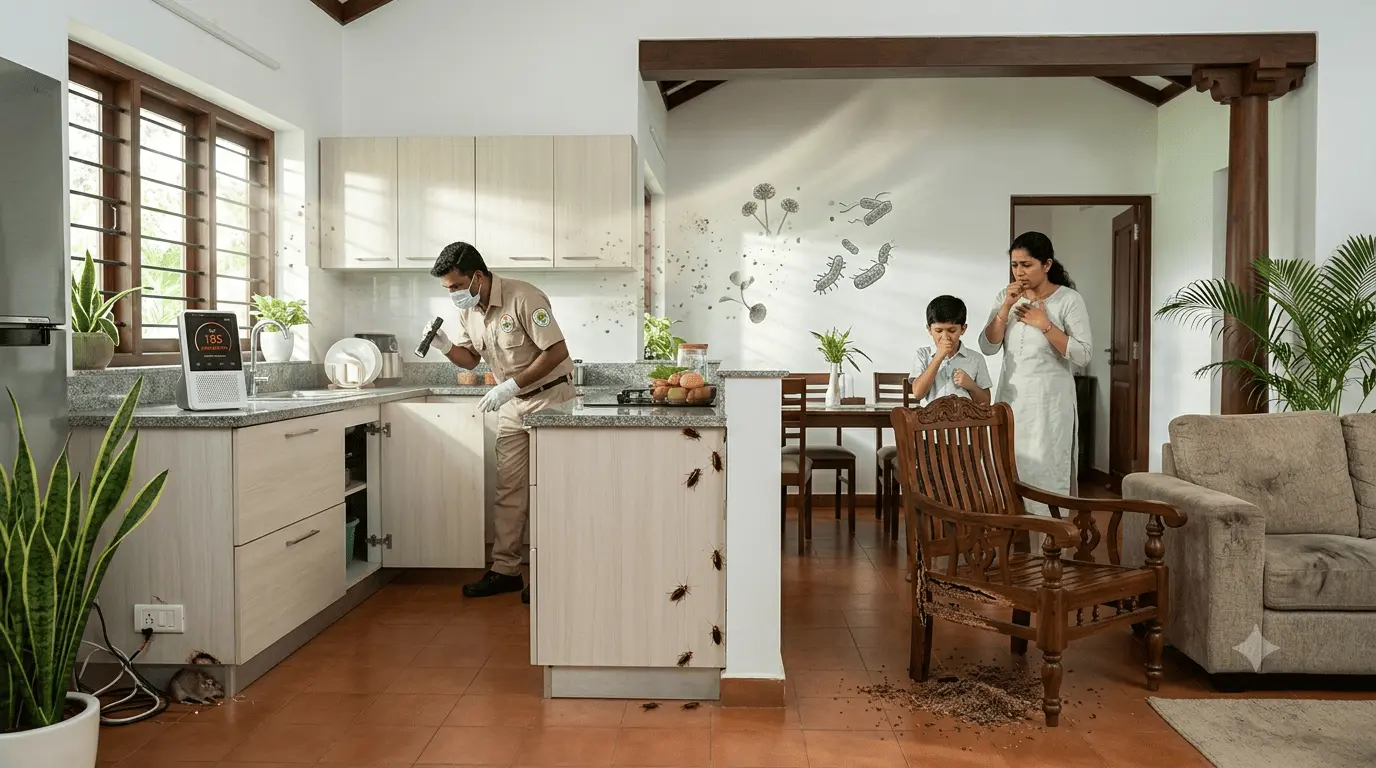
Cockroaches in Kerala homes can spread at least 7 serious diseases — including Typhoid Fever, Dysentery, Salmonellosis, Cholera, Gastroenteritis, Leptospirosis, and Asthma-triggering allergies. Kerala's humid tropical climate makes infestations faster and more dangerous than in drier parts of India. Professional cockroach control is the most reliable long-term solution.
You spotted one cockroach near the kitchen sink last night. "Just one," you told yourself. But here's what most Kerala homeowners don't realise, for every cockroach you see, there are likely 10 to 50 more hiding behind your walls, inside your appliances, and beneath your sink pipes.
Cockroaches are not just a nuisance. They are active disease carriers. In a state like Kerala — where the climate is warm and humid almost year-round, and where kitchens and food are central to daily life — cockroach infestations pose a genuine, serious health risk to your family.
This guide explains exactly which diseases cockroaches spread in Kerala homes, why our local climate makes the problem worse, and what you can do to protect your home right now.
Why Kerala's Climate Makes Cockroaches Extra Dangerous
Before we get into the diseases, it's important to understand why Kerala is a particularly high-risk environment. The German cockroach (Blattella germanica) and American cockroach (Periplaneta americana) — both extremely common in Kochi homes, flats, and restaurants — thrive in hot, humid conditions.
Kerala's average humidity hovers between 70% and 90% for most of the year. Add to that our warm temperatures, monsoon season flooding, and older drainage infrastructure in areas like Ernakulam, Thrissur, and Kozhikode — and you have the perfect environment for rapid cockroach breeding and the spread of the pathogens they carry.
The 7 Diseases Cockroaches Spread in Kerala Homes
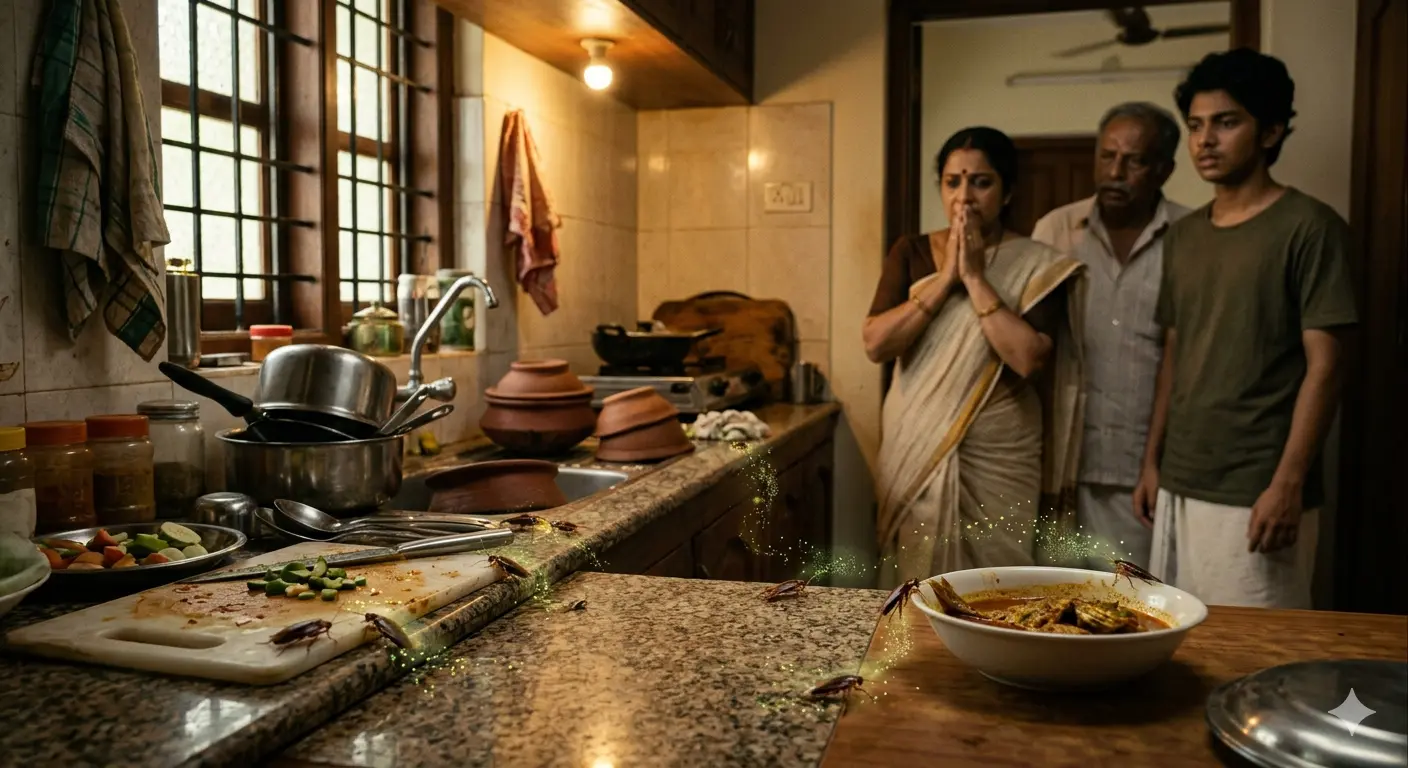
Cockroaches spread disease in a deceptively simple way — they crawl through sewage, garbage, and rotting matter, pick up pathogens on their legs and bodies, and then walk directly over your food, countertops, utensils, and stored groceries. Here are the seven most significant health threats they bring into your home.
1) . Typhoid Fever
Cockroaches are well-documented carriers of Salmonella typhi, the bacterium responsible for typhoid fever. In Kerala, where home kitchens are often warm and open, cockroaches that move between drain pipes and food preparation surfaces can transfer this pathogen easily. Symptoms include prolonged high fever, weakness, stomach pain, and in untreated cases, serious intestinal complications. Typhoid remains a genuine concern in urban Kochi neighbourhoods with older sewage systems.
2). Dysentery (Bacillary & Amoebic)
Cockroaches carry both Shigella bacteria and Entamoeba histolytica, the culprits behind bacillary and amoebic dysentery, respectively. These infections cause severe diarrhoea (often with blood), abdominal cramps, fever, and dehydration. Children and the elderly are particularly vulnerable. In households where cockroaches have access to stored water containers, open fruit bowls, or uncovered cooked food — a common reality in Kerala kitchens — the transmission risk is very real. This is one of the most frequently reported cockroach-linked illnesses treated by Kochi hospitals every monsoon season.
3) Salmonellosis (Food Poisoning)
While Salmonella typhi causes typhoid, other Salmonella strains carried by cockroaches cause salmonellosis — the most common form of food poisoning. Cockroaches transfer these bacteria to food through their faeces, regurgitated stomach contents, or simply by walking across your food. In Kerala homes where fish, meat, and rice are staples stored at room temperature, contaminated food can quickly become a health hazard. Symptoms include nausea, vomiting, diarrhoea, and fever within 12–72 hours of eating contaminated food.
4)Cholera
Cockroaches can mechanically transmit Vibrio cholerae — the bacteria responsible for cholera — particularly during Kerala's monsoon months when flooding contaminates water sources and cockroach activity peaks dramatically. Cockroaches that have been in contact with contaminated floodwater or sewage can carry cholera bacteria to kitchen surfaces and open water containers. While outbreaks are not common in well-maintained urban homes, the risk rises significantly in older homes in Ernakulam, Fort Kochi, and areas prone to waterlogging. Early cholera symptoms — sudden watery diarrhoea and vomiting — can escalate dangerously fast.
5) Gastroenteritis (Stomach Flu)
Gastroenteritis — commonly known as "stomach flu" — is one of the most frequent health complaints in Kerala households and is significantly underattributed to cockroach contamination. Cockroaches spread multiple gastroenteritis-causing organisms, including E. coli, Campylobacter, and various viruses, through faecal contamination of food and surfaces. Symptoms include stomach cramps, nausea, vomiting, and diarrhoea. Families often don't connect their recurring stomach issues to cockroaches because the contamination is invisible — there's no taste, smell, or visible sign that food has been contaminated.
6).Leptospirosis
Leptospirosis is a bacterial disease caused by Leptospira species, and Kerala has the highest incidence of this disease in India — made worse every flood season. Cockroaches can act as mechanical carriers, transferring leptospira bacteria from rodent urine (which they come into contact with in sewers and drains) into your home environment. Unlike the other diseases on this list, leptospirosis can progress to Weil's disease, a severe form causing kidney failure, liver damage, and in serious cases, death. The link between cockroach infestations and leptospirosis risk in Kerala homes is a critical but under-discussed public health issue.
7) Asthma & Respiratory Allergies
This is the disease most people never think to connect to cockroaches — yet it may affect more Kerala families than any bacterial infection on this list. Cockroach droppings, shed body parts (exoskeletons), saliva, and egg casings contain powerful proteins that act as allergens. When disturbed, these particles become airborne and are inhaled. In homes with cockroach infestations, these allergens are present in the air 24 hours a day. Research consistently links cockroach allergen exposure to asthma onset in children and worsening asthma in adults. In Kerala, where asthma prevalence is already high due to humidity and pollution, cockroaches are a major but often invisible trigger. Recurring coughing, wheezing, runny noses, and skin rashes in your household may all be cockroach-allergen related.
Warning Signs of a Cockroach Infestation in Your Kerala Home
- Dark, cylindrical droppings near kitchen corners or behind appliances
- A musty, oily smell — especially in cupboards or under the sink
- Shed cockroach skins near skirting boards or behind the fridge
- Egg casings (oothecae) — small, brown, ribbed capsules
- Smear marks on walls near drain pipes and water sources
- Seeing cockroaches in daylight (a sign of severe overcrowding in hiding spots)
- Unexplained recurring gastric illnesses in your household
- Worsening asthma or allergy symptoms without a clear cause
Prevention Tips for Kerala Homes
While no home can be made 100% cockroach-proof — especially in humid, tropical environments — these practical steps significantly reduce infestation risk and the disease burden that comes with it..
1)Seal Food Tightly
Store all food — including rice, flour, and sugar — in sealed, airtight containers. Never leave cooked food uncovered overnight on the kitchen counter.
2)Fix Leaking Pipes
Cockroaches are attracted to moisture as much as food. Fix dripping taps, leaking pipes under sinks, and seal around drain openings.
3)Covered Dustbins
Use covered garbage bins in the kitchen and empty them daily. Organic waste left overnight is a major cockroach attractant in Kerala's heat.
4)Seal Entry Points
Caulk gaps around pipes, electrical outlets, skirting boards, and drainage entry points. Cockroaches can squeeze through a gap as thin as 3mm.
5)Clean Behind Appliances
Regularly clean behind your refrigerator, microwave, and washing machine. These warm, dark spaces are prime cockroach nesting areas.
6)Scheduled Pest Treatment
Prevention alone isn't always enough in Kerala. Quarterly professional pest treatment is the most reliable way to maintain a cockroach-free home.
Why DIY Isn't Enough: Professional Cockroach Control in Kochi
Supermarket sprays and home remedies might kill the few cockroaches you can see. But they do nothing to reach the nests hidden deep inside wall cavities, behind kitchen plinths, and inside the warm motor housing of your refrigerator. This is the critical limitation of DIY approaches to cockroach control.
Professional cockroach control service in Kochi — like the treatments offered by PestTrack — uses a layered approach designed to eliminate not just visible cockroaches but entire colonies:
Frequently Asked Questions
What diseases do cockroaches spread in Kerala homes?
Cockroaches in Kerala homes can spread at least 7 diseases: Typhoid Fever, Dysentery, Salmonellosis (food poisoning), Cholera, Gastroenteritis, Leptospirosis, and they trigger Asthma and Respiratory Allergies. They are confirmed to carry over 33 types of bacteria, 6 species of parasitic worms, and multiple viruses.
Why are cockroaches more dangerous during Kerala's monsoon?
During Kerala's monsoon season, flooding drives cockroaches from drains and sewers into homes. They carry bacteria and pathogens picked up from contaminated floodwater directly into kitchens. Simultaneously, the humidity accelerates bacterial survival on surfaces, and warm temperatures speed up the cockroach breeding cycle — compounding the health risk significantly.
Can cockroaches cause asthma in children?
Yes — this is a well-documented medical fact. Proteins found in cockroach droppings, shed skins, and saliva are potent allergens. When these particles become airborne in an infested home, they trigger allergic reactions and asthma attacks. Children exposed to cockroach allergens are at significantly higher risk of developing chronic asthma. This is an especially serious concern in Kerala, where asthma rates are already elevated.
How do I know if I have a cockroach infestation in my Kerala home?
Key signs include: dark, cylindrical droppings in kitchen corners or behind appliances; a distinctive musty odour in cupboards; shed cockroach skins near walls; egg casings (small brown capsules); and seeing cockroaches during daylight hours — which signals a severe infestation. Unexplained recurring stomach illnesses or worsening allergies in your family can also be indicators.
How often should I get professional cockroach treatment in Kochi?
For most Kerala homes, a quarterly professional cockroach control treatment is recommended — timed to cover the pre-monsoon, monsoon, and post-monsoon periods when cockroach activity peaks. Homes near waterways, older properties, or those with prior infestation history may benefit from bi-monthly treatments. PestTrack can assess your specific situation and recommend the right treatment schedule.
Is professional cockroach control safe for children and pets?
Yes, when applied correctly by trained pest control technicians. PestTrack uses gel-bait formulations and low-toxicity residual insecticides approved for residential use in India. We follow HACCP-compliant procedures and advise homeowners on how long to keep children and pets away from treated areas — typically just 1–2 hours after treatment.
Cockroaches have been sharing our homes — and our food — for millions of years. They are extraordinarily adaptable survivors. But in a Kerala home, where food is always cooking, humidity is ever-present, and monsoon season brings them flooding in from drains, they are not a problem you can simply ignore or manage with a can of spray.
The seven diseases outlined in this guide are not rare or theoretical. They are real health risks that affect Kerala families every year — and most cases are preventable with the right action. Whether you've spotted one cockroach or suspect a full infestation, acting early and decisively is always the right call.
PestTrack's cockroach control service in Kochi is built specifically for Kerala's climate and home environments. If you're concerned about cockroaches in your home, reach out today for a free inspection and expert advice.
Protect Your Family From Cockroach-Borne Diseases
Don't wait for illness to confirm what the signs are already telling you. PestTrack offers professional cockroach control service in Kochi and across Kerala — fast, effective, and family-safe.