How Seasonal Climate in Kerala Influences Pest Behaviour
Indroduction
As someone who has spent years working on the ground, inspecting homes, commercial buildings, and industrial facilities across Kerala, I’ve learned one truth the hard way: pests here don’t follow textbooks — they follow the weather. Understanding how climate shapes pest behaviour is the backbone of effective Pest Control Kochi solutions, and it’s something every property owner should be aware of.
Kerala’s tropical environment creates ideal breeding conditions for pests year-round, but each season brings a distinct shift in their activity, nesting habits, and risk levels.
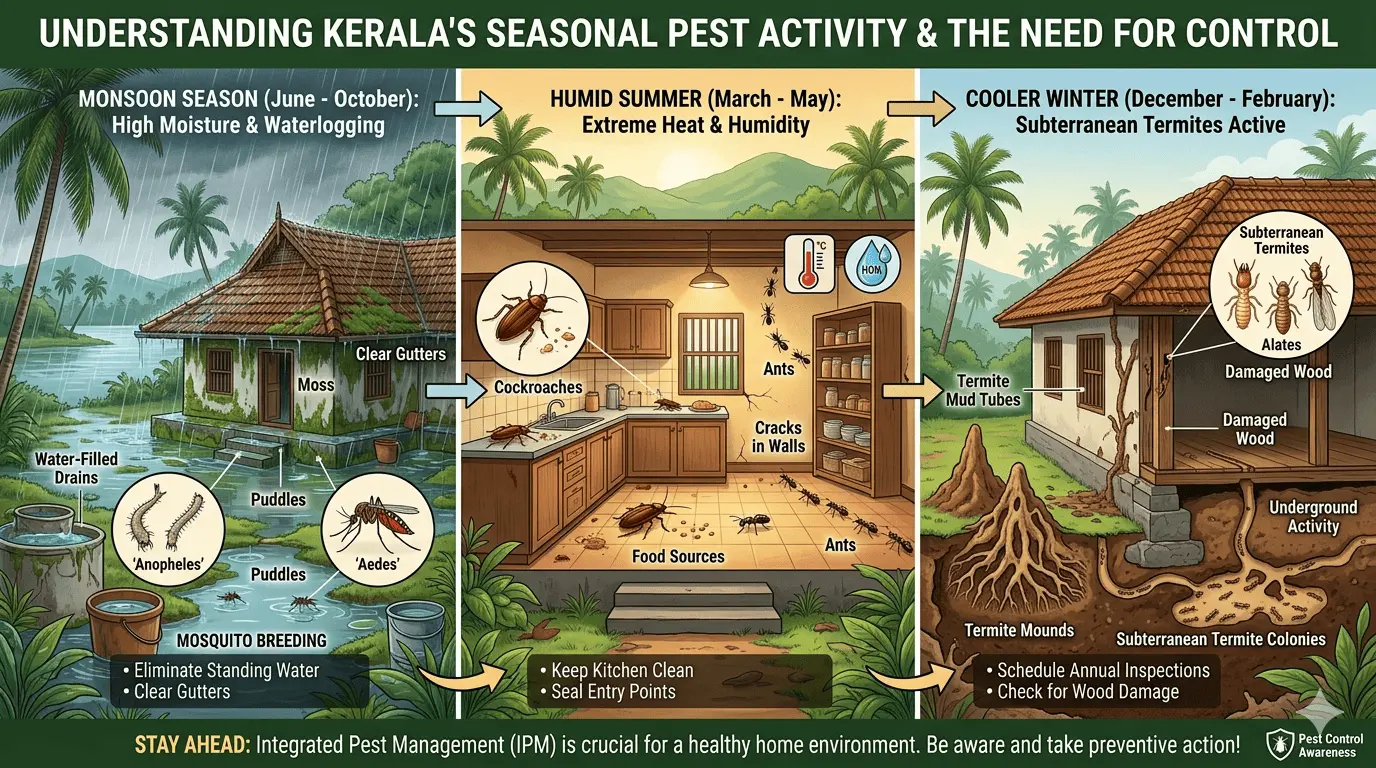
Monsoon Season: When Pests Multiply Aggressively
The monsoon months are the most demanding period for any Pest Control Kochi professional. High humidity, water stagnation, and cooler temperatures create the perfect storm for pest outbreaks.
● Mosquito populations explode due to standing water
● Rodents seek shelter indoors as burrows flood
● Termites swarm, especially near wooden structures
Many clients ask during inspections, “Why did pests suddenly appear after the rains?” The answer is simple — moisture accelerates breeding cycles. Preventive treatments before monsoon often reduce infestations by more than half, something I strongly recommend as part of responsible Pest Control Kochi planning.
Summer Season: Heat Forces Pests Indoors
Kerala summers may not be extreme, but prolonged heat and water scarcity push pests to adapt. Ants, cockroaches, and rodents move indoors in search of hydration and cooler shelter.
In residential kitchens and commercial food spaces, I often see increased cockroach activity during peak summer. This is where timely intervention from a trained Pest Control Kochi service makes a real difference, especially when treatments focus on entry points and nesting zones rather than surface spraying.
A common FAQ I hear is, “Do pests die in summer heat?” In reality, many pests survive by relocating indoors, which is why infestations often feel worse during these months.
Winter Season: Subtle but Strategic Pest Movement
Kerala’s winter is mild, but pests don’t become inactive. Instead, their behaviour becomes strategic. Rodents start nesting deeper inside structures, while bed bugs and cockroaches remain active in warm indoor environments.
From years of field observation, winter is the best season for long-term control measures. Structural proofing, sanitation audits, and residual treatments applied by experienced Pest Control Kochi technicians are more effective now because pest breeding slows slightly, making elimination easier.
Another frequent question I’m asked is, “Is pest control really needed in winter?” Absolutely — ignoring winter infestations often leads to major outbreaks when the climate shifts again.
Why Seasonal Awareness Improves Pest Control Results?
Effective pest management isn’t about reacting to infestations; it’s about predicting them. Climate-driven pest behaviour analysis allows professionals to apply the right treatment at the right time.
● Reduced chemical usage
● Longer-lasting results
● Lower reinfestation rates
This approach defines professional Pest Control Kochi services that focus on safety, sustainability, and long-term protection rather than short-term fixes.
Experience-Backed Advice for Property Owners
If there’s one takeaway I share with every client, it’s this: pests are predictable when you understand the climate. Regular inspections, preventive treatments, and expert guidance tailored to Kerala’s seasons are essential.
Whether you manage a home, restaurant, warehouse, or office, partnering with a knowledgeable Pest Control Kochi provider ensures your property stays protected throughout the year — not just when pests become visible.
Conclusion
After years in this industry, I can confidently say that Kerala’s climate doesn’t make pest control impossible — it makes it specialized. Seasonal awareness, ethical practices, and real-world experience separate average services from truly effective Pest Control Kochi solutions.
If you plan ahead and act early, pests won’t stand a chance — no matter the season.