Hybrid Termites 2026:
The New Super Species Threatening Homes in Kochi
What Every Homeowner and Property Owner in Kochi Needs to Know Right Now
Introduction: Kochi Has a New Termite Problem, and It Is Unlike Anything Before
If you have lived in Kochi for more than a few years, you already know that termites are a fact of life here. The humid climate, the monsoon rains, and the widespread use of wood in Kerala homes have always made this city particularly vulnerable. But in 2026, something has changed, and pest control professionals across Kochi are noticing it.
A new hybrid termite species, the result of natural interbreeding between the Formosan subterranean termite (Coptotermes formosanus) and the Asian subterranean termite (Coptotermes gestroi), has been spreading across tropical coastal cities in Asia. Research first confirmed this crossbreeding in Florida in the United States, but entomologists in South and Southeast Asia have been tracking its spread toward regions with similar climates, and Kerala's coastal geography, warm temperatures, and dense urban construction make Kochi an environment where this hybrid can thrive.
This is not fearmongering. This is a documented biological development with very real implications for your home, your investment, and your family's safety. Understanding what makes hybrid termites different and why standard pest control measures may be insufficient on their own is now essential knowledge for every homeowner, apartment resident, builder, and commercial property owner in Kochi.
In this article, we explain what hybrid termites are, how they differ from the species you may already be familiar with, what the warning signs look like in 2026, and what Kochi residents should do to protect their properties before the damage becomes visible.
What Exactly Are Hybrid Termites and Why Are They a Problem?
A hybrid termite is the offspring produced when two genetically distinct termite species mate and produce viable, fertile young. This was once considered unusual in the termite world because most species are adapted to specific environmental conditions and rarely encounter one another in the same habitat.
That changed with globalisation. The Formosan subterranean termite, widely considered the most destructive termite species on the planet, was spread across the world through international shipping and timber trade. In regions where it overlapped with local Asian subterranean termite populations, interbreeding began.
The hybrid offspring inherit traits from both parent species, and this is what makes them so concerning. Scientists studying this phenomenon have observed that hybrid termite colonies:
• Grow significantly faster than either parent species — hybrid queens produce more eggs per day than standard queens
• Are more genetically diverse — this reduces the vulnerability that same-species colonies have to targeted treatments
• Can tolerate a wider range of moisture conditions — they are not confined to the damp soil environments that traditional subterranean termites require
• Swarm more aggressively and across longer distances — meaning they can travel from an infested neighbouring property to yours with greater ease
• Show reduced sensitivity to some of the older termiticide compounds that have been in widespread use for decades
In practical terms, this means that a hybrid termite colony can establish itself in environments that would have been marginal or unsuitable for traditional species, and it can grow to a destructive size in a fraction of the time.
How Hybrid Termites Differ from What Kochi Has Seen Before
To understand the scale of the threat, it helps to compare hybrid termites directly against the subterranean termite species already established in Kochi and across Kerala.
di Moisture Need
High — needs damp soil
Moderate — adapts to drier conditions
Swarming Season
Primarily monsoon months
Monsoon AND dry season — year-round
Colony Size
Up to 3–5 million workers
An estimated 5–10 million or more
Wood Preference
Soft, moist, or decaying timber
Dry hardwood, furniture, structural beams
Detection
Mud tubes are visible on the walls
Often, no visible mud tubes — hidden entry
Treatment Response
Responds well to standard barriers
Reduced response to some older termiticides
Structural Risk
High
Very High
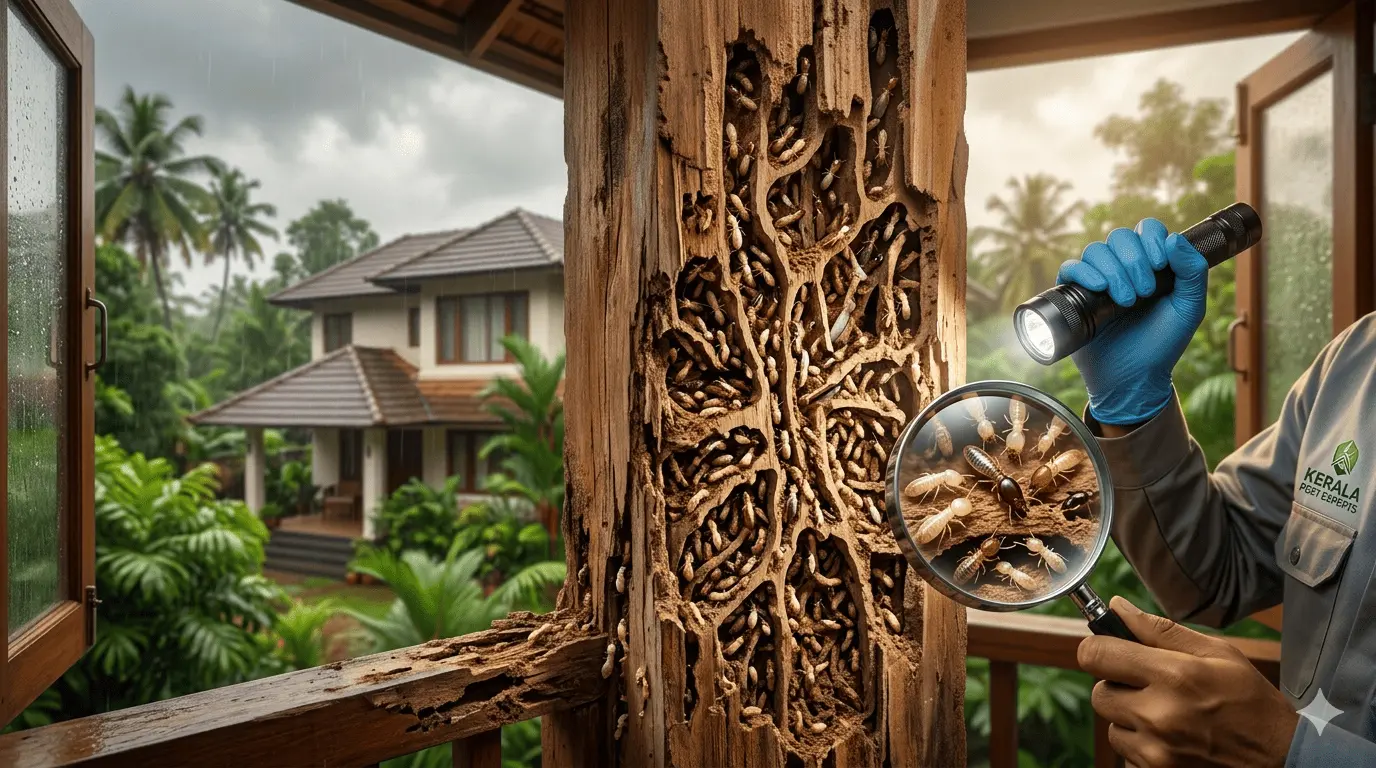
The most alarming difference for Kochi homeowners is the detection challenge. Traditional subterranean termites almost always leave mud tubes, those distinctive brown tunnels you can see running up your walls, skirting boards, or foundation pillars. These tubes are one of the most reliable early warning signs that homeowners and pest control professionals have relied on for decades.
Hybrid termites, however, often enter structures through very narrow cracks in concrete, through plumbing channels, and through direct wood-to-soil contact points without building visible mud tubes. This means the infestation can progress significantly further before any external sign appears, and by the time you notice the damage, structural compromise may already have occurred.
Why Kochi Is Particularly Exposed to This New Threat
Several factors specific to Kochi and the wider Ernakulam district make this city more vulnerable to hybrid termite colonisation than many other Indian cities:
Coastal Geography and High Humidity
Kochi's position on the Arabian Sea coast, surrounded by backwaters and built on reclaimed land in many areas, creates the kind of warm, moisture-rich environment that both parent species of the hybrid thrive in. The average relative humidity in Kochi sits above 80 per cent for most of the year, close to ideal conditions for rapid colony development.
Dense Urban Construction and Rapid Development
The construction boom across areas like Kakkanad, Edappally, Aluva, and Thrippunithura means large quantities of timber and building materials are stored on and around construction sites, often for extended periods. This creates easy colonisation opportunities. As buildings go up quickly, pre-construction pest control measures are sometimes skipped or completed inadequately, leaving new structures vulnerable from day one.
The Port of Kochi
International shipping is a primary route by which termite species travel between countries. Kochi's position as one of India's busiest deep-water ports means it has historically been a gateway point for invasive species. Timber imports, wooden packaging, and cargo containers are all known vectors for termite introduction.
Ageing Wooden Infrastructure
Many older homes and heritage buildings in Fort Kochi, Mattancherry, and Ernakulam feature extensive use of teak, jackwood, and other traditional timbers. These properties are precisely the kind of high-cellulose, established wooden infrastructure that large termite colonies prefer as a primary food source.
Climate Change Effects
Rising temperatures and shifting monsoon patterns, both clearly visible in Kerala over the past decade, are extending the period each year during which termite swarming and colony establishment can occur. What was once a seasonal risk is increasingly becoming a year-round concern.
Warning Signs of Hybrid Termite Activity in Your Kochi Home
Because hybrid termites do not always leave the same visible trails as traditional subterranean species, it is important to know the full range of signs that may indicate their presence. Look out for any of the following:
• Swarmers appearing outside the monsoon season — if you see winged termite swarmers between December and March, when traditional species are largely dormant, this is an unusual and concerning sign
• Hollow or papery sound when tapping wooden surfaces — run your knuckle along skirting boards, door frames, and wooden flooring; a hollow response indicates the wood has been consumed from within
• Fine sawdust-like material near wooden surfaces — this frass (termite excrement and debris) may accumulate near furniture legs, door frames, or window sills
• Paint or plaster that appears to bubble or blister without any obvious water damage source
• Doors and windows becoming progressively harder to open or close — termite moisture causes wood to swell and warp
• Cracks in interior walls, especially around door and window frames, that seem to appear or worsen quickly
• Structural timber that looks intact on the surface but yields easily to pressure or probe — a screwdriver pushed into compromised wood will sink with little resistance
• Small, pinhole-sized entry points in drywall, plaster, or wood panelling
If you notice any of these signs, contact a qualified pest control professional in Kochi for a thorough inspection as soon as possible. The speed of hybrid colony growth means that waiting even a few weeks can result in significantly greater damage and higher treatment costs.
What Effective Pest Control for Hybrid Termites Looks Like in 2026
Standard termite treatments developed for single-species infestations may still be effective as part of a broader strategy, but combating hybrid termites in 2026 requires a more comprehensive and layered approach. Here is what homeowners in Kochi should expect from a professional pest control service dealing with hybrid termite risk:
1. Advanced Inspection Technology
Professional pest control technicians today use moisture meters, acoustic emission detectors, and in some cases, thermal imaging cameras to detect termite activity hidden behind walls and under floors without destructive probing. Given that hybrid termites may not build visible mud tubes, these tools are no longer optional; they are essential.
2. Updated Chemical Protocols
Some of the older organochlorine-based termiticides have shown reduced effectiveness against hybrid colonies. Licensed pest control professionals now use second-generation non-repellent termiticide compounds that termites cannot detect and therefore do not avoid. These are applied to the soil around and beneath the structure and work by being transferred from exposed termites back to the colony.
3. Baiting Systems with Modern Active Ingredients
Modern termite bait stations use active ingredients that inhibit the moulting process in termites, preventing larvae from developing into workers. These are placed around the perimeter of the property and monitored regularly. For hybrid colonies, baiting is particularly effective because it reaches the colony regardless of how they are entering the structure.
4. Pre and Post Construction Treatment
For new construction anywhere in Kochi, pre-construction anti-termite soil treatment using approved chemical barriers is now more important than ever. For existing structures, post-construction treatment involving drilling, injection, and targeted wood treatment should be carried out by certified technicians using protocols designed for high-resistance species.
5. Follow-Up Monitoring and Warranty
A single treatment visit is not sufficient for hybrid termite risk management. Reputable pest control companies in Kochi now offer annual inspection and monitoring contracts that ensure any new colony establishment is caught and addressed before it reaches a destructive scale. Look for companies that provide a written service warranty as standard.
Practical Steps Kochi Homeowners Can Take Right Now
While professional intervention is essential for any confirmed or suspected hybrid termite infestation, there are practical steps every property owner in Kochi can take to reduce their exposure:
• Schedule a professional termite inspection if you have not had one in the past 12 months — this is now the most important single action you can take
• Remove wood-to-soil contact from around your home's foundation — raised garden beds, wooden posts set directly into soil, and timber stored against your walls all create easy access points
• Fix any water leaks, drainage problems, or roof seepage promptly — moisture management is your first line of defence
• Seal cracks around your foundation, utility entry points, and plumbing penetrations with appropriate sealants
• Ensure good ventilation in sub-floor spaces, roof voids, and store rooms — dry conditions significantly slow termite colony development
• If you are building or renovating, insist on certified pre-construction anti-termite treatment from a licensed pest control company before your slab is poured
• Ask your pest control provider specifically about hybrid termite risk and whether their treatment protocols have been updated for 2026
Why Professional Pest Control in Kochi Has Never Been More Important
There is a certain understandable temptation to try over-the-counter termite sprays or home remedies when you first notice signs of termite activity. These products may kill individual termites on contact, but they do nothing to address the colony, which, for a hybrid species, could number in the millions and be located metres below the surface of your property.
Professional pest control services in Kochi bring tools, training, certifications, and treatment-grade chemicals that simply are not available to the general public. More importantly, they bring experience, the ability to correctly identify what species is present, how the colony is structured, and which combination of methods will be most effective for your specific property.
In 2026, with hybrid termite activity increasing across tropical coastal cities, the cost of professional pest control is genuinely dwarfed by the cost of the structural repairs that a large, rapidly-growing hybrid colony can make necessary. Roof timbers, flooring joists, structural columns, furniture, and architectural woodwork are all of it is at risk.
Our team of certified pest control professionals in Kochi has updated its inspection protocols, treatment formulations, and monitoring programmes specifically to address the hybrid termite threat. We serve all areas across Kochi and Ernakulam from Kakkanad and Edappally to Fort Kochi, Aluva, Thrippunithura, and beyond.
We also offer comprehensive cockroach control, rodent control, and general pest management services, giving your property integrated, year-round protection against all threats, not just termites.
Frequently Asked Questions
Are hybrid termites already confirmed in Kerala and Kochi?
Entomologists have confirmed the spread of Formosan and Asian subterranean termite hybrid colonies across tropical coastal regions in South and Southeast Asia. Given Kochi's climate, port activity, and geography, pest control professionals in the city are treating hybrid termite risk as a current, active concern rather than a future possibility. If you notice unusual termite activity, particularly swarmers appearing outside the monsoon season arrange an inspection promptly.
How can I tell if I have a hybrid termite infestation rather than a regular one?
Accurate species identification requires laboratory analysis of termite samples by a qualified entomologist. In practical terms, signs that may suggest hybrid activity include swarmers appearing outside the traditional monsoon swarming season, unusually rapid visible damage progression, and the absence of the mud tubes that standard subterranean termites typically construct. A professional pest control inspection is the right first step.
Do hybrid termites respond to the same treatments used for regular termites?
Partially, yes, but not always to the same degree. Non-repellent termiticides and modern baiting systems that target the insect growth regulation process remain effective against hybrid colonies. Older repellent barrier chemicals may be less effective because hybrid populations carry greater genetic diversity. Updated treatment protocols from a certified pest control company are essential.
How quickly can a hybrid termite colony cause serious structural damage?
A well-established hybrid colony, which can number 5 to 10 million individuals, can cause significant structural damage to wooden elements in a building in as little as 3 to 6 months under favourable conditions. This is meaningfully faster than traditional subterranean species, which is why early detection and professional treatment are so important.
Is pre-construction termite treatment still effective against hybrid termites?
Yes. Pre-construction soil treatment using approved second-generation termiticides remains highly effective as a preventive barrier, even against hybrid species. The key is ensuring that the treatment is applied by a licensed professional using current-generation chemicals and that it covers all foundation areas completely. Builders and developers in Kochi should verify that their pest control providers are using updated protocols.
How often should I have my Kochi property inspected for termites in 2026?
Given the increased risk from hybrid species, annual inspections are now the minimum recommended frequency for all properties in Kochi. Homes with prior termite history, those near water bodies or construction sites, and older properties with significant wooden elements should consider inspections every six months.
Are termite treatments safe for my family and pets?
When applied by trained and licensed professionals, modern termiticide treatments are designed to be safe for residents and pets at the exposure levels that occur during and after a professional application. Technicians will advise on any ventilation recommendations following treatment. Always choose a certified pest control company that uses CIB-registered chemicals.
What should I do if I see termite swarmers in my Kochi home right now?
Do not disturb the swarmers or spray them with household insecticide; this may scatter surviving individuals and make the infestation harder to locate and treat. Instead, note where you saw them, collect a few samples in a sealed container if possible, and contact a professional pest control service in Kochi immediately. The faster a professional inspection is conducted, the better the outcome.
Conclusion: 2026 Is the Year to Take Termite Protection Seriously in Kochi
The emergence of hybrid termite species is not a distant scientific concern it is a developing reality for tropical coastal cities like Kochi, where the conditions for colony establishment and rapid growth are close to ideal. Faster colony growth, broader environmental tolerance, and reduced response to some traditional treatments all mean that the pest control strategies that may have been adequate five years ago need to be revisited.
The good news is that effective protection is entirely achievable. Modern termiticides, advanced baiting systems, professional inspection technology, and thorough pre and post-construction treatment protocols can provide robust, long-lasting defence against even the most aggressive hybrid colonies. The key is acting before visible damage appears because by the time you can see the destruction, the colony causing it has been active for months.
Whether you own a family home in Thrippunithura, a commercial space in Kakkanad, a flat in Edappally, or a heritage property in Fort Kochi, professional pest control is the most cost-effective investment you can make in protecting your property in 2026 and beyond.
Contact our expert pest control team in Kochi today to schedule your inspection. We will assess your specific risk, provide a clear and honest evaluation of any activity we find, and recommend the most appropriate treatment plan for your property with a written warranty and ongoing monitoring to ensure your protection lasts.
Explore Our Complete Pest Control Services in Kochi
• Termite Control Services — pre-and post-construction treatment, soil barriers, and baiting systems
• Cockroach Control Services — targeted elimination for residential and commercial properties
• Rodent Control Services — trapping, baiting, and proofing against rats and mice
• General Pest Management — annual contracts for year-round integrated pest protection
• Contact Us — request a free inspection or get a quote today
© Pest Control Services Kochi | Ernakulam, Kerala | 2026